
Yayra Agbofah’s first comments, as we join the virtual room from both hemispheres, extraordinarily set the scene for our conversation. “We live in a global village,” he says in a rich, warm voice. The African designer’s comment has more to do with everyone’s responsibility to live on this planet than the ability of technology to bring us together. In the midst of a fashion waste crisis, using design to prevent garments from ending up in the landfills of his hometown, Accra, was an appealing prospect for Yayra.
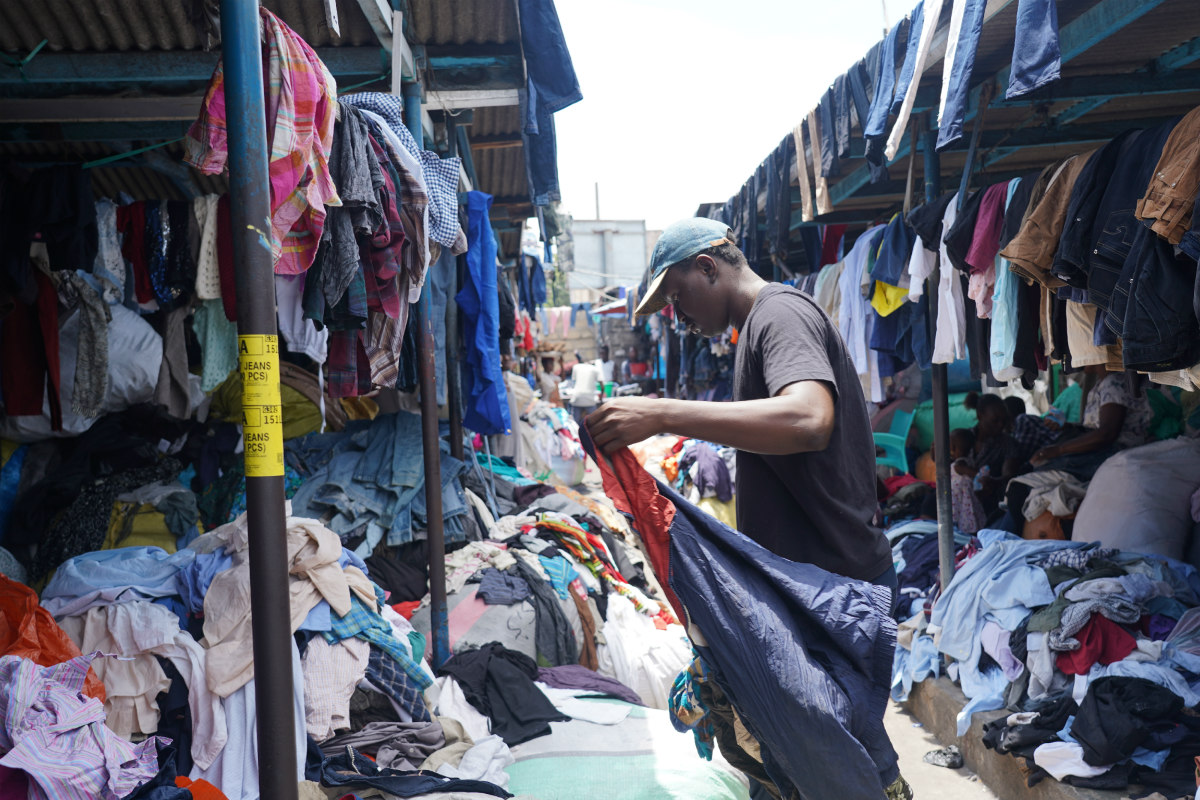
“Fashion was ingrained in me at a very young age,” he says. At 12 years old, his older sibling showed him the fashion industry, but “I always wanted to look fashionable.” Yayra grew up in Accra with little financial access to things. “I would go to Kantamanto, the largest second-hand market in Ghana, and buy stuff that I couldn’t afford otherwise.”
In 2007, before Instagram was even born, he became a stylish influencer in his neighborhood and began using Facebook to show people how to be fashionable in various ways with little resources. “The response was amazing, people followed me to see how I would source clothes from the second-hand market.”
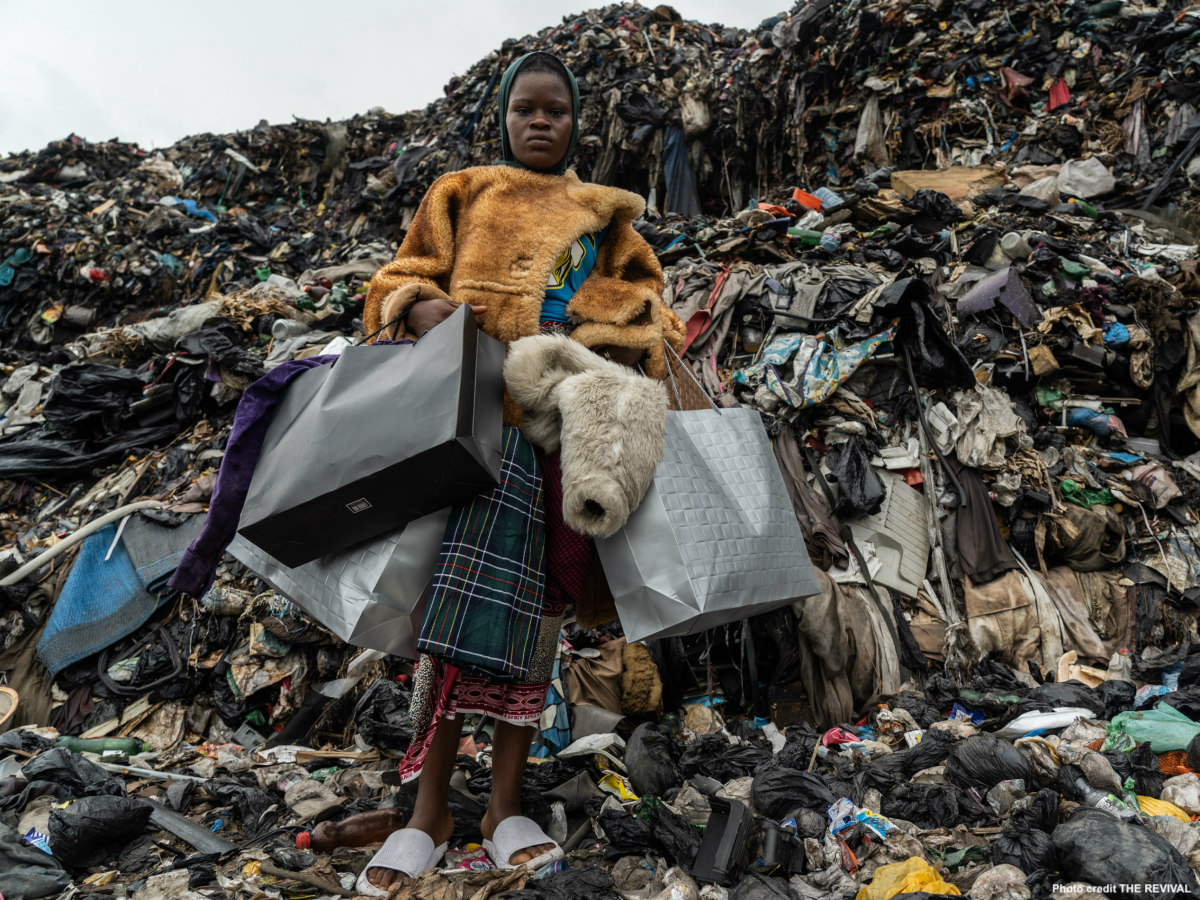
“After some years, I realized I couldn’t find the garments I wanted,” he explains. Vendors at Kantamanto market were throwing away winter clothing, which was difficult to resell in a warm climate but suitable for his vintage style. “I was literally finding those garments dumped on the floor and started to realize the amount of textile waste and the fashion industry crisis. I was shocked to see, for the first time, the landfills close to Accra in 2014.” That was the trigger for him to dive into the world of sustainable and circular fashion and to use upcycling to keep materials in circulation at their best.
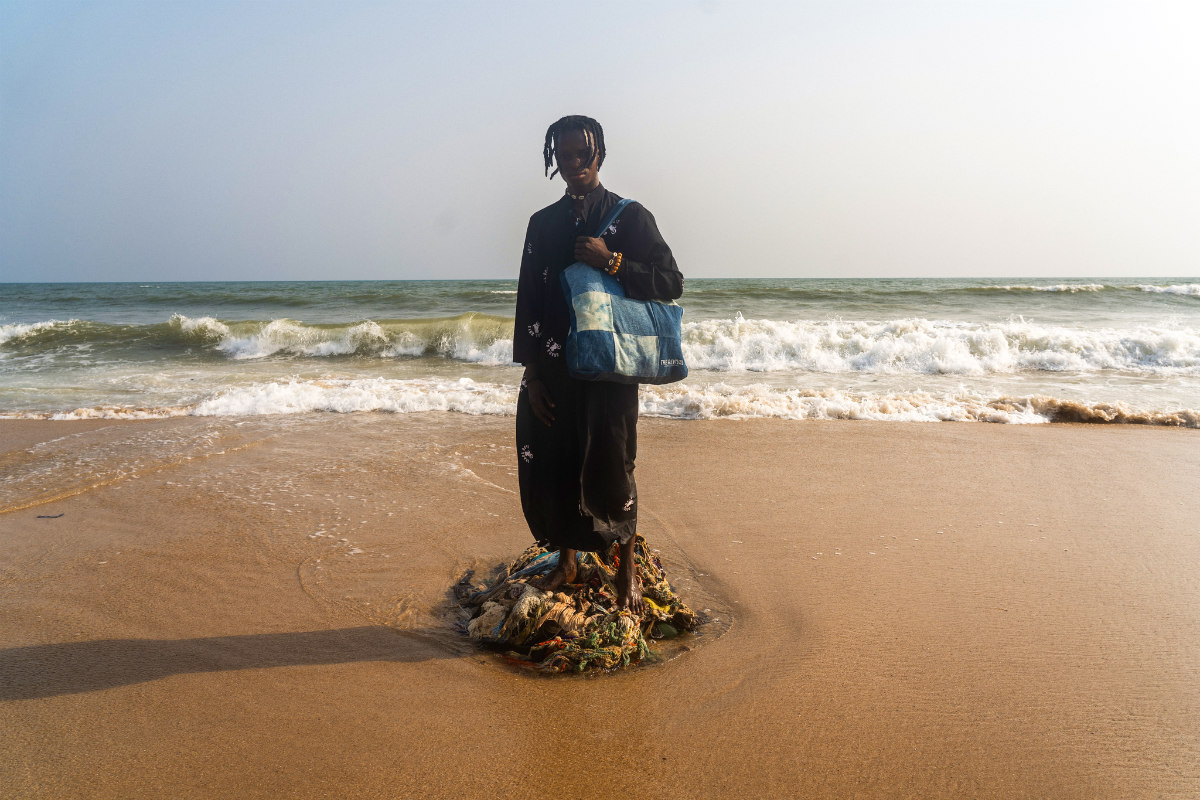
In 2018, he launched, together with Kwamena Dadzie Boison, the non-profit THE REVIVAL and put people at the center of upcycling culture. With community involvement, the team creates new designs and art from discarded garments collected in Kantamanto. They also organize experiential upcycling workshops as part of their strategy to creatively engage consumers while drawing attention to the effects of overconsumption nurtured by fast fashion.
“I realized people value clothing if they understand how it is created, thus I decided to use this platform to take them through the design process and show how they can do something practical to address the fashion waste crisis. I believe this is what is missing in the fashion industry,” explains Yayra in the same manner as when he said in a video, “Fashion is not personal. It’s communal, it’s societal.”
Textiles are now the largest source of global microplastic pollution and have even been detected in the deepest parts of the ocean.
At the workshops, people leave with upcycling skills but also with a different mindset. They fix items together and watch documentaries and panels with design professionals from other parts of the world. Regularly, Yayra calls on volunteers from fashion schools to co-host events and broaden their knowledge to help stop perpetuating what is already going on in the fashion industry. He revolutionizes the fashion industry at every opportunity, giving lectures in Luxembourg, London, France, and Berlin.
“We [in Accra] have to deal with waste that we didn’t create; we don’t have the fast fashion industries,” he says. But neither governments nor the fashion industry is responsive enough to tackle the problem, which is getting bigger by the day. According to the HEY FASHION report by PENTATONIC on behalf of the Eileen Fisher Foundation, today the average consumer buys 60% more clothing than 15 years ago. Each item is only kept for half as long.
Yet low-income countries have been left alone to deal with the environmental repercussions of the spending spree in snagging a bargain in higher-income countries. Since Yayra visited the landfills in Accra for the first time, the quality of the clothes arriving at Kantamanto has been decreasing, meaning that roughly 40% of the average clothing bale opened now leaves as waste. Approximately 15 million garments arrive weekly at Kantamanto Market in Accra, in a country of just over 30 million people.
“The illegal dumping and burning of tons of low-quality clothes from the Global North in Ghana is polluting air, soil, and water at an alarming pace,” warns Yayra. Landfills are overflowing, and much of this textile waste – made of small plastic fibers called microfibers – ends up in the sea of the coastal city of Accra. “Textiles are now the largest source of global microplastic pollution and have even been detected in the deepest parts of the ocean,” claims the report by PENTATONIC. And not to mention the environmental degradation caused by textile production.
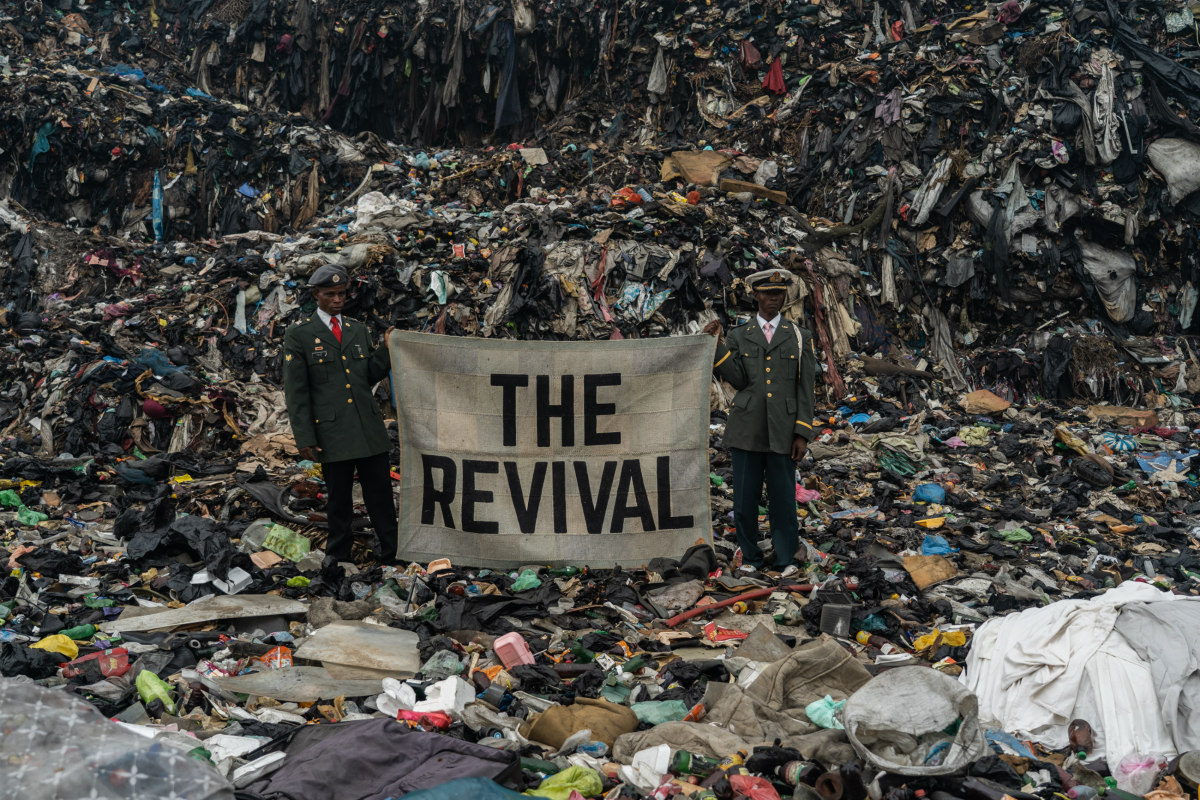
Using powerful photography and desirable design in upcycled garments, Yayra has dug deep into the industry’s disparities. Sometimes playing with vintage elements, sometimes a bit of a celebration of his culture, the design he creates is timeless and inspires a return to classics, intentionally taking us back in time, before the fast-fashion industry existed.
I ask him if the power of upcycling relies on the design. And he answers, “It is our tool to wake up every individual. Our design process should serve purposes that celebrate people.” His best example is how he turned denim – the most common textile waste – into protective farming clothing. Cool jumpsuits made of denim, a fabric originally confined to the working people of the western United States, with printed pineapples, honor the importance of local farmers in Ghana who keep feeding us.
And he adds, “we have to create solutions on our own, and show the resilience of Africans in creating something out of nothing. Our own industry is gone because of the second-hand clothes industry, but we still can create opportunities for ourselves.”
He believes that sustainability always had a place in African culture “because of the way we used to live – we all inherited clothes from our siblings – but sustainability became much of a word, something impracticable, and we lost it.” It makes people think, “This is too big for me, I can’t do it.”
At his workshops, people understand that “it has been in us since we were born,” and it gives upcycling a different meaning amid the fashion waste crisis. Yayra collaborates worldwide and uses the ideas of waste and upcycling to reach people. A tote bag from recycled denim in collaboration with the Victoria and Albert Museum was conceived as a forever garment, a statement that was saved from the landfill by the buyer.
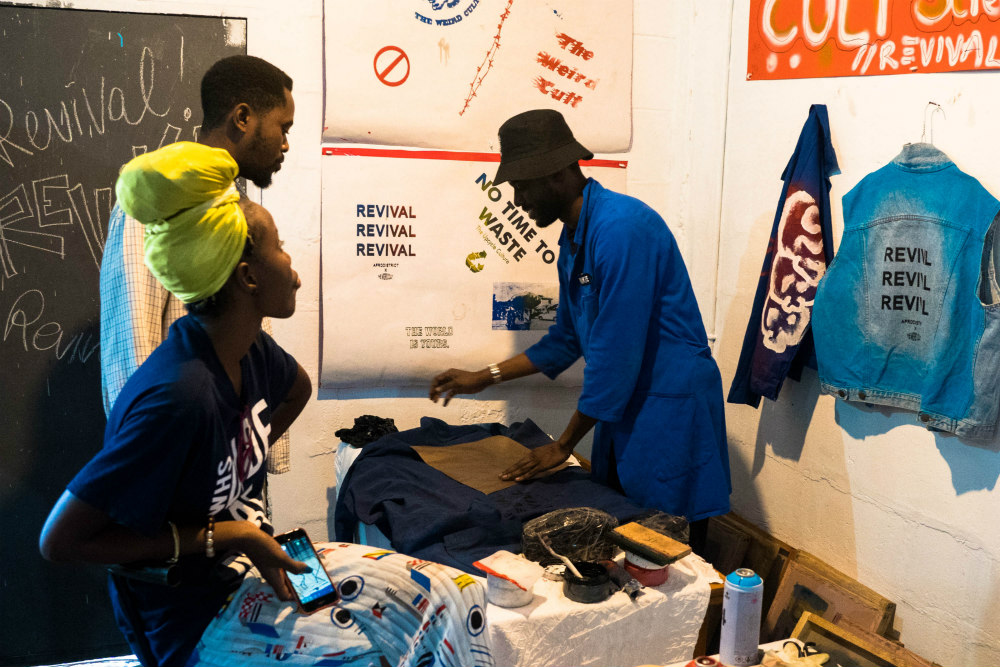
By now, his workshops have grown into free courses released every year to teach people upcycling worldwide. He continues researching the whole idea of waste into innovative tech solutions for repair, how people can design their own clothes, and how to incorporate that inclusivity into the value chain of fashion, rather than seeing sustainability as an add-on for marketing purposes.
After all, says the PENTATONIC report, the fashion industry “loses about $500 billion of value every year due to the lack of recycling and clothes that are thrown into landfills before ever being sold.” Yayra’s advice to companies in the fashion industry is to go back to the foundation of their brand and their mission, and redesign and redefine the business model, from the farming of cotton, paying the right wages, naturally dyeing fabric, and to stop manipulating customers to keep buying automatically.
Today, many brands have developed models that prioritize profit over the planet, but they require sacrifices to fill their accounts with more money. Yayra’s disruptive entrance into the fashion industry doesn’t get any external funding; “it is all from my pocket, and it is capital intensive,” he says. But his motivation to stop the fashion industry’s waste crisis is “what keeps me doing it as long as I live.”