
Listen to the audio version of this article (generated by AI).
This article was produced independently with support from the non-profit organization Nobel Women’s Initiative.
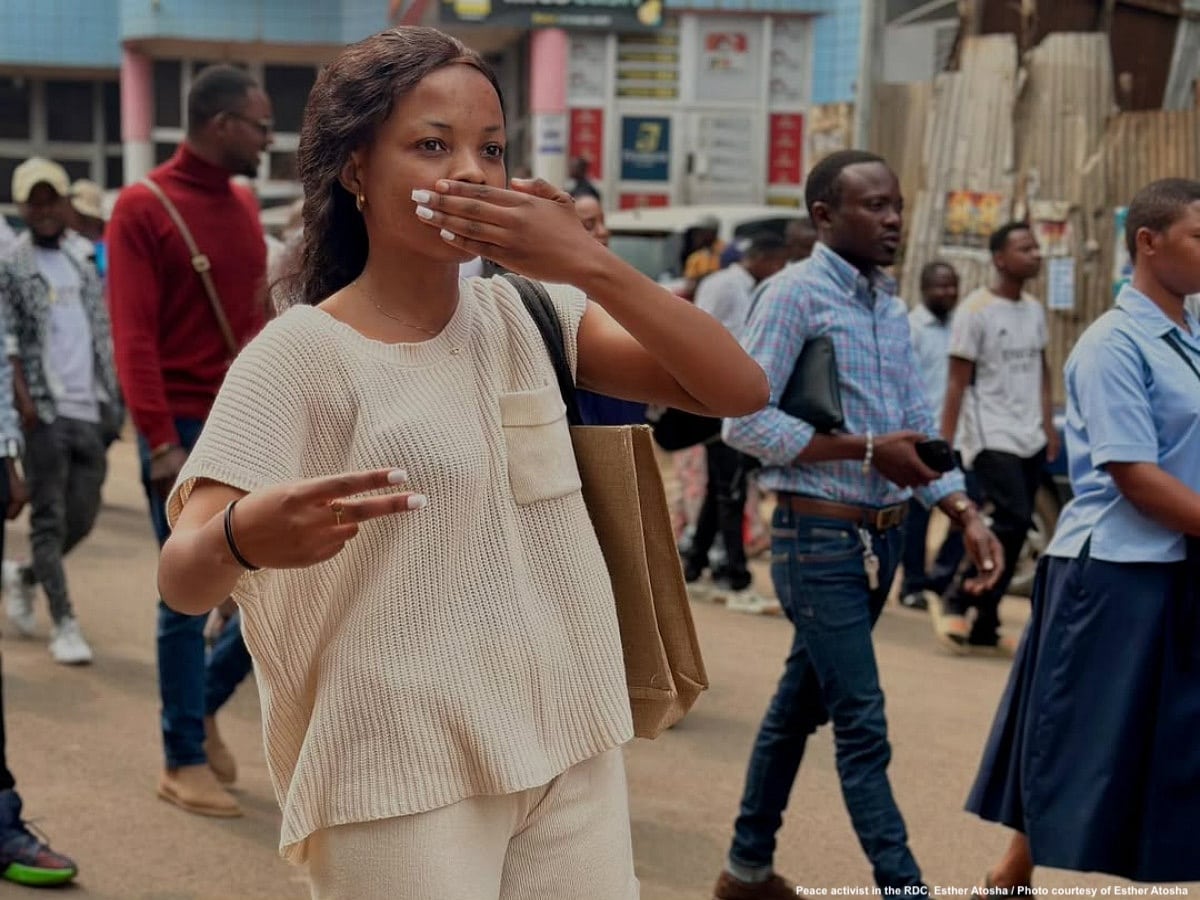
Two fingers touching the temple of the head represent death, and the other hand placed over the mouth means that nobody is talking about it. French-Congolese footballer Cédric Bakambu has frequently used this symbolic gesture after scoring a goal in the Spanish League. He has protested against the ongoing massacre in his country of origin, while the international community remained largely silent. But last week, a sudden U.S.-brokered peace deal between the Democratic Republic of the Congo (DRC) and Rwanda woke up the world.
This deal also took local peacemakers in eastern Congo by surprise, where a nearly three-decade-long armed conflict has resulted in countless lives lost. While it remains to be seen how the peace deal with Rwanda will be implemented as fighting still rages, local peacemakers in Congo continue to work with the complexities on the ground that they have always hoped could bring the aspirations of citizens closer to the official texts of any peace agreement.
One such peacemaker is Congolese activist Esther Atosha. A few weeks before I met her on a chilly morning in Munich, she had been in Uganda and Kinshasa, engaged in intensive peacebuilding sessions, followed by a visit to Kenya to hear testimonies from women whose experiences resonated with her own from her hometown of Bukavu. A few weeks later, when you read this, she’s back in Congo, guiding a team on how to equip survivors, widows, and mothers to build peace and promote better governance.
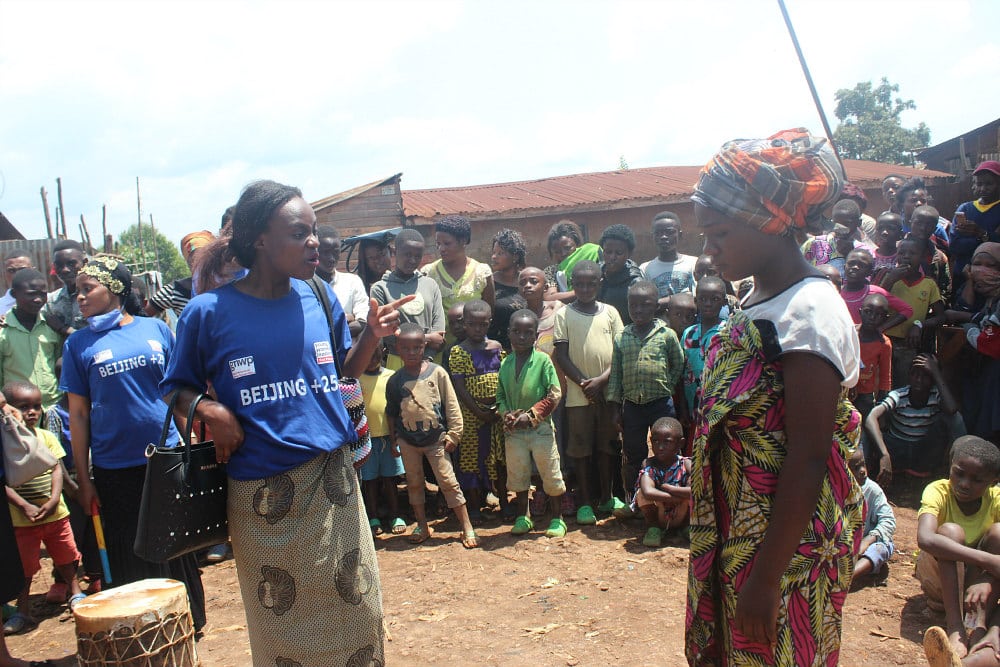
Esther’s efforts as a peacemaker in the conflict zone of South Kivu have trained and empowered over 15,000 women and youth in leadership, entrepreneurship, and community mediation. Beyond peace and security, she is deeply engaged in advancing women’s economic independence, providing comprehensive business skills and mental health support. Her flagship initiative, “Street Business School,” has graduated many women who now generate at least $2 per day—an improvement that has likely saved numerous lives. “For the first time in years, they don’t have to worry about tomorrow. It’s a great start on their journey toward income, independence, and dignity,” Esther states.
Many might expect the founder of the nonprofit Women in Peace and Governance—a Mandela Washington Fellowship recipient and recently recognized as the Fastest Rising Peace Builder in East Africa 2025—to be a senior woman in her 60s. However, the young woman sitting across the table from me looks more likely to share travel stories than tales of war. Her soft voice barely rises above the noise of the hotel bar.
Esther was not born in South Kivu. Her mother fled to a village during her pregnancy to escape the conflict, where Esther was born in the aftermath of the 1996-2000 conflict. Following the 1994 genocide in neighboring Rwanda, many Hutu refugees fled into eastern Congo, resulting in the establishment of refugee camps near Bukavu. This created ethnic tensions, instability, and ultimately insurgency. Over time, regional powers—particularly Rwanda—have intervened militarily or supported rebel groups within the Congo, allegedly to aid the Hutus, which has undermined peace and prolonged cycles of conflict. Atosha’s life has been characterized by constant movement until her family eventually settled in Bukavu.
She grew up uncomfortable with the realities and injustices faced by women in her city. During the civil conflicts in the DRC (spanning much of the late 1990s and early 2000s), Bukavu was a site of repeated violence, with fighting between government forces and various rebel or local militias. In 2004, the city was the scene of particularly terrible atrocities: there were horrific cases of mass rape and killings when rebels briefly overran parts of Bukavu.
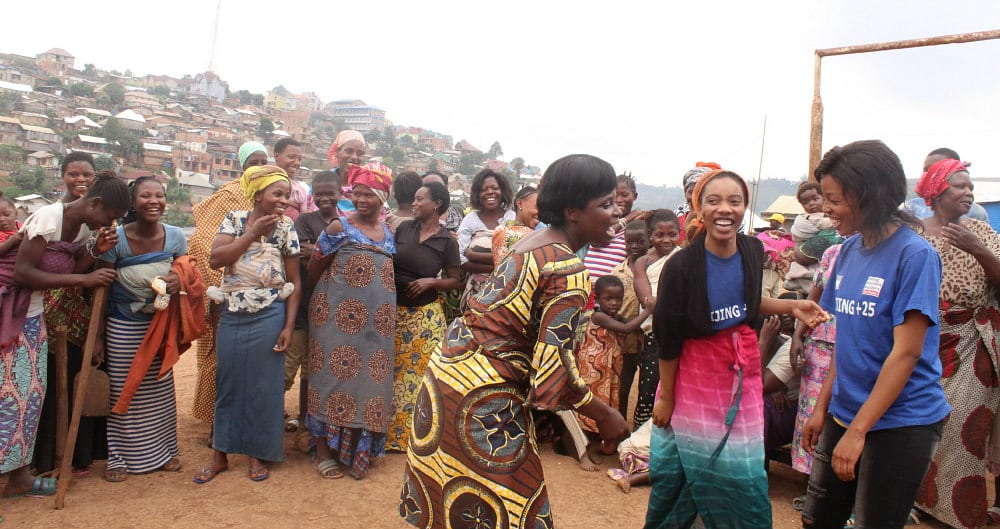
Esther explains that the most significant impact of her program is when the women she works with, often traumatized, feel free to talk about what happened to them. About 64% of them have experienced sexual abuse during conflict, and 80% have been victims of abuse. “I have been on a healing journey myself,” Esther shares. “I grew up in that environment where I was not accustomed to schools, books, or toys. My life was all about fleeing from one village to another. I was uncomfortable talking about my story, about how we used to escape. When you find others with similar experiences, you feel more open to share and begin your healing process.”
Although Esther focuses on female leadership and governance, she has effectively used the football field, much like footballer Cédric Bakambu, as a platform to communicate with the men who often stand in her way. “It’s a public space where you can easily reach people,” she explains. To this end, she introduced theater plays in local stadiums in Bukavu. The last play her team organized advocated for women’s participation in elections and civic engagement. The plot was straightforward: a husband forbids his wife from voting, but by the end of the play, it is revealed that the woman who voted has the power to open doors for the betterment of their community.
To attract thousands of men to watch the performances, she also implemented a “community assistance” strategy: distributing 1 kg of sugar per participant and clothes on the day of the play.
In the days following the performances, Esther says, people would stop her on the street, asking when she was campaigning. “They initially thought our presence in the community was about political campaigning. Once they realized we were there to raise awareness through dialogue and interaction, they were surprised,” she recounts.
“Imagine how people behave, conditioned by the constant conflicts that have become ingrained in their minds, leading them to believe everything is politically motivated. This perception has been shaped by our leaders, who only reach out to the community when they need votes or support. Our leaders seldom engage with the public. Her nonprofit organization, Women in Peace and Governance, has developed an interactive approach to help people feel open and receptive to speaking with Atosha and her team. They also conduct research and data collection on the status of women and youth in the DRC. “We don’t struggle to collect data because of the trust that we’ve built in the community,” she adds.
By transforming data into action, her organization engages in evidence-based advocacy to empower young women to claim their rights and hold institutions and decision-makers accountable for democratic governance and human rights. Atosha’s work has been instrumental in promoting the implementation of UN Security Council Resolutions 1325 and 2250, integrating women’s and youth perspectives into peace processes and ensuring that policies and programs respond to the real needs of the community.
Recommended Read: The Streets of Kissy Neighborhood in Freetown, Sierra Leone, Are Female
Last January, one of the militia groups, the March 23 Movement (M23), supported by Rwanda, seized the city of Goma. Footballer Cédric Bakambu intensified his protests on the football field, repeating his gesture every time he scored. In the DRC, Atosha joined over 12,000 people on the streets of Bukavu to protest against the M23 militias while also conducting radio broadcasts covering the violence inflicted by the M23.
In February, Bukavu fell under the control of the M23 militia, putting Atosha’s life in danger. She had previously received threats, such as demands for money to access public services and requests from local government officials to silence some of her critics regarding governance. However, this situation felt different. Esther had been documenting and reporting cases of abuse, particularly concerning the violation of women’s rights in Eastern Congo, which is dominated by more than 120 militia groups, including M23 in certain areas.
She had to flee once again, this time through Uvira, a particularly dangerous zone in Eastern Congo. During her escape, she passed through 14 checkpoints where her safety often hinged on her appearance and the mood of the militias, as she explained. “I was trapped in a refugee camp in Burundi for two days, and then I escaped to Kenya.” Back in Congo, she kept running the programs in Bukavu from afar.
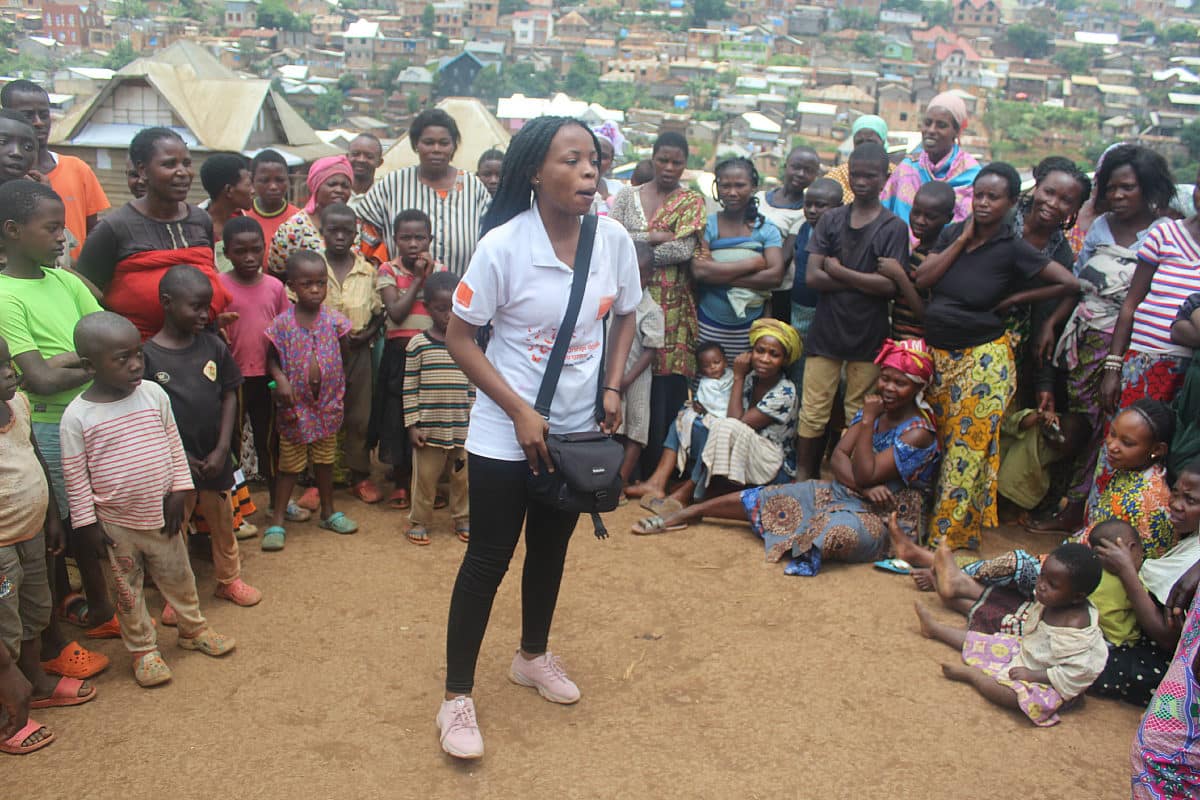
The peace agreement signed between the Democratic Republic of Congo and Rwanda, facilitated by the US, would bring more light to the communities Atosha serves. Instead, it has left many questions unanswered. Peacemakers such as Esther Atosha amplify the unrepresented voices and demands for justice from fellow citizens, planting seeds that negotiators can use to build meaningful dialogue. She believes the ability to draw attention to the physical, emotional, and psychological impacts of war in the political space of the talks is a crucial pillar for transforming the peace process and ensuring sustainable peace on the ground.
Although the US President stated he “ended” the war between Rwanda and Congo and claimed peace, fighting persists. Since December 4th, the M23 has resumed fighting in Bukavu, and the situation on the ground remains tense. It feels like a deja-vú. The M23 previously declared a ceasefire on February 4, but it lasted less than a week.
Back then, footballer Cédric Bakambu commented in an interview that he believed the conflict stemmed from certain international interests. Although the conflict has a long history, it is largely motivated by control over minerals in Congolese soil, primarily coltan and cobalt — essential for manufacturing technological devices such as mobile phones and computers, and for supporting the energy transition. According to a draft European Parliament resolution on the escalating violence in Congo, the country holds 60% of the world’s cobalt reserves and between 60% and 80% of its coltan.
With so many international interests at stake, Congolese human rights activist Denis Mukwege has stated that a peace agreement that excludes civil society is doomed to fail. It “mocks all those victims who continue to suffer in this region.” Esther Atosha insists that the negotiators of peace agreements are not merely impartial mediators; they enter the process with the demands of their fellow citizens in mind, demands that cannot be ignored or silenced. Local peacemakers have long been training women and youth to ensure their voices are heard.