
Listen to the audio version of this article (generated by AI).
“At least once in a lifetime, we all feel the need to transform ourselves,” says Ava Hangar, an activist drag queen in Italy. In fact, we often don different personas whenever we attend meetings, sports events, or parties. “It’s like Barbie, you know? There’s Barbie the worker, Barbie the athlete, Barbie the party girl. Drag is just when you turn up the volume and go boom!”
Similarly, the well-known American drag queen RuPaul famously stated, “We are all born naked, and the rest is drag,” suggesting that everything beyond our basic selves — our clothes, style, and personality — is a form of self-expression through the various roles we take on in life. Ava Hangar’s definition of drag draws on these stereotypes to perform with her troupe, Underdogs Creative, based in Florence.
Drag queen performance is loaded. It can be used to entertain, communicate, and advocate. A blur of gender that seems harmless to one person can appear offensive to another. By now, you will already be developing an opinion on what I’m writing here, and I’ve barely even started.
Seemingly irresistible just a few years ago, queer movements sparked diversity initiatives across the globe to address systemic inequalities. However, all revolutions face a backlash. For some, the progress may have gone too far.
For instance, Ava Hangar points out that the focus on pronouns has backfired for some people. “Those who stay within their own bubbles think everyone else should know how to pronounce a non-binary situation. But instead of pointing fingers, you have to educate,” she explains.
According to the ILGA-Europe 2024 report, LGBTQIA+ human rights have rolled back across Europe. The UK dropped six places in ILGA-Europe’s Rainbow Map, as Hungary (just one spot behind Italy) and Georgia also registered steep falls following anti-LGBTQIA+ legislation. Italy ranks 35th out of 49 European countries based on how friendly its legal and policy practices are toward LGBTQIA+ individuals. Not a single month in 2024 has passed in Italy without homophobic incidents in public spaces, and thousands of court cases are currently in progress to defend the rights of rainbow families, transgender individuals, and LGBTQIA+ asylum seekers. But often, courts dismiss the cases because sexual orientation does not constitute a protected ground in hate speech legislation in Italy.
Ava Hangar believes that there is still much work to be done to eradicate homophobia and prejudice against diversity from the minds of the “average Italian.” “If you really want to change things, you do so day by day, planting small seeds,” she says, a sentiment that seems quite remarkable coming from someone with over 27,000 followers on Instagram. “It’s not about the big movement. It’s truly invisible, drop by drop.”
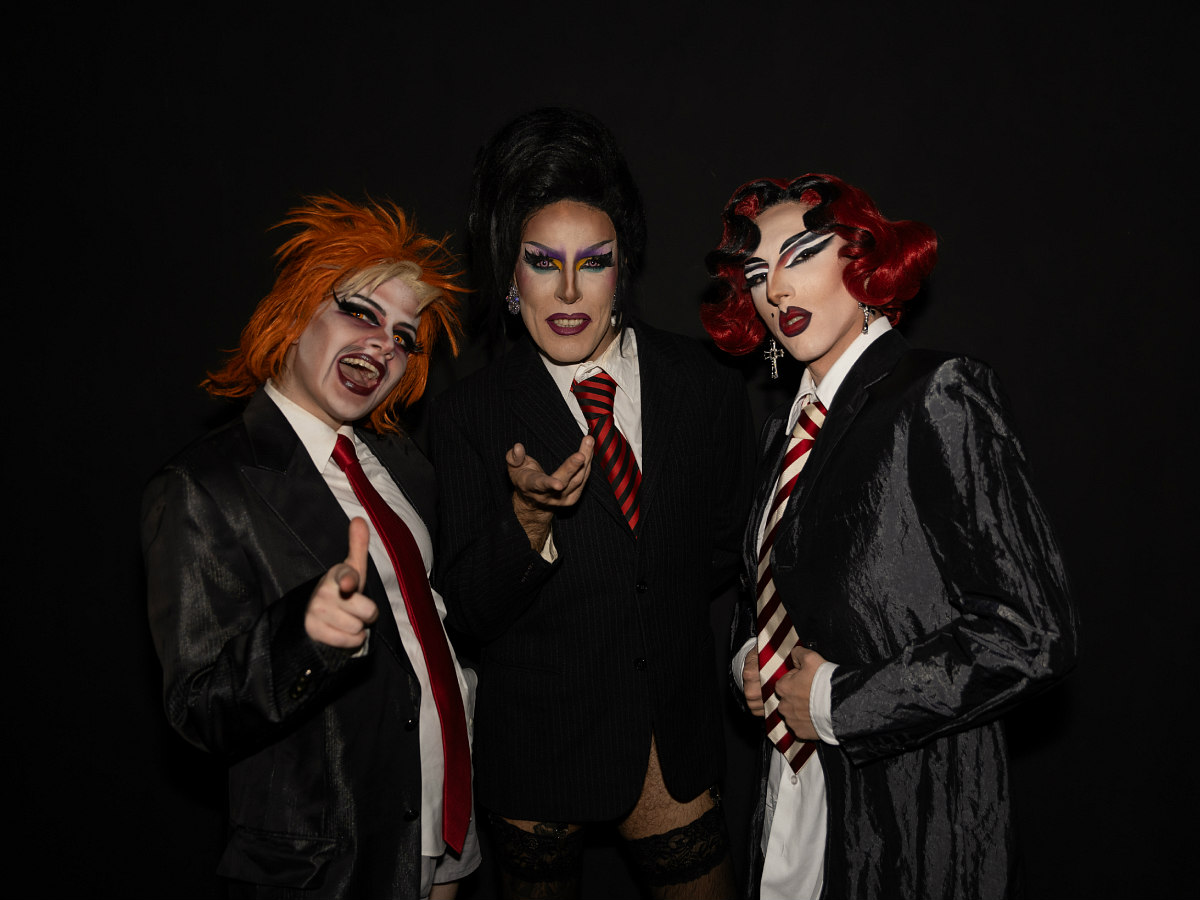
Born in Sardinia, Ava Hangar grew up attending music festivals and cultural events with her parents. These spaces always felt safe for expression without saying a word. She graduated from a circus school in Torino and has started a Master’s degree in co-creation and performance-making in the Netherlands. In 2017, she began exploring the idea of joining the drag scene in Italy. However, instead of using drag merely to empower herself and promote self-acceptance — like many others do on an amateur level — she viewed drag as a form of performative language. Ava explains that this idea is not new. A small San Francisco club founded in 1936, known as Finocchio, changed the course of drag and “female impersonation.” It elevated these acts beyond mere exotic entertainment for wealthy audiences in the cabarets of Paris and Berlin during the early 20th century.
The club’s motto, “The most interesting women are not women at all,” provided a rare haven for queer individuals — men dressing as women, transgender people, and others who defy traditional gender norms — during a time when being openly queer could mean legal or social peril. Years later, RuPaul arrived, and his show, RuPaul Drag Race, in the US became a worldwide format. In Italy, Ava Hangar was in the first edition.
Once in Florence, she and her troupe started performing at La Limonaya, which she describes as a “lovely place always always well attended” that put on a talk, a cabaret show, and a disco party. However, after moving to another venue due to disagreements with partners, she found that her audience did not follow. “They just wanted to dance and drink—that’s it. That audience, we never had it,” she reflects.
I first met Ava Hangar in 2023 at the Bunker, a former World War I air-raid shelter in Torino that had been transformed into a space for urban explorers, architects, artists, and sociologists focused on regeneration. She was DJing, and a mutual friend introduced us. It was immediately apparent that Ava Hangar was involved in something beyond simply being a flamboyant entertainer.
Recommended Read: Italian Rapper Gets ‘Real’ on ‘Baby Gangs’
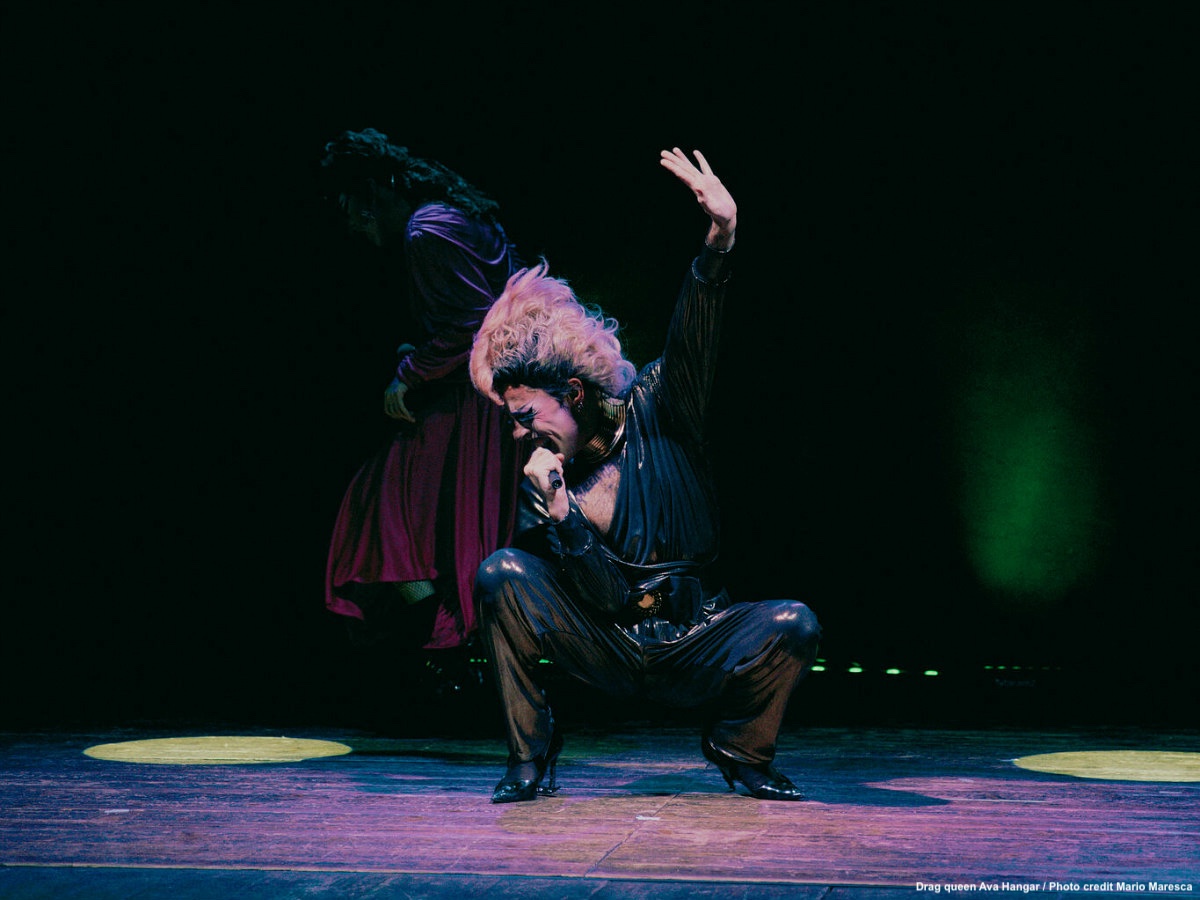
Two years later, I attended one of her performances at Il Progresso in Florence and finally understood her perspective that “drag is a proper language.” I witnessed not only men, or women, in high heels and wigs but also a businessman in straps delivering what felt like a political speech, nostalgic women celebrating the 80s, and women employing a humorous, ironic, and occasionally biting tone. Her comedic rhythm, connection with the stage and audience, and the fragility of her characters reflected her background in contemporary circus.
During the performance, I noticed an elderly lady in the front row. Although the venue was not complete, this was a significant success for Ava Hangar, as she noted after the show: “That lady would never have gone to a queer club night, but she came tonight.”
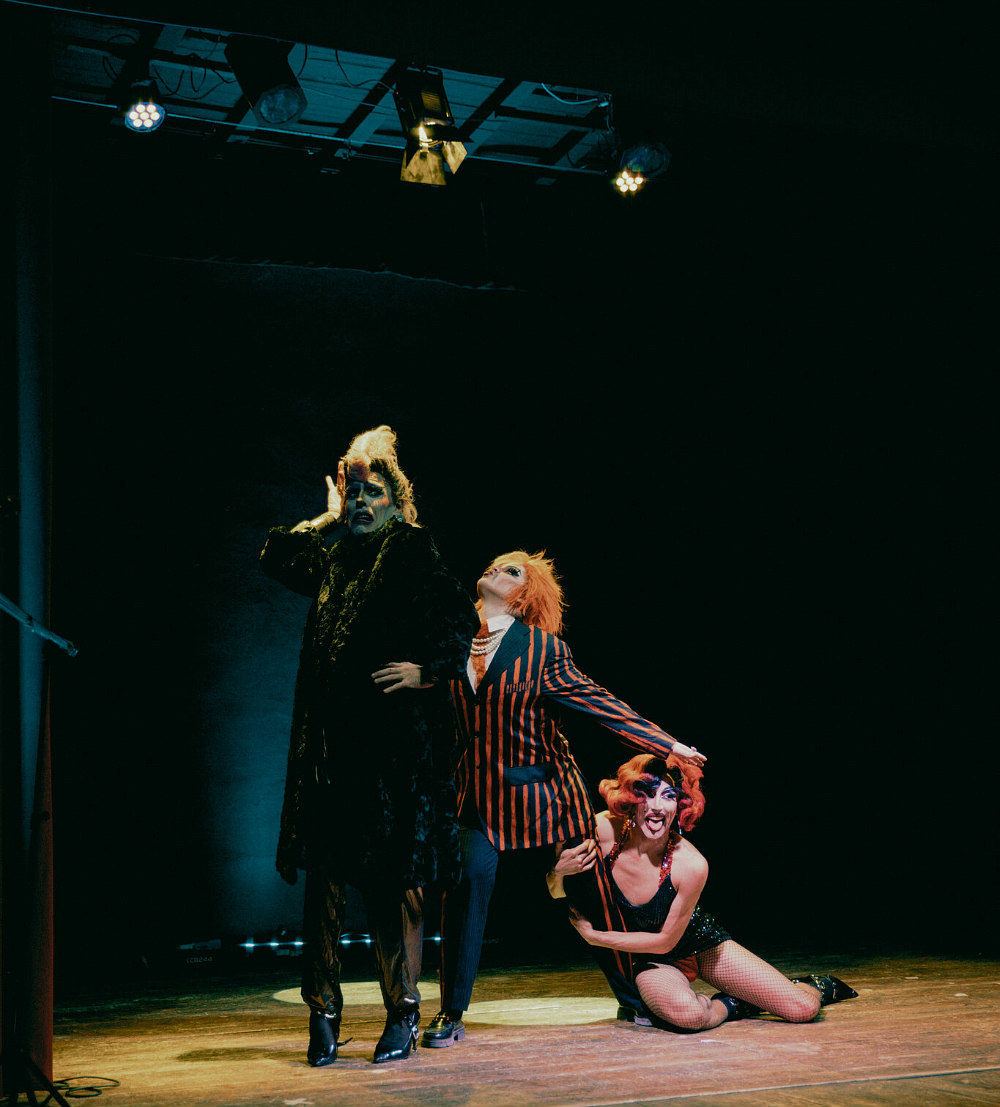
Reaching diverse audiences is not easy, especially in Florence, which has seen many clubs close and has become, in her words, “Disneyland Renaissance.” Yet, Ava Hangar has chosen “to lose it” and to perform as a drag queen in a way she considers genuine and activist, aiming for real social impact in Italy. She refuses to perform only for a niche audience. In Italy, you can usually see drag only in gay clubs. However, Ava Hangar is concerned about significant gatekeeping occurring within these circles. Her desire is to bring a drag show to the stage that consciously embraces all audiences and facets of the genre.
So, I asked Ava Hangar how she finds the right balance between doing something that still feels more underground but also reaches a broader audience. But she sees no issue with becoming more mainstream. Her real concern is the potential standardization of the symbolism she tries to convey on stage. “Everything you do is a symbol that carries a new message,” she emphasizes.
Ava Hangar’s final piece of advice for everyone is to try drag at least once in their life and reflect on themselves. “It’s transformative,” she insists. “You’re playing a character that you invent yourself. Your drag can derive from your life experiences, references, and aesthetics. It’s a chance to see yourself as a child again, but with a budget. You can be queer, trans, straight—whatever. The reaction is always incredibly powerful. It’s about catharsis.”
There is no doubt that drag is an art form capable of deconstructing our notions of gender. “From there, whoever you feel attracted to is your own business,” Ava Hangar asserts. In her unique way, she attempts to create moments of uncertainty and humor, enriching and affirming human rights regardless of gender or sexual orientation.
Here are the next events to watch Ava Hangar perform, including a preview, like the one I experienced at Il Progresso, coming on 10th January 2026.