
Listen to the audio version of this article (generated by AI).
The moment well after work, when one slides into the home routine or into the social life of a bustling city, the Museum Brandhorst offers an alternative — an unconventional liaison. On Thursdays, the museum stays open a couple of hours later in the evening and invites guests to engage with street paper vendors at its “After Work” dialogue series, where they present their favorite art pieces. In a laid-back after-work atmosphere, attendees can discuss what moves and interests them about contemporary art, which is just as central here as engagement with pressing social issues.
The collaboration between the Museum Brandhorst and the street magazine BISS came naturally for the first time three years ago. BISS magazine helps vendors overcome social difficulties by earning a legitimate income by selling the magazine on the streets. In 2023, Munich collector Eva Felten donated a photo collection of over 400 works by more than 140 artists from the 1930s to the present, with a particular focus on depictions of people. The exhibition “This is Me. The is You” presented a selection of around 140 of those works, including poignant portraits of people and socially conscious street photography, to which BISS vendors contributed as part of the dialogue series.
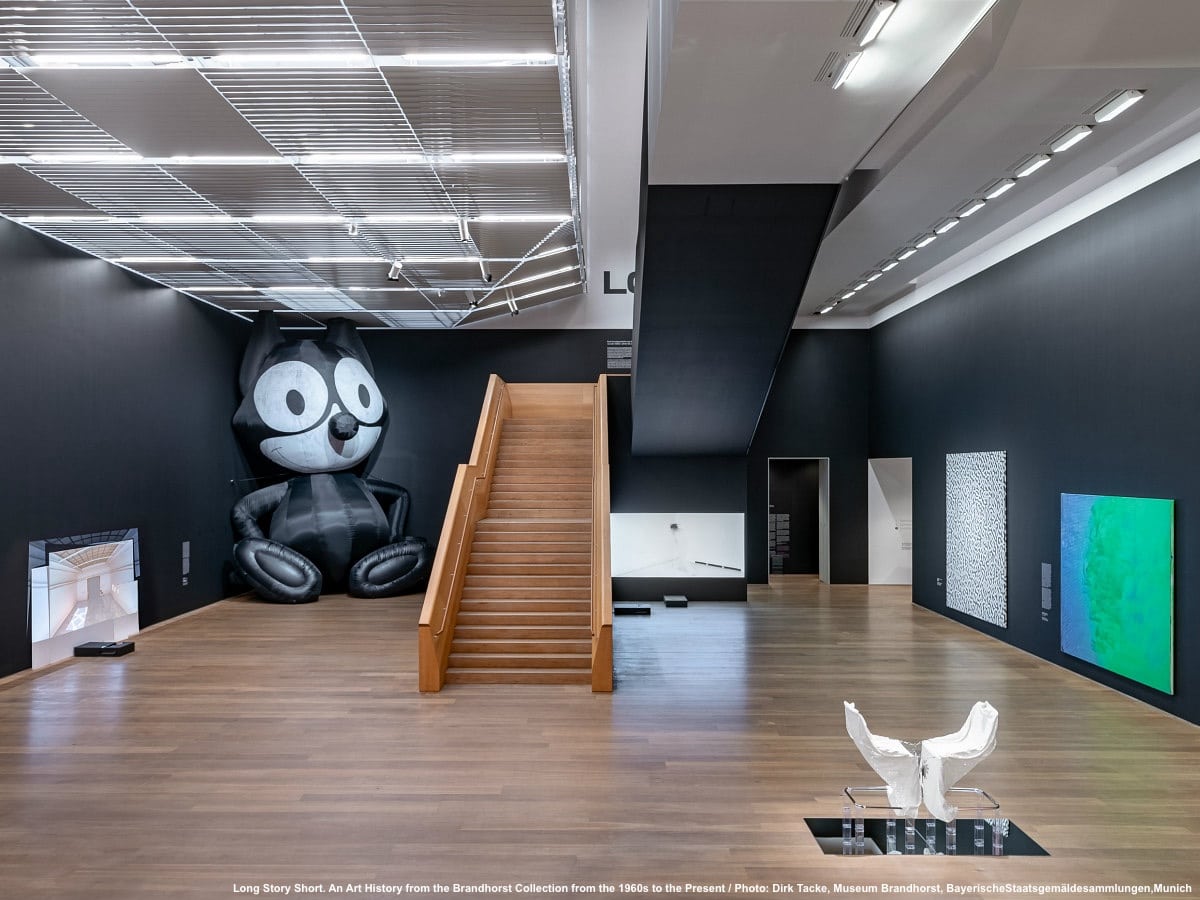
In 2026, the museum and BISS launched a new collaboration for the ongoing exhibition “Long Story Short,” which features artworks that reflect art history over five decades. BISS vendors select specific pieces and share what resonates with them, engaging with visitors’ comments and answering questions. “Neither of them has anything to do with art. It takes courage to want to do this,” notes Jochen Meister, a museum employee who moderates the Thursday evenings with the BISS vendors.
Rather than a traditional guided tour through the entire exhibition, the exchange centers around the selected piece. Afterwards, visitors can explore the rest of the exhibition or continue their conversations in the museum’s café.
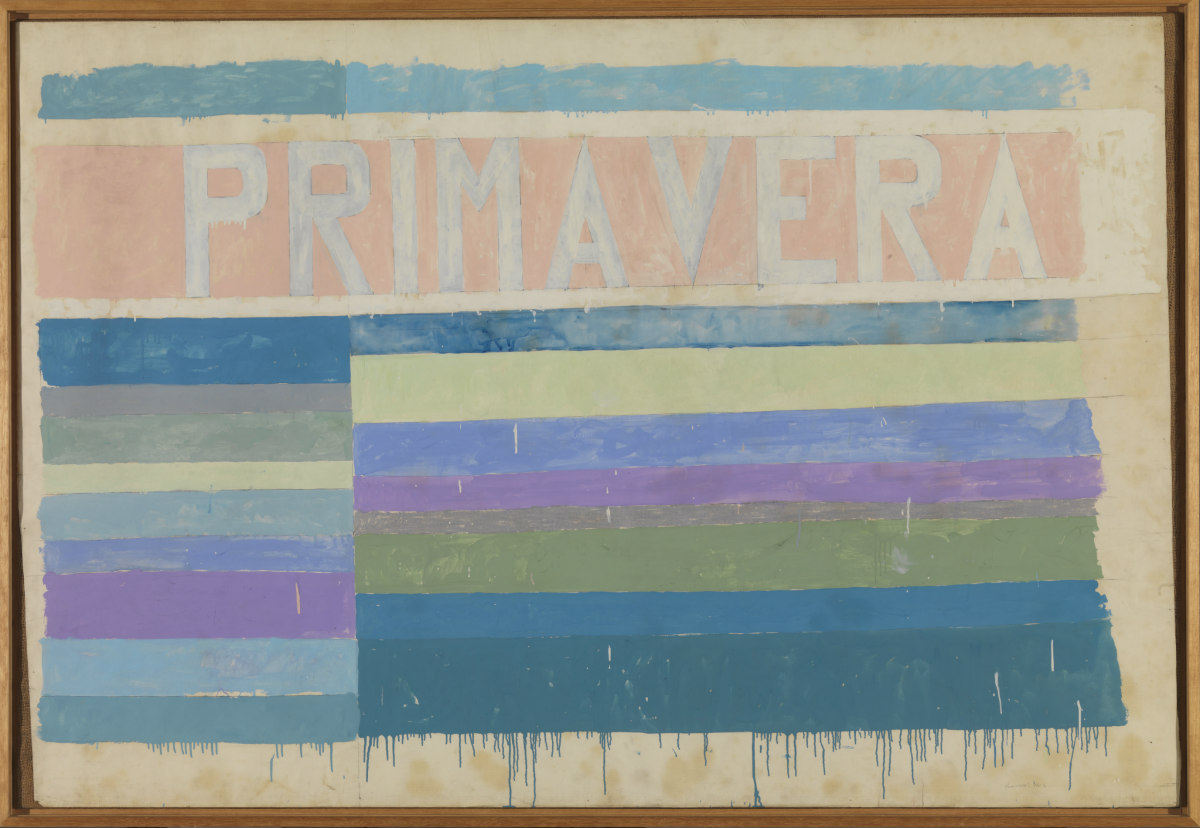
One Thursday evening, Dorina Kalnerasch, a BISS vendor from Romania in her 40s, presented a piece by Greek artist Jannis Kounellis (1963), which fits within the Italian art movement “Arte Povera.” The artwork features several horizontal lines in vibrant colors, but for Kalnerasch, it resembles a landscape — a constant horizon. “When I saw it, joy immediately popped into my head. It has beautiful colors. For instance, the blue looks like the sky, while the other colors resemble flowers,” she reflects. The word “Primavera,” written in the middle, is the name of the piece and means “Spring” in Italian and Romanian, which immediately evokes many childhood memories for Kalnerasch.
“What connects you to those memories?” Jochen Meister, the evening’s moderator, asks. “The different colors remind me of the flowers in the meadows during Spring,” Kalnerasch responds. Growing up in the countryside, she cherished springtime when she could finally play outside after a long winter. “I was a carefree child. In the village, you could roam freely; there was less supervision. I could go out and stay outside for hours. It was that simple,” she recalls. The artist conveys that sense of freedom for Kalnerasch purely through his use of color.
Perhaps a sense of freedom to move was ingrained in the artist’s brush by his own life experiences. Born in Piraeus, in crisis-stricken Greece, Jannis Kounellis lived there during the Second World War and the Greek Civil War before moving to Rome in 1956, where he began his artistic career and remained until his death. His migration journey, fueled by the difficulties in his homeland, mirrors the circumstances that pushed Kalnerasch to leave Romania for Germany.
Museum employee Jochen Meister notes that childhood memories often influence why many vendors select a particular piece. The stories behind these choices of contemporary art take us on an imaginary journey, helping us understand the various turns one’s life can take and the many social issues of our time.
Dirk Schuchardt did not hesitate for a moment to select his art piece: “That is my painting!” he exclaimed, as Meister recalls. The painting, created by American artist Amy Sillman in 1995, combines abstract painting with cartoon-like drawings, layered colors, and organic shapes. Among the rich colors and figures, one character resonates with Schuchardt—a bent figure drawn in blue lines that features a character resembling Mickey Mouse on its feet. To him, the painting’s vibrant colors evoke a sense of a Walt Disney story. As a child, Schuchardt would use the blue tracing paper from lottery tickets to replicate characters from his Mickey Mouse comic collection. This reference to objects like tracing paper from the 80s evokes nostalgia in those listening to his explanation, reminiscent of techniques used by artists like Andy Warhol.
On the upper left side of the painting, Schuchardt points out an intriguing detail—a Greek figure that may not be immediately recognizable but turns out to be a mythological centaur. When Meister asks about all the figures’ genders in the painting, Schuchardt jokingly responds, “Well, in Greek mythology, it’s all mixed up anyway,” prompting laughter from the group. Sillman’s paintings often explore themes such as the body, emotion, humor, and the instability of form, which is why we see partly figurative elements, mixed with abstract forms and dripping shapes.
Schuchardt continues speaking about his childhood. After spending time on the streets with friends after school, he would come home late and watch one of the three TV channels available, including Sesame Street—much like any kid who grew up in the 70s or 80s.
Recommended Read: Paris’s Unlikely Revolutionary: Its Philharmonie
However, Schuchardt faced violence at home at the hands of his stepfather. At 19, following a major fight, he left home with just an olive green rucksack and a hundred Deutsche Marks. Once on the street, he randomly pointed to a location on a map and chose Hamburg. With a train ticket costing 98.50 DM, he arrived in Hamburg with only 1.50 DM left. Yet, he asserts, “I didn’t go down the wrong path,” unlike others who resorted to drugs or robbery to survive. Instead, he began to build a life, facing various challenges along the way but never succumbing to substance dependency.
Over the years, he changed addresses frequently, got married, had children, and went through two divorces. Twenty years ago, he settled in Munich and has worked for BISS magazine since then. Schuchardt sees himself not just as a street paper vendor at the subway entrance where he often stands, but also as a “pastoral care worker, policeman, watchman, and information service, all while selling magazines in between.”
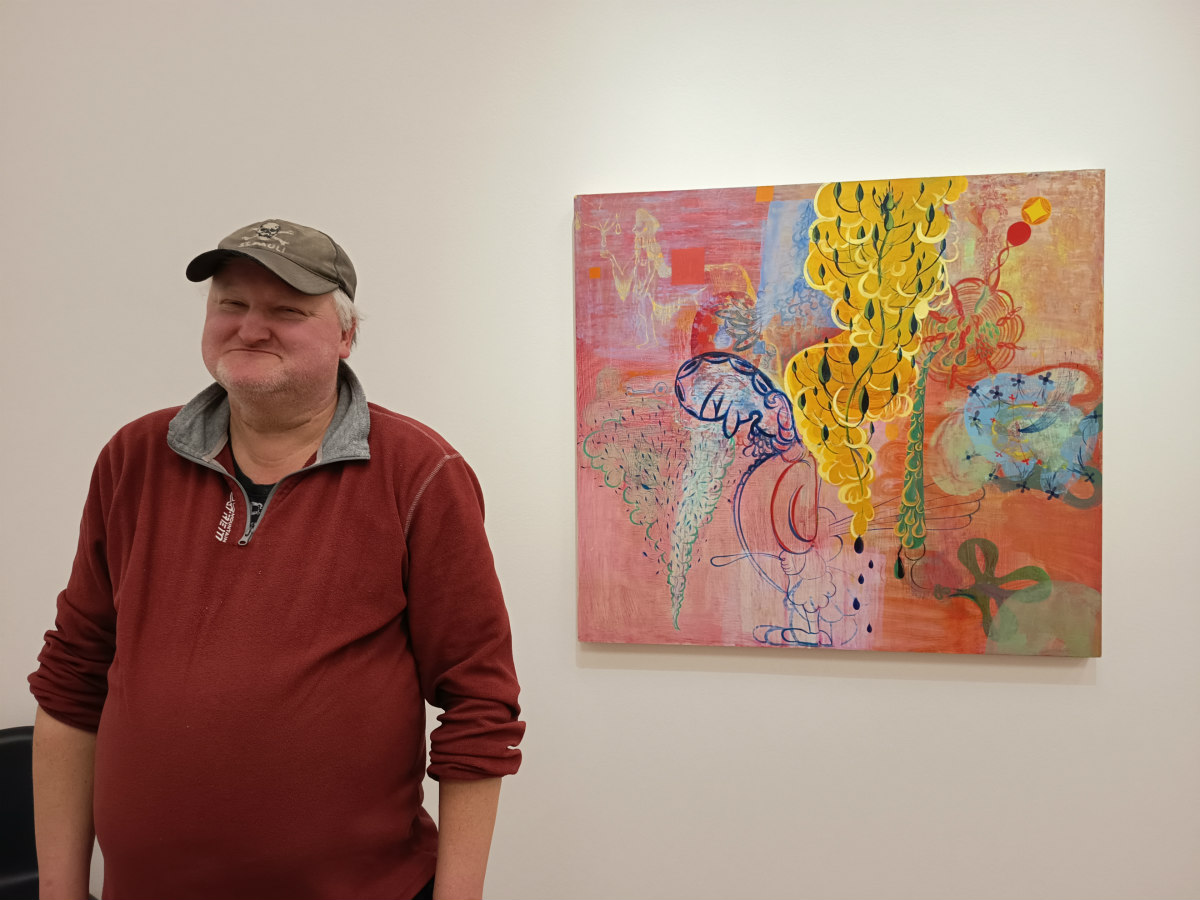
At the end of the event, Meister reveals the title of the painting chosen by Schuchardt: Mr. Wrong. How would you explain this title? What would all these colors and drawings over-painted surfaces mean? He asks Schuchardt. Schuchardt responds promptly, “These are his thoughts.” This interpretation may not be far off; the artwork appears to convey several images and gestures simultaneously, almost as if thoughts or emotions are colliding.
Neither Mr. Wrong nor Primavera tells a specific story; instead, they transport us into a realm of fantasy that allows us to play our own stories. During the viewing, all attendees discussed the artwork without framing it within art history, deliberately choosing instead to focus on their personal observations and experiences.
Meister explains, “It’s not just about imparting knowledge in one direction; it’s also about adopting a subjective, biographical approach.” Describing a contemporary art piece from the perspectives of individuals with diverse life experiences who grapple with various social issues—without any prior knowledge of the painting’s historical context—creates a connection between the artwork and the emotions or stories it seeks to convey. In this exchange, all participants gain valuable insights.
For street vendors and visitors, this event provides an opportunity to express their opinions in the presence of an expert, boosting their self-esteem. Visitors can engage with street magazine vendors, ask questions, share their thoughts, and challenge preconceived notions. Additionally, the museum benefits by expanding its reach beyond its usual audience, breaking down barriers for those who may be hesitant to step in. This turns the museum into not just an exhibition space but also a platform for research and exchange.
The collaboration with BISS is part of the museum’s initiative to use a range of tools — such as workshops, dialogues, and tours — as different exercises to train visitors’ senses. It encourages us to experience art not just within our own bubble, but to open us up to new perspectives.