Listen to the audio version of this article (generated by AI).
Step into the homes of writers, artists, and thinkers where discussions and debates nested democracy in our cities—and be part of today’s conversations at these historic locations.
This article is part of the series The City’s Best Houses Open to the Public, published in partnership with New York-based organization 1014.
It might surprise some people to learn that Thomas Mann, the writer and Nobel Laureate who spoke out against Hitler after his own exile from Germany in 1933, at one point did not believe that literary writers should be political. His book, Reflections of a Nonpolitical Man, says as much. But as Hitler’s power spread across Europe, and Mann contemplated his own refugee status, he started to change his tune. His shifting political stance culminated in 1940, when he began recording “Listen, Germany!,” a series of anti-Nazi speeches that were broadcast into German-occupied Europe.
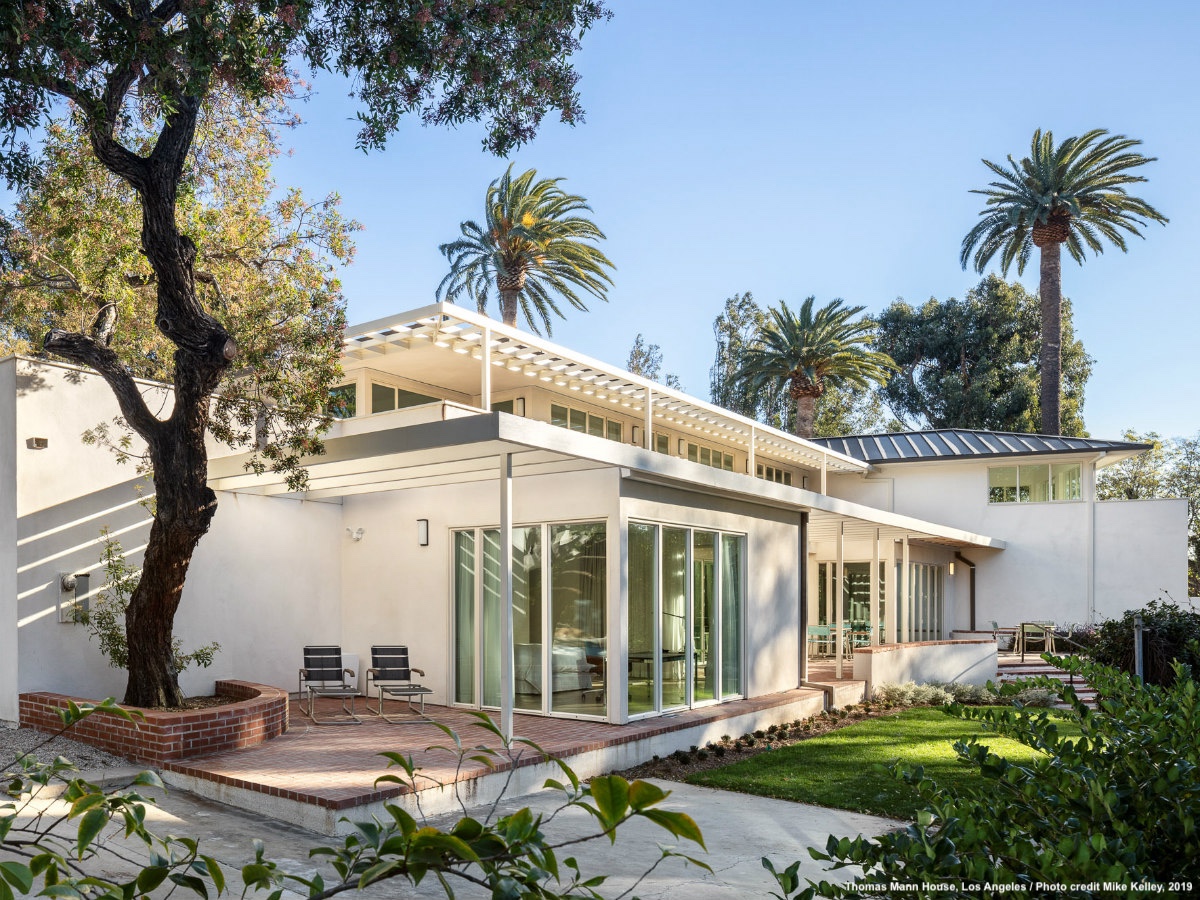
Mann wrote the 55 speeches that became “Listen, Germany!” over five years from his house in Pacific Palisades, Los Angeles, a neighborhood today shared by Adam Sandler, Kurt Russel, and Steven Spielberg. The house’s legacy is deeply intertwined with Hollywood and U.S. politics during World War II and is an emblem of German-American relations.
Purchased by Germany in 2016, the house is a landmark of public debate. Embracing its history as an intellectual space frequented by icons like Albert Einstein, Greta Garbo, and Jack Warner, co-founder of Warner Brothers Studios, the Thomas Mann house now hosts fellows from Germany in the hopes that their work will inspire the kind of debates and discussions that proliferated in Mann’s day.
Such was the case on a recent Thursday afternoon, when members of the German and U.S. media sat down for a talk on political polarization in the news. Led by fellow Susanne Beyer, a journalist at Der Spiegel in Berlin, and Heinrich Wefing, a journalist at Die Zeit, a room of full of columnists and editors spoke candidly about what they see on a daily basis: a changing appreciation for the value of news, the challenges of reporting on the “other side,” and what trust means to readers. Some time was put aside at the end to discuss solutions to this growing divide, but no conclusions were made – this was an open dialogue, after all.
Sitting on the perimeter of the room was Benno Herz, the program director at the Thomas Mann House. Herz had moved to Los Angeles from Germany one year after the residence reopened in 2018 and was looking for work in a cultural field. As a German, Herz grew up reading and digesting Mann’s work in school.
“Thomas Mann is such a canonical figure in the German context that you can’t really get around him,” he said.
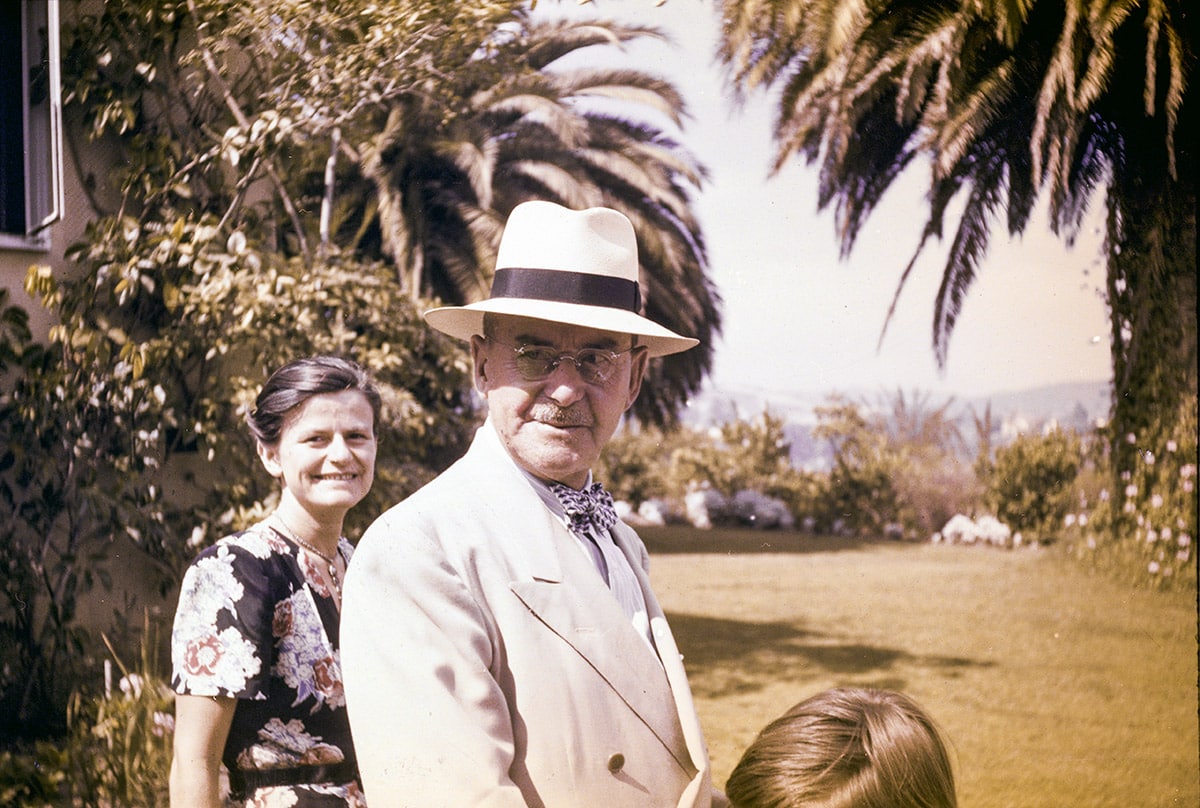
Herz feels as though he’s grown with the house – it was still under construction when he joined the team – and has co-published two volumes on Mann’s time in Los Angeles. He explained that by the time Mann reached Los Angeles in the late 1930s, he was already a famous figure. Mann first visited the city while on a lecture tour with the speech “The Coming Victory of Democracy.”
At that time, Mann held a Professorship at Princeton, which he secured with the help of American journalist, philanthropist, and civil rights activist Agnes Meyer, who was married to Eugene Meyer, businessman and owner of the Washington Post. A fan of his work, she gave him the professional opportunities that would allow him to afford to build his Palisades home. The Manns shared the street with other intellectual luminaries from Europe, such as composers Arnold Schoenberg and Hanns Eisler, earning the neighborhood the nickname “Weimar Under the Palms.”
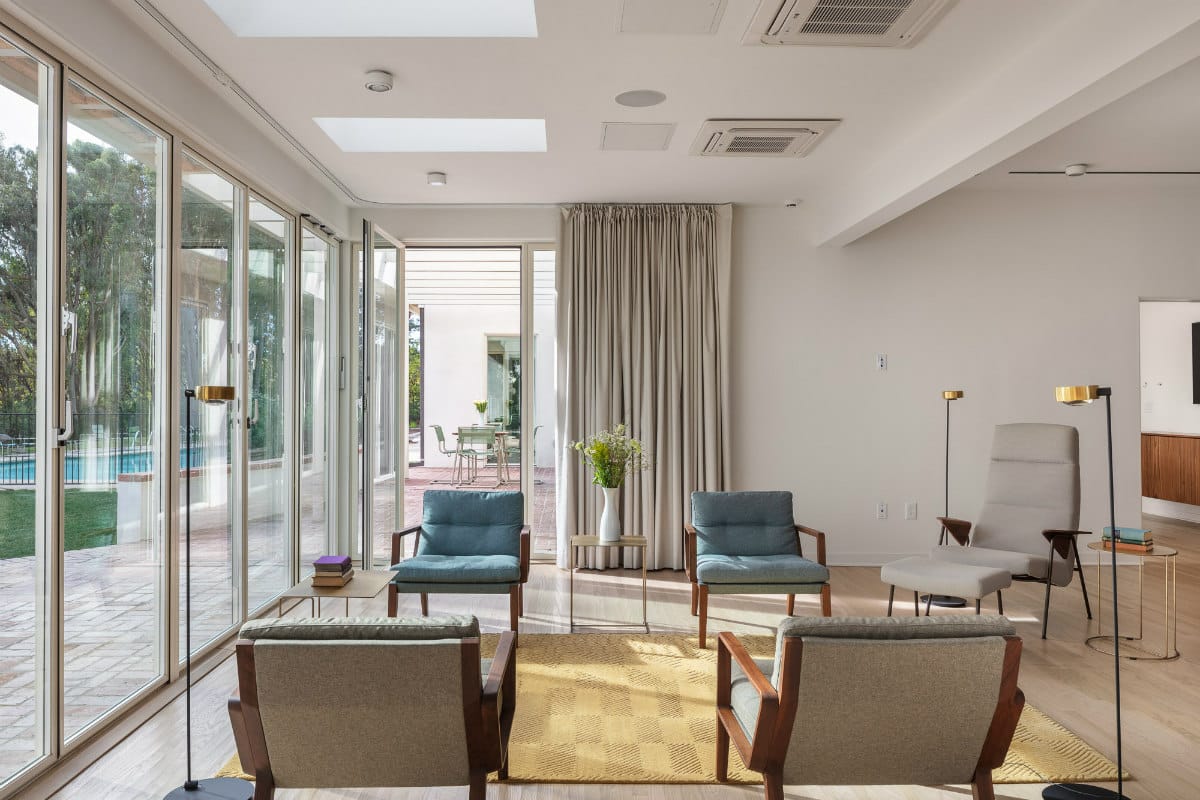
The Thomas Mann house, sometimes referred to as the “White House of Exile,” was designed by Julius Ralph Davidson, a noted modern architect. Commissioned in 1941, the house is a simple, if not beautiful, single-story home. In commissioning a modern design, Mann and his wife Katia, who moved into the home in 1942, hoped to project to the American public that they were progressive thinkers. But inside, they filled their home with dark rugs and wood furniture, a reflection of the upper-class life they left behind in Germany.
“It’s a very nice metaphor for the condition of living in exile; adaptation on the outside, but this longing for a lost home on the inside,” Herz said.
***
By 1952, Thomas Mann had left the United States and returned to Switzerland. He was dealing with a shifting political landscape in the U.S., which was slowly turning against him. He was a target of McCarthyism, which sought to weed out suspected Communists, particularly those who worked in Hollywood. LIFE magazine, which had featured a big story about Mann in April 1937, was now depicting him as a Communist.
In the years since, one other family owned the house, who knew its history and sought to preserve it. In 2016, the house went on sale as a “teardown,” inciting a U.S. and German media firestorm. Hearing about and knowing the history of the house, the German government purchased the home, updated it, and has the non-profit organization Villa Aurora & Thomas Mann House operate and program it.
Recommended Read: Open Houses #3: Artist Donald Judd, New York City
The German government also funds Villa Aurora, another artist’s residence located not too far from the Thomas Mann house. It was the home of former German exiles, the novelist and playwright Lion Feuchtwanger and his wife, Marta. These days, Villa Aurora hosts a residency for artists as well as a six-month fellowship for writers or journalists from countries that suppress freedom of speech.
Some strange coincidences have befallen the Thomas Mann house over the years. A portrait of Katia Mann, Thomas Mann’s wife, turned up a few years ago in a peculiar way. Known only through photos, the portrait was stolen by the Nazis in the late 1930s. In 2022, it appeared at an art auction in Canada, where Mann scholars recognized it. The owner claimed his grandfather purchased it from a German art dealer in Munich in 1945. The owner turned it over to the Mann family, who then lent it to the Mann house, not wanting to return it to Germany.
On January 7th, at 10:30 am, a wildfire started burning in Pacific Palisades. By 11:30 am, the Mann house had been evacuated, including the fellows staying there, who moved to local hotels. The team grabbed what they could, including the portrait of Katia.
Gratefully, the house survived. After five months of remediating, including replacing the insulation and soil in the yard, the house reopened in June. Herz and the team will continue welcoming international fellows to inspire and spark conversation and debate.
“We are obviously a nonpolitical, nonpartisan institution, but at the same time we stand in this long tradition of exiled writers,” Herz said. “Freedom of speech and the condition of being exiled from your home are very important to our mission.”