
Listen to the audio version of this article (generated by AI).
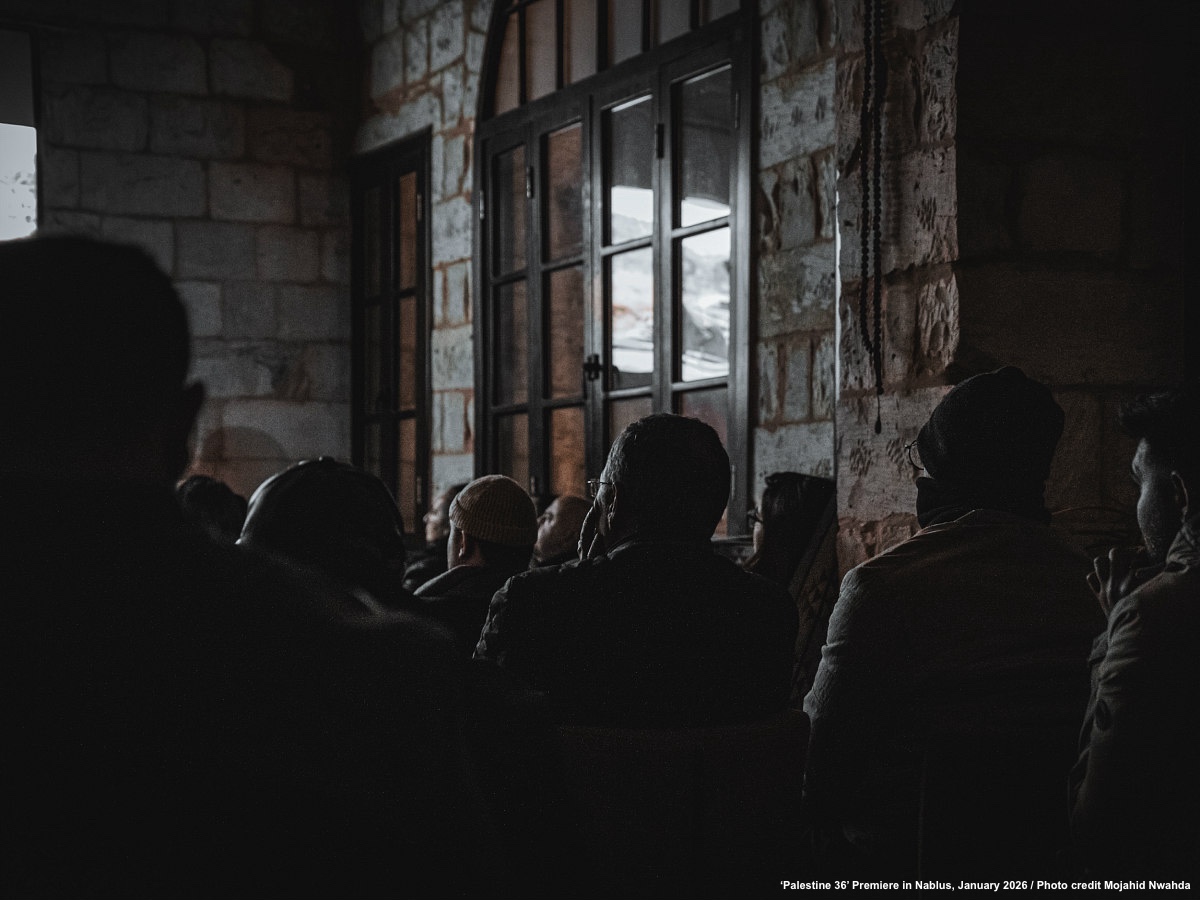
For a city with no movie theatre, the red-carpet premiere of the film Palestine 36 last Thursday, 22 January, in Nablus, where it was partly shot with Nabulsi actors, is as historic as the film itself. It may be down-at-heels compared to the premiere in Dubai two days later, but the meaning of this event was profound to the 38 ticket-buying attendees, plus a few who snuck in at the back of the literary and cultural hub, Al-Mubtada.
In this ancient, beautiful, yet impoverished street, a few extras at the back are privately welcomed. Besides, their bodies share warmth against the cold night air, the bite reduced by an electric heater beside the projector, the orange glow emanating from the bars promising more joules than it delivered.
Nearly two weeks earlier, the military had shot five people and caused fifteen more to be hospitalized with respiratory injuries, all a few minutes’ walk from the cultural hub, Al-Mubtada. The courage of Al-Mubtada in screening this film at their Ottoman palace inside the Old City of Nablus is notable, yet this resilience is reflexive. Their mission is to bring culture back to the Old City, a space for intellectualism, books, and all things related to the Arabic word. The audience members who attended the screening crushed a clear intention to scare them away.
People showed up to watch this film alongside some of its creators, who are local Palestinians (mostly from Nablus) and to celebrate their achievement, encouraged by the Bethlehem-based production team, Philistine Films, and FilmLab, a Ramallah-based organisation whose remit is to facilitate movie screenings across the West Bank, including Jerusalem.
FilmLab granted the Yabous Cultural Center in Jerusalem the rights to screen Palestine 36 on the same day as the premiere in Nablus. The film includes scenes shot in Jerusalem and was Palestine’s official entry to the Academy Awards. But on Thursday evening, a unit from Israel’s intelligence services, Shin Bet, closed down the event. The paperwork taped to the door of their theatre accused the film of ‘promoting terrorist activities… and promoting or supporting the activities of a terrorist organisation’. It refers to Israel’s 2016 Anti-Terror Law (Article 69) and ‘an order was issued prohibiting the aforementioned activities from taking place at the indicated location or any other location within the State of Israel.’
Meanwhile, at the premiere in Nablus, people were blissfully ignorant about the closure in Jerusalem, and as such, watched the film together in that cold, limestone palace, with a missing roof due to an airstrike.
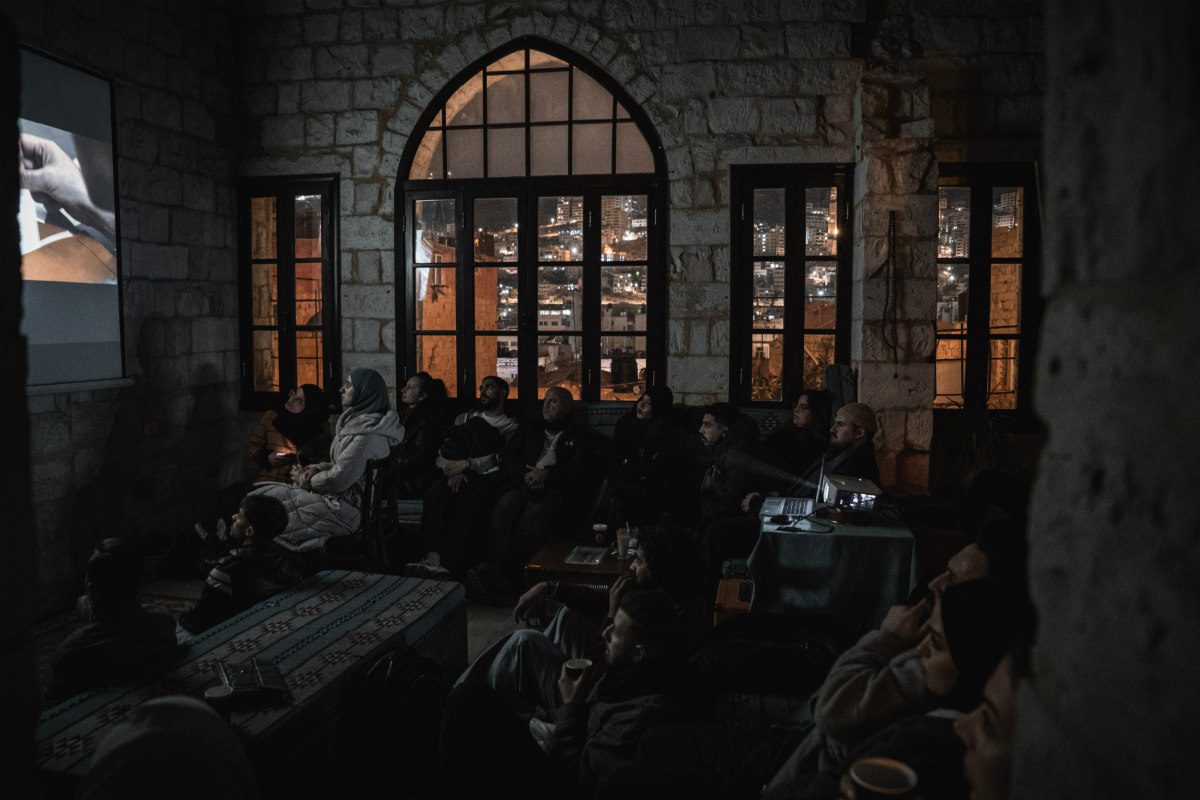
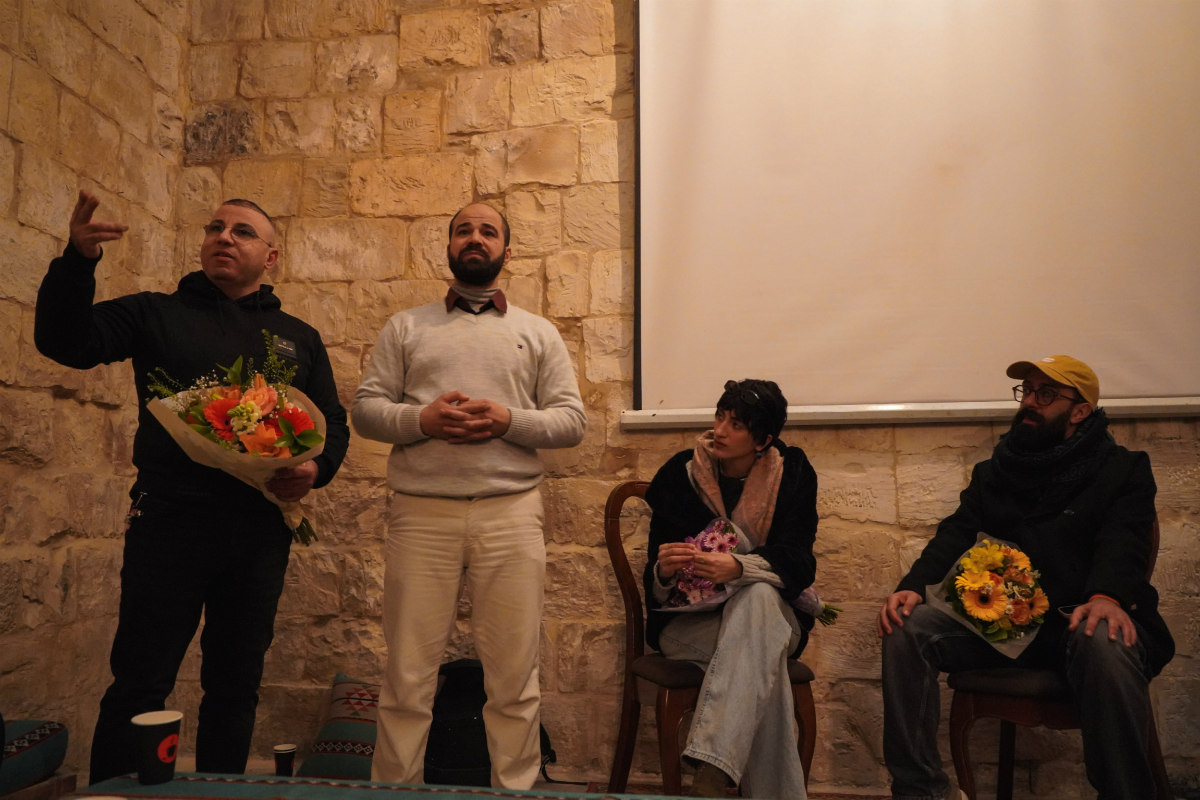
The film features Palestinian actors and film crew, alongside British actors Jeremy Irons, Robert Aramayo, and Billy Howle, and Irish actor Liam Cunningham, under the direction of Palestinian director Annemarie Jacir. Two Nabulsi members of the film’s crew, Marzouk Ismaeel and Omar Al Salem, and two actors, Motassem Abu Hassan and Shatha Yassin, were guests of honour at the premiere.
There was silence as the lights went up, and Basel Kittaneh, co-founder of Al-Mubtada, served tea. It caused tears and sobs of grief to issue from the women, while the men bottled it up.
In retrospect, it’s fortunate that the Nablus screening took place on the same night as the raid in Jerusalem, since the legal statement has now been made — all future screenings of this film face prohibition.
But why is this movie so dangerous to the state? Because it says the quiet part out loud — that the entire apparatus of oppression that exists in the West Bank was created by, and for, the British.
***
Palestine 36 is a historical epic that chronicles the Arab Revolt against the British Mandate in 1936, in contrast to 1948, when the Nakba unfolds, and people in the West start talking about Palestine. The parallels between the British system and the current Israeli system are revealed, with regular military invasions, the use of lethal force, human shields, dogs, house demolitions, and refugee camps as tools of control, as well as withholding drinking water.
The scenes that remain etched on the inside of my eyelids are the gentler ones. Not the bus full of Palestinian men that exploded with a British mine. Not the house that was detonated with an elderly Palestinian couple inside. Not the grenade that a Palestinian man threw at British soldiers who besieged the cave where he was hiding, but the quiet, daytime exchange between a mother and her daughter around eight minutes into the film.
The pair watch a group of Jewish arrivals building a colony on land belonging to the village, sunlight on their skin illuminating their pastoral beauty as they observe newly-arrived settlers in construction mode.
Fresh air and sunlight — the mantra for good health in 1930s Germany — arose in response to tuberculosis in World War I. It’s a scene of German athleticism, as the recently arrived immigrants stretch naked limbs for the carpentry tasks at hand, while these locals watch the recently arrived, unobserved. Berlin, Hamburg, Frankfurt, Leipzig, Cologne, and Danzig were their origins, where the anthroposophical philosophy of nature, sun, and fresh air developed. Jewish Germans coming to Palestine created their own spin on Steiner’s concept, as ‘New Jews’, overcoming the stereotype of European Jews as sickly and bookish. Ironically, the concept was first popularised in a book, ‘Altneuland’ by Theodor Herzl, in 1902, but the term was coined by Max Nordau, Herzl’s partner and the public face of Zionism, in the 1890s.
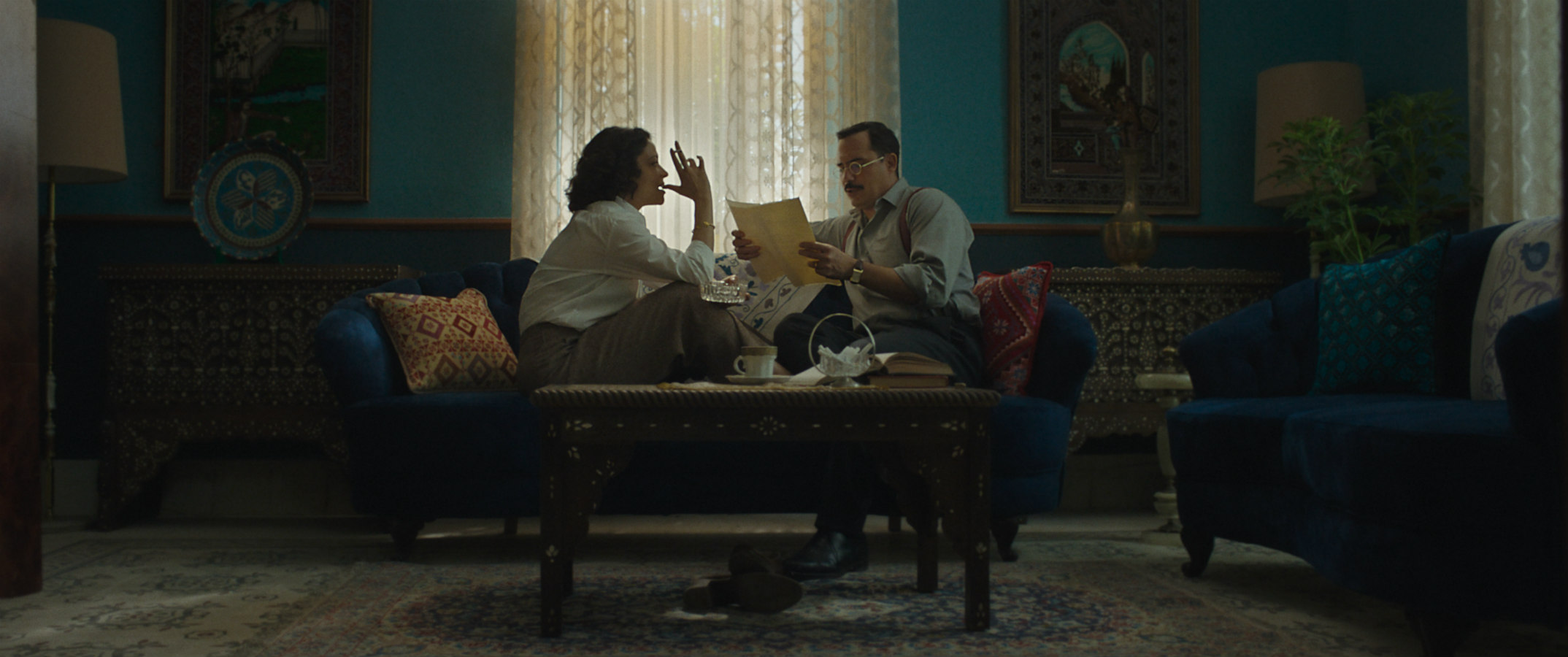
Their naivety is understandable — a widowed peasant farmer trying to answer the obliquely complex questions of her innocent daughter. She’s not versed in the issues of the day, and her character would indeed have answered incorrectly. But as a pivotal scene in such a rigorously researched film, an opportunity is missed to shine a light on arguably the most serious revelations of this period in time.
The girl, Afra, is about ten, and asks her mother, Um Kareem, why they are building the fence around the colony and why they came to live in Palestine. Um Kareem responds that their countries don’t want them, but this plural is false. The vast majority of Jewish people who arrived in 1936 came from Germany, specifically from the cities listed above, and this was for a razor-sharp reason: the Haavara Agreement. Afra’s question about the fence is left hanging, unaddressed, but could be answered that they are erecting a fenced ghetto, equally, to a protective fortress, because they know it will be needed as a result of their bad intentions.
Why the fence? Why did they come?
The Haavara Agreement was drawn up between two beneficiaries, Germany and Britain, and signed in 1933. The British Empire benefited from the transfer of German Jews to Palestine because they needed people loyal to Britain to manage the project on their behalf. At this time, the British Empire was strained, and they needed to delegate some of the outposts to curb this decline. Equally, the Third Reich benefited, as the ‘Jewish Question’ was resolved without the need for an answer that involved systemic extermination. A third beneficiary could be said to be Jewish Germans, who ultimately got their own state, but at what cost? Who would choose to be a coloniser and condemn future generations to an inherently violent, militaristic occupation? It was undeniably an upgrade from the final solution that ultimately arose, but it’s hardly the land of milk and honey.
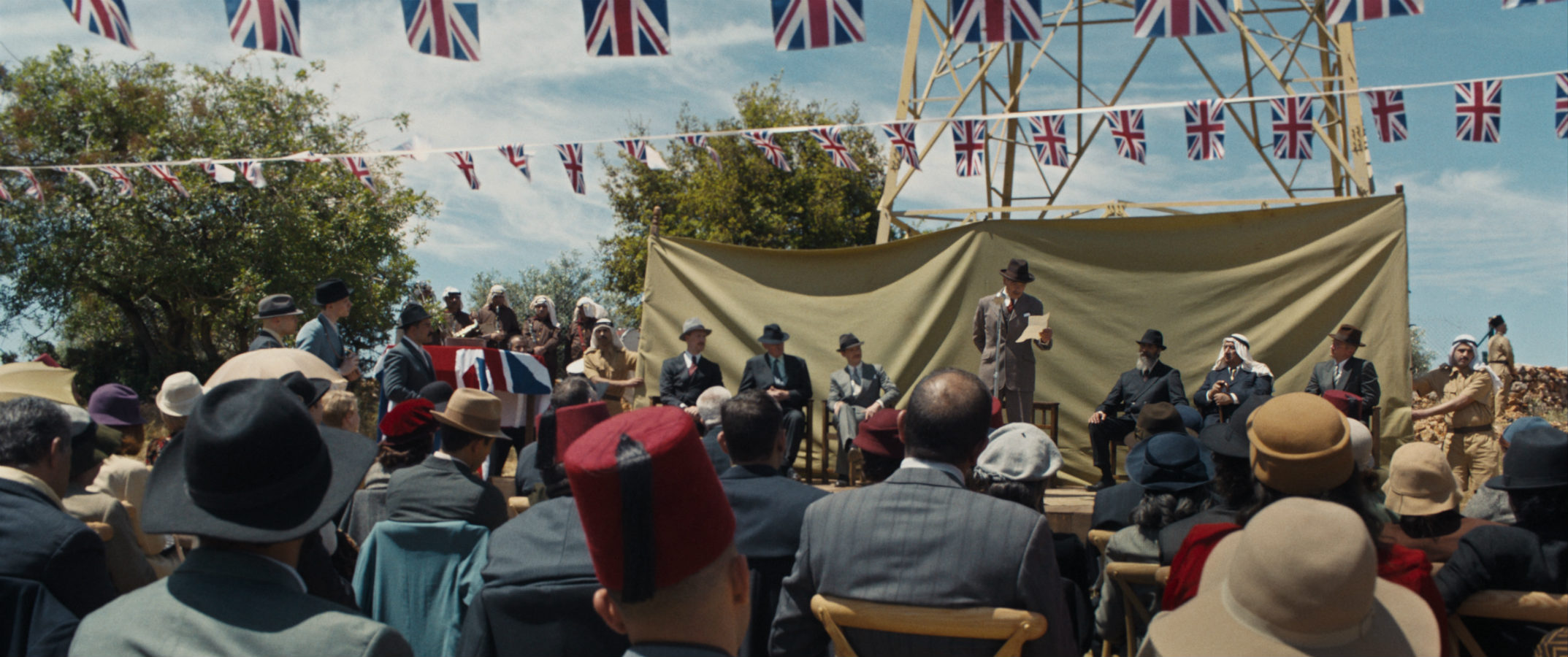
Haavara was financially beneficial to both the British Empire and the Third Reich, enabling the Anglo-Palestine Bank (later Bank Leumi) to transfer German funds to the new arrivals in Palestine and to support the establishment of the immigrants in an intermediary role on behalf of the British. Jewish people in Europe were beneficiaries of relative historical tolerance in the UK compared to continental Europe and, as a result, had an affiliation to King George V, who also died in 1936, and whose stamps are collected by Afra.
The Third Reich benefited financially from Haavara because the assets transferred to Palestine had to be spent on German goods. This effectively opened a new market for German goods in Palestine, including cars, machinery, and other exports, such as the drills seen in the hands of the men and women wearing shorts in front of Afra. Maybe the ongoing close relationship between Germany and Israel is partially based on guilt, but the financial benefits are overwhelmingly compelling, too.
Afra’s mother, Um Kareem, got the answer wrong, but her daughter’s question was right — answering this question is the first step to understanding the nature of Zionism, and arguably the best way to finding a just peace.
Robert Aramayo’s character, Captain Wingate, led a British training program for Jews, the Special Night Squads, starting in 1936. The initial aim was to protect British oil pipelines, but it increasingly started raiding villages and retaliating with group punishment. Wingate created the Jewish Supernumerary Police (Notrim) and their armed wing, the Jewish Settlement Police, both in 1936, for which he was later awarded the Distinguished Service Order. Aramayo’s compelling portrayal displays a fascist fuelled by Christian Zionism, with its central narrative of Jews returning to Zion in order for the Armageddon prophecy to come true. This belief underlies his insistence that Billy Howle’s character, Thomas Hopkins, stays in line.
Meanwhile, Thomas Hopkins increasingly expresses his horror about what’s going on. Howle read Hopkins’ diaries to prepare for the role, noting the transformation of this proud British diplomat into an anarchist. Ultimately, Hopkins left Palestine and, according to Howle, ended up a part of the anti-war underground in London during World War II. And as art imitates life, Howle himself has become an outspoken advocate for Palestine, notably making speeches at rallies in London in 2025.
Recommended Read: Standup Comedian Noam Shuster Eliassi: “Coexistence, My Ass!”
Increasing unease with their intermediary role in 1936 led some Jews to attack the British, as well as Palestinians. Webs of violence increased, with Jewish groups splitting, forming, and recombining. Ultimately, in 1944, the British and their Jewish paramilitary group, the Haganah, declared a ’Hunting Season’ against all the other Jewish militias. Finally, the British enlisted Haganah members into the British Army and trained every single future leader of Israel’s military. When the State of Israel was founded in 1948, the Haganah became the Israel Defence Forces. And thus, a British proxy was created in the region, with Palestine controlled by British-trained, locally installed, loyalists.
Whether by reparations from the British and the EU, perhaps, or a national reflection within the Israeli population, Palestine 36 asks questions that could substantially alter the reality for millions of people living on this patch of land. For this reason, it challenges the status quo. It is a dangerous film if the status quo is your friend, and the warning note on the door of Yabous Cultural Centre makes perfect sense in this light. It’s worth noting that the film is a co-production with the BBC and other British partners, at a time when the UK public is starting to reckon with its brutal legacy.
***
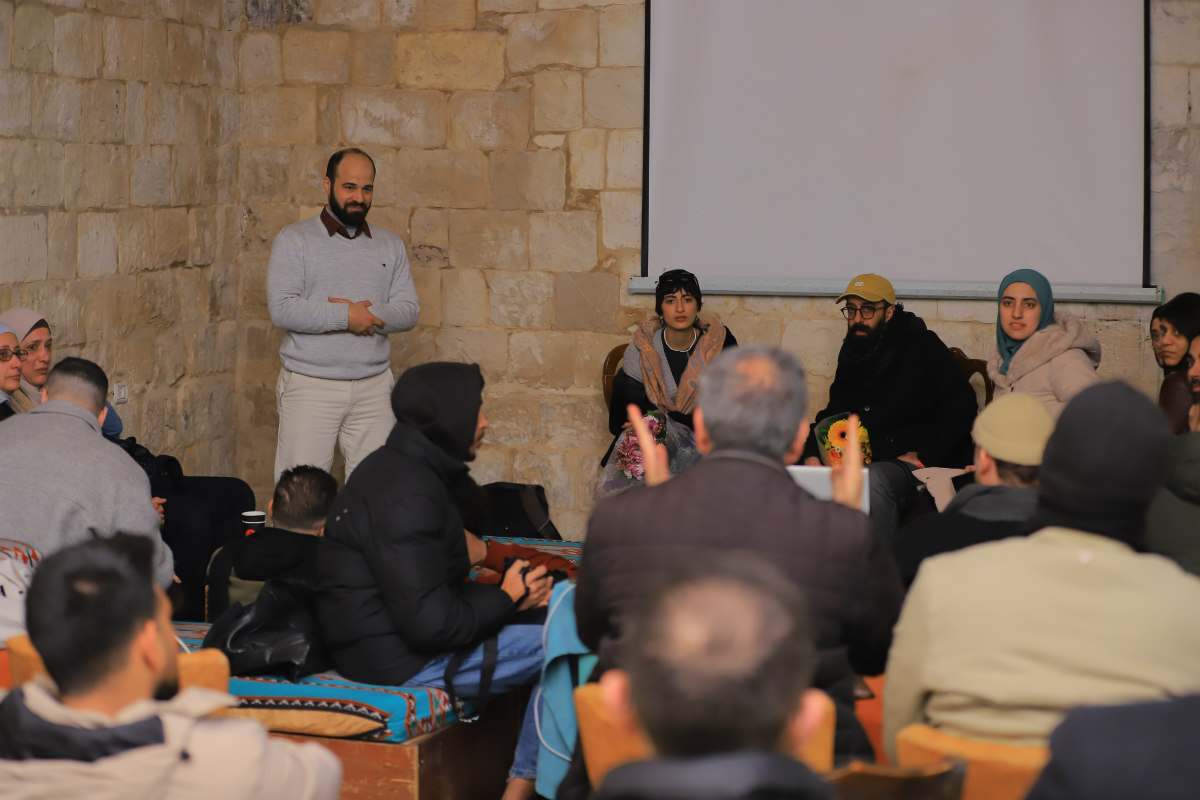
The post-film discussion of Palestine 36 centred on the triumphs and challenges of the cast and crew, as Shatha Yassin and Motassem Abu Hassan initiated the conversation from a pair of hand-crafted Syrian chairs staged on a red-and-pink hand-tufted rug.
Then the prop-maker, Marzouk Ismaeel, stepped up to talk about his satisfaction with recreating a 1930’s vintage car and bus, and with working on the period restoration of the village of Farkha, which served as the set for the fictional village of Al-Basma, close to Nablus. But the vehicles he made weren’t used, because the massacre on 7 October 2023 led to the closure of the film’s shoot in the West Bank, and the project was forced to move to Jordan to be able to continue after the tightening of restrictions and the escalating dangers.
The actors and prop-maker were given bouquets and warm applause.
Finally, B-camera operator Omar Al Salem spoke about his similar emotional curve, from the initial joy of being hired for the movie to his later disappointment when the shoot moved to Jordan, leaving all the Palestinian crew without employment due to travel restrictions. A seasoned professional, he worked as a Third Assistant Camera on Farah Nabulsi’s film, The Teacher, which won eighteen international awards in 2023. Both Palestine 36 and The Teacher featured Palestinian actor Saleh Bakri, part of a small community of highly skilled talent that comprises the Palestinian filmmaking world. It’s this limited pool of professional cast and crew that has led to a crunch in work opportunities, as multiple film productions respond to growing international interest in stories about Palestine.
Three of the fifteen feature films shortlisted for the 2026 Academy Awards were about Palestine. The filmmaking community is navigating this increase in opportunities alongside growing restrictions and the rise in violence that stimulated this elevated international interest in their stories in the first place. None of the Palestinian-made films made it to the final Oscar nominations. Yet the Tunisian-made film, The Voice of Hind Rajab, did get through, as a true-life story about Gaza, made in direct collaboration with the Palestinian Red Crescent.
This tightrope ultimately leads Palestinians to leave and pursue their careers overseas. Careers in a creative field are always volatile, but the added disruptions in the West Bank make cultural workers emigrate, understandably.
There is no way to win with the stakes as they’re currently set. Either stay and face enormous obstacles, or leave, and lose your initial creative inspiration, connection to home, and sense of purpose.
This film will be seen by history as a marker on the road to justice, exposing the origins of the issues in the gentle, innocent questions of a child. Afra didn’t know what she was watching when she and her mother sat in that sunny field, looking at the new colony being built, but she asked the right questions. These are relevant questions to ask now, as the new colonies are announced by the coast. The cornerstones of so-called New Rafah and New Gaza were visible in 1936.
Director Annmarie Jacir’s choice to focus on this period is the key we need to unlock a better future for everyone, including Jewish Israelis, as they drop their shackles alongside their whips. By exposing the centrality of the British to the creation of the problem, a future solution inches closer to hand. No wonder that threatens Shin Bet, and brought them to the door of a theatre in Jerusalem on that same, chilly night in January.
As Annmarie Jacir said, “This is before the Holocaust, but, of course, you know, Jews were fleeing for safety. I wanted to show that. You see in the archive people waiting to get off the boats. You see, in a woman’s hand, a Nazi passport. I really felt that was important to the whole world. You know, Palestine has always been a place of many communities.”
Jacir is correct, there was a stick, as well as a carrot. A vulnerable population that could be manipulated to serve a cohort of European powers, with a need for oil and control of shipping lanes, at the crossroads of the world. With a trajectory already set towards the Holocaust, who wouldn’t accept such a deal? Especially with their Biblical origin stories, and centuries of pain behind them, at the hands of European Christians. An intersectional plan to benefit a powerful elite and an underdog, with Palestinians underneath the underdog.
“I wanted to focus on the British complicity in this mess that we live in today. But it’s also important to understand the whole way Zionism was part of this. The Zionist project was in line with the project of empire and colonialism, and how to take over and control a place, and eventually disinherit the people who live there.”
It’s moments like this when Israel’s mask of democracy slips — with the Anti-Terrorism Act applied to a film. The dystopia is displayed for all to see. Equally, it’s a stamp of authentication that everyone should not wait to watch the movie, in case it is banned in their own location.