
In early January, I wrote a story for The Urban Activist about Tehran’s underground music scene. It centered on the clandestine concerts in soundproofed villas on the city’s outskirts, the DJs spinning Melodic Techno into the early hours, the café owners who sealed their heavy wooden doors and calibrated their sound systems “with surgical precision” so the music was “crystal clear for the audience but practically a whisper to the outside world.” It was a scene built on love, defiance, and the constant management of fear, yet fueled by the hope for gradual change in Iran from the bottom up.
The story was momentous. Millions of Iranians had just taken to the streets in protest against a year of economic free-fall and the collapse of the local currency. But the government’s response was brutal. Over 3,500 people were killed in just two days. Authorities imposed a near-total internet blackout that remains in place to this day, deployed the elite Revolutionary Guard (IRGC) to crush the worst civil unrest since the 2022 Woman, Life, Freedom protests, and swept more than 990 people into detention. It was an existential battle for the survival of an authoritarian regime change in Iran.
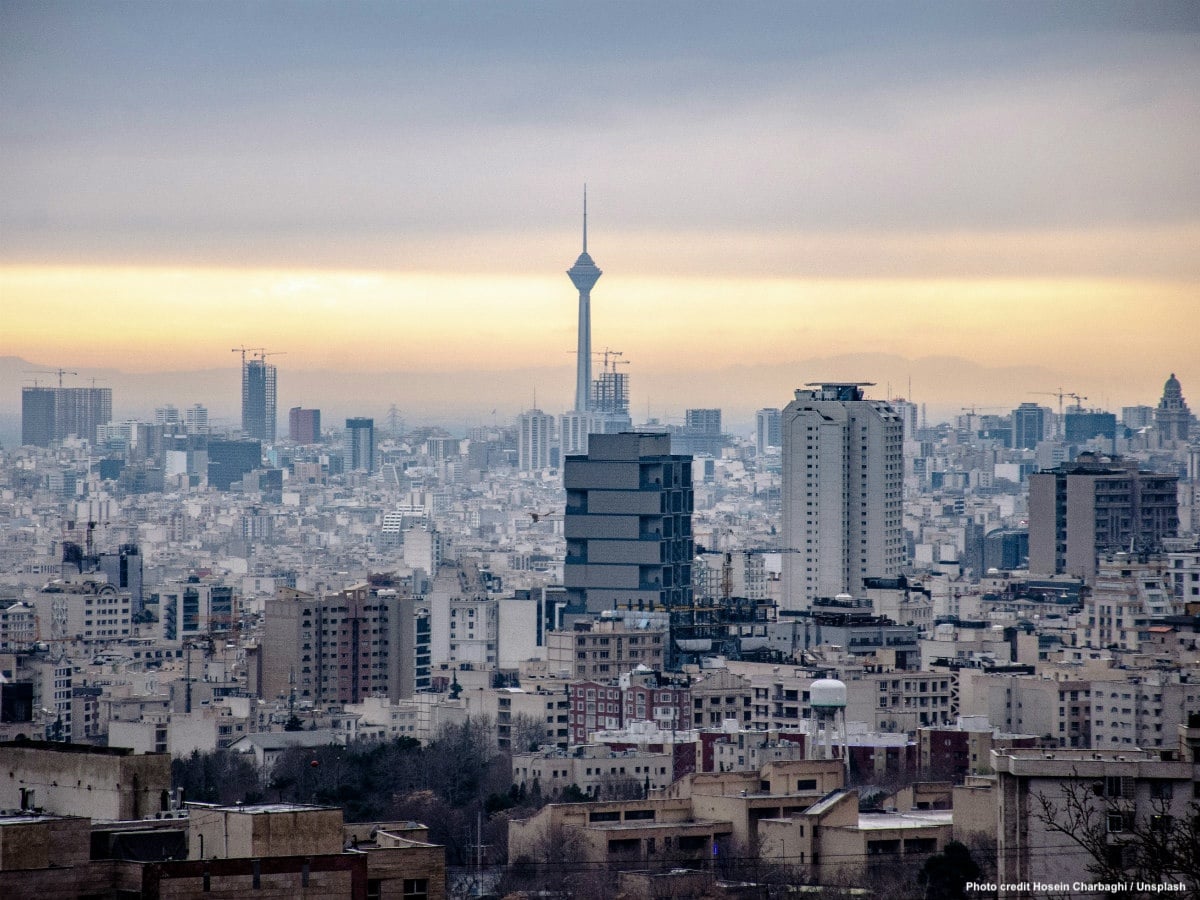
Less than two months later, the country faces a different and far more existential threat. An US-Israeli military assault has claimed over 630 lives and injured almost 7,000, destroyed critical infrastructure across energy networks, water systems, hospitals, schools, transport hubs, and housing; and effectively dismantled what remained of that underground spirit of resistance.
Recommended Read: Music Gigs in Tehran Defy Iran’s Cultural Red Lines
I spoke again to two of the people whose voices anchored the original story to find out whether change is still possible in Iran: Amir, the 29-year-old civil engineer and underground DJ, and Ali B., a service worker and a concertgoer. From the other two, Sahar (not her real name), another concertgoer in her twenty-seven-year-old, and Mahmoud (not his real name), a veteran concert organizer in his mid-50s, I haven’t heard back.
For Amir, the collapse began even before the bombs fell.
The January protests shattered the psychological scaffolding on which underground culture depended.
“Practically since the January protests began, everything has ground to a halt,” he says.
Promoters stopped organizing events entirely, telling him the city was grieving, that people simply wouldn’t show up anymore.
Amir attended one underground gathering after the uprisings. It was a single, fragile attempt to hold on. But the collective trauma in the room was impossible to escape. “The mood of the crowd was broken,” he says. “I saw a girl in the middle of the set who just broke down. She walked out onto the balcony and wept uncontrollably.”
Then the military strikes began. The once vital outlet for the city’s youth fell silent altogether. The securitization of the public realm and the constant threat from the skies have dismantled both the geography and the appetite for music.
“Since the war started, it’s just over,” Amir says. “There is absolutely nowhere left that you can call safe.”
Much of his social circle has fled Tehran for smaller cities in the interior. Those who remain, like him, have retreated entirely into domestic space. His world has contracted to his apartment, where he reads and plays acoustic guitar alone. When he does venture out, navigating checkpoints to visit friends, they sit together inside and do not leave.
Amir came of age playing music in the margins of a system determined to erase him.
He once described the hypnotic release of a Melodic Techno set: industrial basslines reflecting the city’s grit, layered with ethereal synthesizer melodies that spoke to a collective yearning, a space where inflation, politics, and fear dissolved into rhythm. That world is gone now.
Recommended Read: The Women Poised to Hold Peace in Congo
When asked whether foreign military intervention might bring freedom, his answer is unsparing, as he dismisses the romanticized notion of an armed civic uprising.
“Freedom does not come from aerial bombardment,” he says. “I have no hope.”
For the city’s working class, the privilege of staying home is simply non-existent. Ali B., a service worker who, before the war, dreamed of one day attending a public concert by classical vocalist Homayoun Shajarian in Tehran’s Azadi Square, now navigates the brutal economic fallout of the war.
There is no retreat into the safety of home, friends, and family. His monthly wage of roughly 260 million rials ($186) leaves no margin for shelter-in-place. Half the custodial workers at his company were laid off when the war began, and he has absorbed their shifts, working longer hours without additional pay.
His wife and eight-year-old daughter refused to evacuate to the family’s hometown in Tafresh, a city in Markazi province, central Iran.
They said, “Unless you come with us and are safe, we won’t go anywhere safe either.”
Before all of this, music was how Ali B. coped with life’s daily grind. He would listen to classical Persian vocals late at night while scrubbing empty office floors, sustaining himself on Homayoun Shajarian’s voice.
Now even that is gone. The internet blackout has made streaming or downloading impossible. “I just don’t have the heart or the spirit for it anymore,” he says. At home with his family, his eyes are locked on the news. “We are waiting to see what happens,” he says, “and when this war and terror will finally end.”
Back in January, I mentioned that, for me, those clandestine music gigs in Tehran were a fight in which the warriors may not advance at breakneck speed toward their goals. Still, they’ve moved steadily, inch by inch, ensuring that today’s urban Iran bears little resemblance to the decades before, and culture brings about change. I expected the struggle for change to be tough and long to see how the music plays out. For now, though, the music has fallen silent.
This article is published in collaboration with Egab.