
Listen to the audio version of this article (generated by AI).
Armed with clipboards and caffeinated beverages, 1,500 volunteers meet on a winter night in Paris. They will scour every street, park, and metro of the French capital, asking literally everyone they meet a simple but loaded question: “Are you sleeping on the street tonight?”
At 10 p.m., team leader Madeleine Manavit, 22, ushers her group out of the imposing 10th district town hall and into the cold night. Most of them came straight from school, internships, or jobs. After a briefing on security rules and a complimentary meal, the ‘équipe’ of five, aged 22 to 66, head out with good spirits, armed with notepads and draped in their blue traffic vests.
Under a light drizzle, the team carries instructions to the letter, asking everyone they meet the same question, even if they are coming out of expensive cars or groups of teens headed to a party.
Madeleine and her flatmate Alice, also 22, came to Paris for their studies. Eric, 66, is a retiree who lives in the neighborhood and is participating in the Nuit de la Solidarité (Night of Solidarity) for the first time. “I see more and more people on the streets here,” says Eric. “Politics don’t matter at this point. We find common ground in helping people.”
The Night of Solidarity is an annual count in the Greater Paris Region, initiated by Mayor Anne Hidalgo in 2018 to provide critical data amid a decade-long homelessness crisis. Each winter, Paris officials rely on the efforts and expertise of over 120 local associations and some state agencies to gather a one-night snapshot of homelessness. Volunteers from these grassroots groups act as team leaders and help organize the operation in their own neighborhoods.
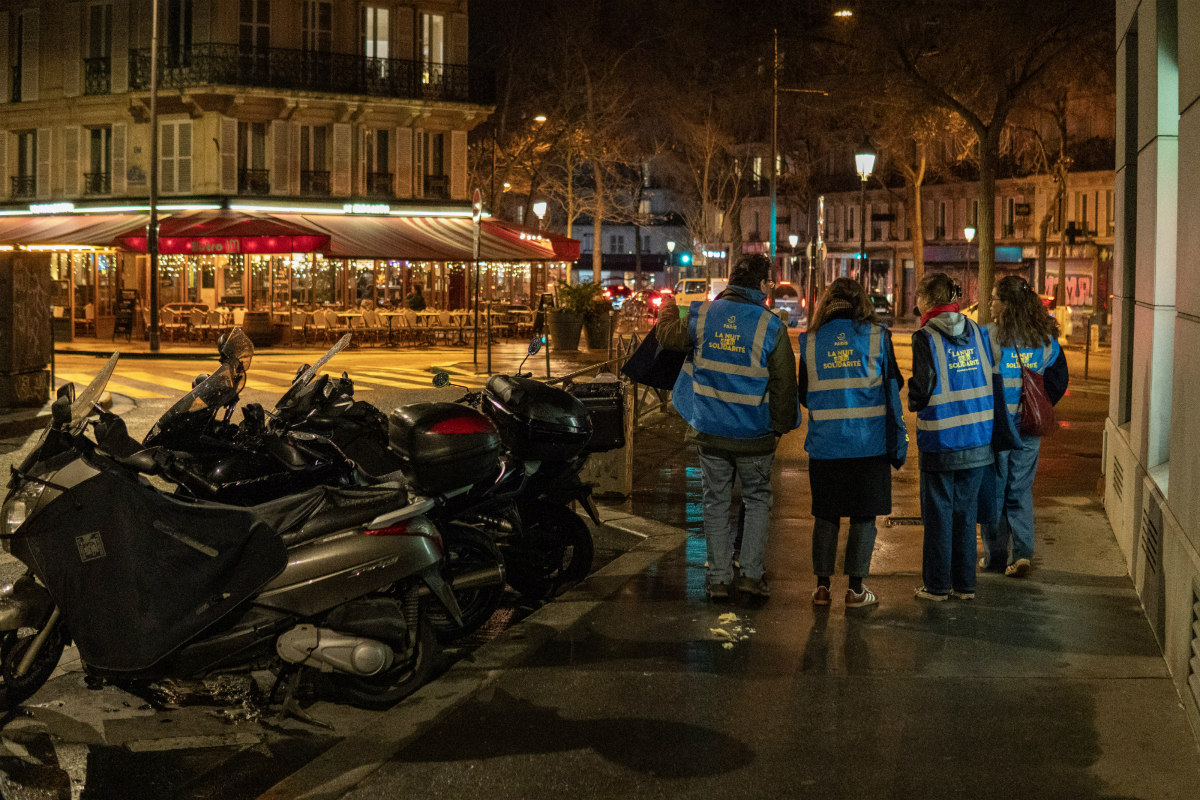
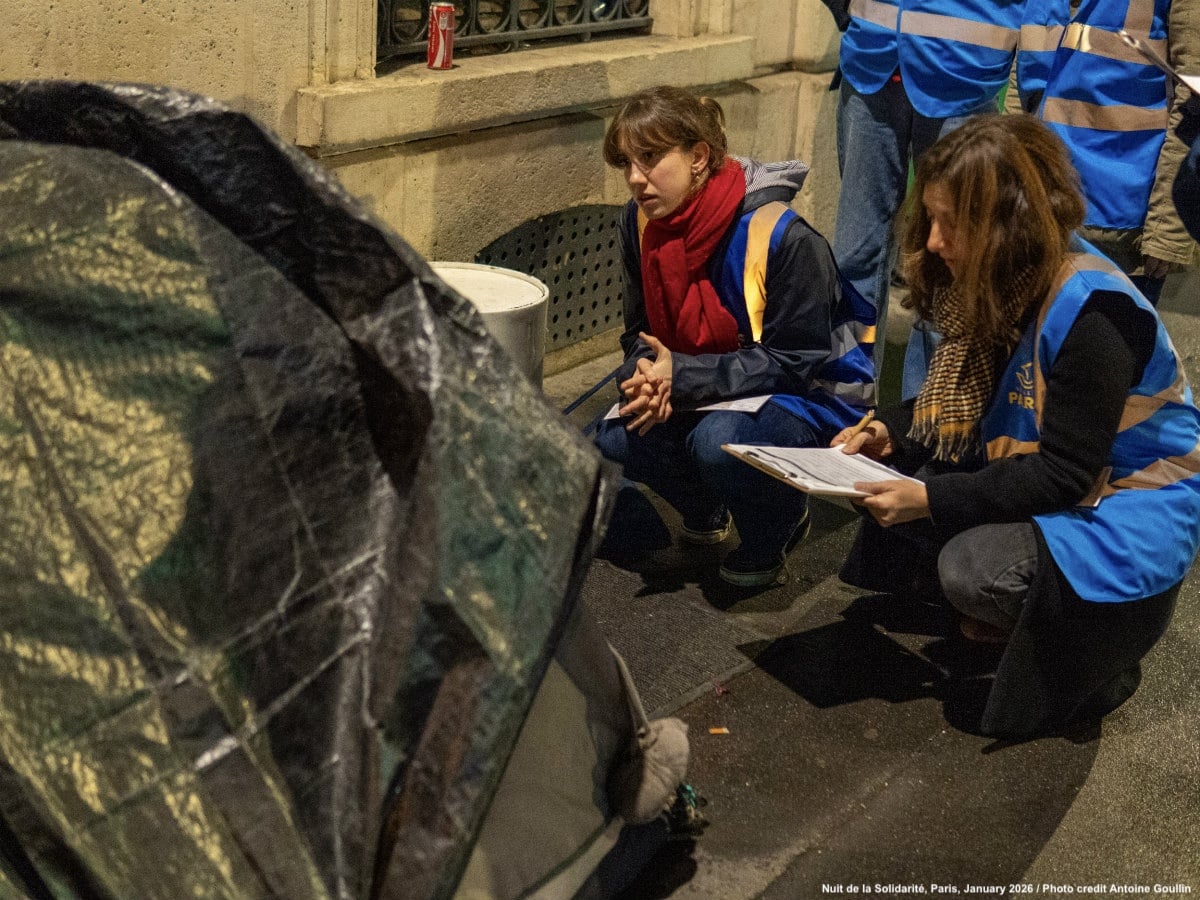
Madeleine and the volunteer group pace quickly through emptying streets, chatting and getting to know each other as they go. In the first 15 minutes, they spot a tent near a French bistro. Inside, a man lies in a sleeping bag, watching YouTube on his phone. Madeleine politely crouches by the opening, and after some confusion about which language to use, she asks, in English, “Are you planning to sleep here tonight?”
Lal, 31, agrees to share his story and answer questions. He’s from Djalalabad, Afghanistan. “I left on foot in 2012. I arrived here 4 years ago, from Germany.” On his phone, Lal shows pictures of himself in uniform. “I used to be in the Afghan army. I ran away because of debt, and after the Taliban killed two of my siblings.”
One by one, with considerable care, Madeleine lists the questions on her notepad. Do you have a job you will attend tomorrow? “No, still looking,” Lal replies. Were you able to shower today? “No, not today. ”
Finally, “Is there anything else you need help with?” Lal gestures to the roof of his tent. “It’s broken,” he says, pausing. “Also, I know I have mental health problems. I would really like some help with that,” he adds.
Volunteers write down testimonies like this that decipher homelessness across Paris. As Madeleine’s group continued, they met 18 people in their 5-kilometer walk.
The job isn’t without its challenges. While talking with a man visibly struggling to stand, the team realizes they are blocking access to a public syringe dispenser. The neighborhood borders the La Chapelle Area, which has regularly suffered from drug use epidemics in the past decade. But every interaction goes smoothly, under Madeleine’s guidance.
Throughout the night, volunteer groups encounter people of all ages sleeping rough, both from France and abroad. A young man named Abu, from Dakar, Senegal, says he won’t risk sleeping and prefers to walk around until he can attend his cooking job. Later at a bus stop, Sai, 54, from the Paris region, is spending his first night outside. He agrees to answer some questions, but soon interrupts: “I mean no disrespect, but what you’re doing isn’t useful to us. What we need is food and a place to stay.”
Towards 2 a.m., the tour of the area is completed, and the team heads back to the town hall with the gathered data.
Street counts exclude people who are “couch surfing,” living temporarily in motels, or sleeping in unconventional dwellings (such as cars). Data gathered in Paris presents a static picture at a specific point in time — whereas homelessness is most often a dynamic phenomenon. But even if street counts don’t provide a full picture of the experience of homelessness in Paris or elsewhere, they are still a key tool for local policy. “It’s a bare minimum estimate. We always miss people, and some cities [of the Greater Paris Region] don’t participate, but it allows us to take action,” explains Léa Filoche, from her office by the iconic Paris town hall. “Through these answers, these numbers, we can readjust the way we work.”
Filoche pilots the massive Solidarity Department of the Paris mayor. She says the Solidarity Night has helped the Paris town hall and local mayors in and around the city conduct more impactful policies to tackle homelessness.
Based on needs expressed during the count, willing mayors around Paris have implemented measures such as free wash stations, lockers where homeless people can store their belongings, and addresses where people can receive mail. According to town hall statistics, the number of locker rooms made available to people experiencing homelessness in Paris has doubled since the first edition of the night.
Recommended Read: Feeding Pets: A Canny Idea Helps the Homeless
The street count also gives information on how to manage these developments efficiently. “Before the count, we believed only around 7% of homeless people were women. It’s actually closer to 14%, and their biggest challenge was access to a safe place to clean themselves,” explains Filoche. Since then, many Parisian shelters and wash stations have dedicated, female-only hours.
“My role is to encourage local mayors to implement these things,” says Filoche. “But it’s a constant financial and political battle. One in which we get very little financial help from the state,” she adds.
In her final year in the role, Filoche spent the night with workers from Paris’s public transport operator (RATP) scanning the metro. For the first time this year, a group of 60 volunteers joined the effort to count people using the metro infrastructure to spend the night. “We needed their expertise to search the metros, since people are very good at hiding themselves. This is why working with local associations is so important.”
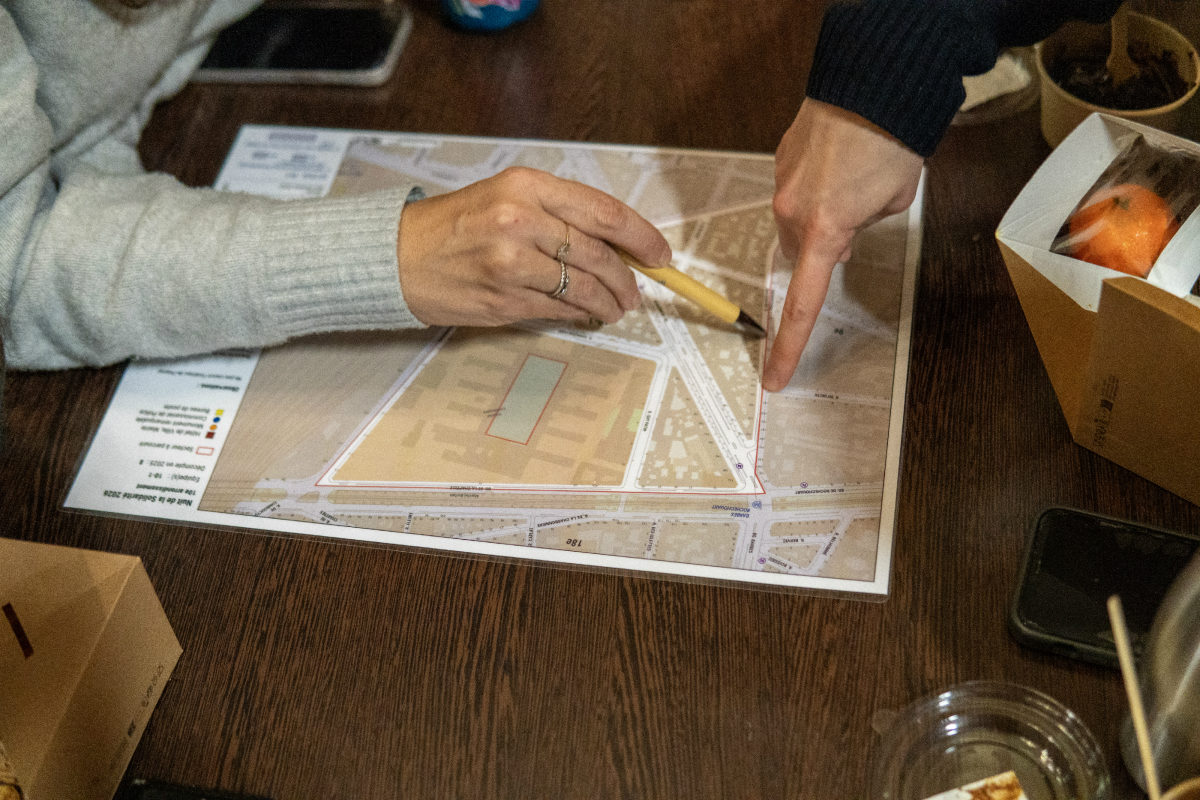
The Paris Urban Planning Workshop, known as APUR, is responsible for compiling the data gathered across the city and turning thousands of handwritten questionnaires into detailed reports used by municipalities.
Clément Boisseau, head of Social and Health Studies at APUR, says the goal is to produce a number that both activists and public officials can rely on. “In the past, some ministers talked about no more than 50 homeless people in Paris, while some associations estimated around 5,000. The point of this count is to establish a scientific figure everyone can agree on.”
Recommended Read: Who Can Afford to Live in Barcelona? Spain’s Housing Crisis Exposed
“Participation is voluntary: each year, all mayors are invited to join the operation, but some municipalities choose not to participate or feel they lack the resources to do so,” says Boisseau. But even with these limits, he states that the results are strong for the covered area because we apply the same methodology each year. “We encourage everyone to participate, because volunteers always spot new needs, new people, and new situations that mayors weren’t aware of,” he adds.
To make the results comparable from year to year, the operation follows the same protocol. “We always do it in winter, when emergency shelters are at their highest capacity,” Boisseau says. “And we start at 10 p.m., because we know that if someone is there at that time, they will most likely sleep there.”
The total number of people sleeping rough has remained relatively stable since the pandemic. Still, the 2026 count recorded 3,857 people — a 10% increase over one year and a 30% increase since 2022 — and the highest number ever recorded. Of those counted, 70% were found on the streets, while the remaining 30% spent the night in various places such as parks, emergency exits, the woods around Paris, or in subways and stations.
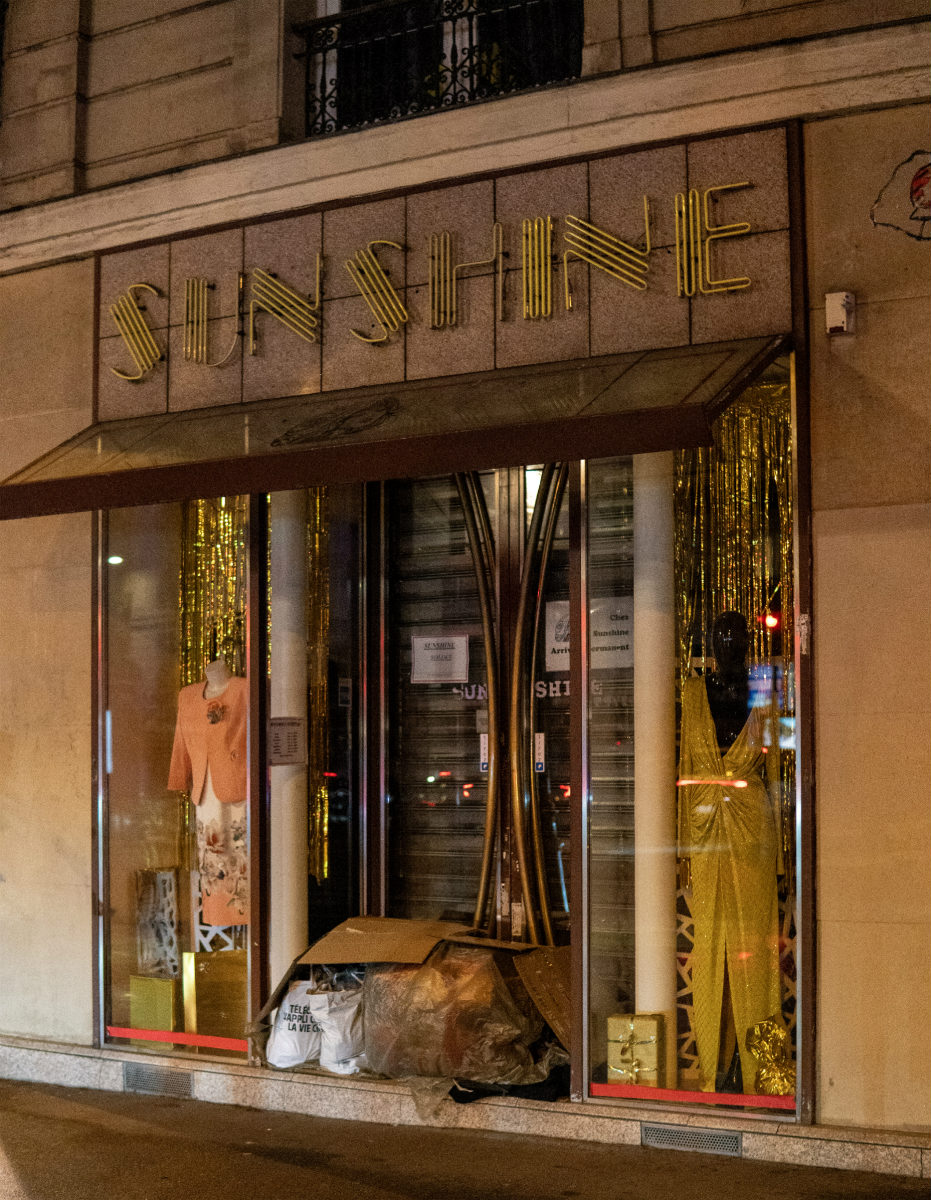
“There are some answers being put into place to house these people: there have never been so many shelter places, and new programs are created each year,” Boisseau explains. “But the number itself shows the problem is far from solved.”
While volunteers fanned out across the city to conduct the count, around 80 homeless families without shelter gathered outside Paris’ city hall in protest. As Mayor Anne Hidalgo delivered a speech, messages were projected onto the building, and chants echoed through the square: “Counting is good. Housing is better.”
The demonstration was led by refugee support organization Utopia 56 alongside the housing collective Le Revers, founded during the wave of evictions ahead of the Paris Olympics. Paul Alauzy, spokesperson for Le Revers, described the urgency of the moment.
“We made phone calls all day trying to find them somewhere to stay.” Alauzy has spent more than a decade providing psychological care with Médecins du Monde in Paris’ makeshift camps. He stressed that the protest was not meant to undermine the Night of Solidarity initiative.
“It encourages Parisians to reach out to their marginalized neighbors”, he says. “But while people cheer in this massive palace, there are pregnant women, babies, and children sleeping outside.” The same night of the protests, Paris City Hall officials agreed to negotiate, and exceptionally agreed to provide immediate emergency housing to the 80 people standing outside the city hall.
“Housing 80 people won’t solve the issue. 300,000 live in temporary housing, and 150,000 are homeless. It’s a humanitarian crisis unworthy of France,” Alauzy explains. “What we need isn’t just emergency fixes, it’s to completely revolutionize the way we think about solving homelessness, build new solutions, and fight to implement them.”