

This article is part of a series on rethinking museums in cities and how some of their progressive actions address the challenges of our time, in partnership with 1014.
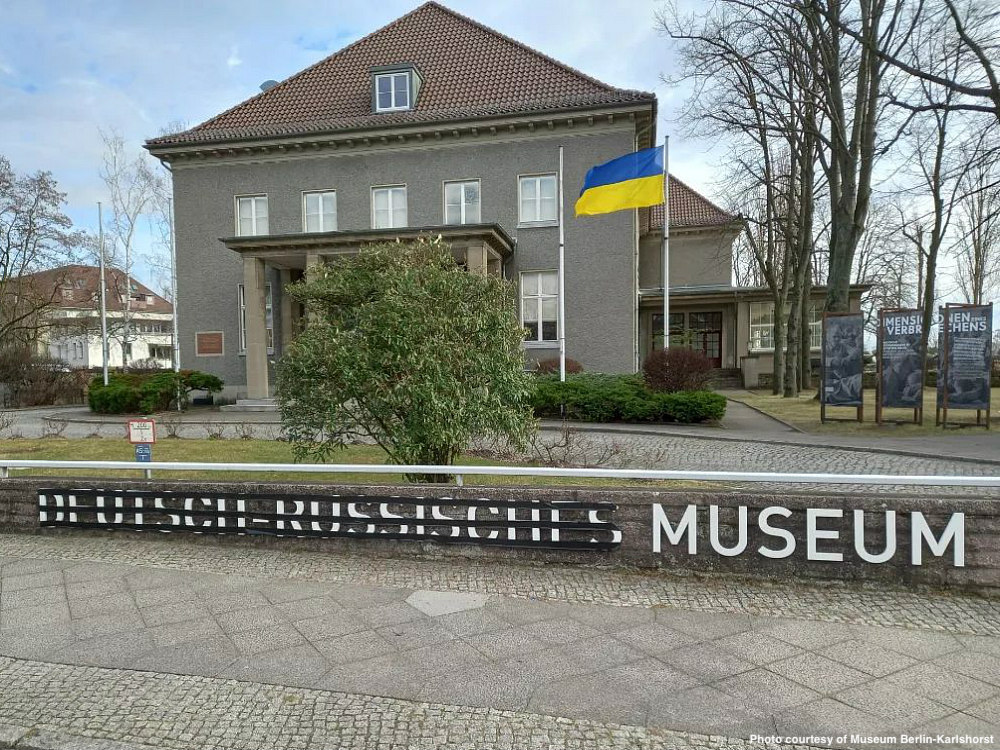
There are not many museums in the world that have acted as quasi-diplomats with Moscow. But in the German capital’s unique history, the Museum Berlin-Karlshorst, formerly known as the Russian-German Museum, is of that kind.
Not only years of collaboration with the Central Armed Forces Museum in Moscow, but also the inclusion of the Museum of Ukraine in World War II in Kyiv and the Museum of the Great Patriotic War in Minsk — among other museums and cultural institutions in those countries — have brought together diverse historical narratives under one roof at a place that witnessed an irrefutable moment in history.
In the main hall of the Museum Berlin-Karlshorst, the leaders of the Wehrmacht explicitly signed the unconditional surrender to the Soviet military on the night of May 8th, 1945, which held the Germans accountable for their atrocities. Although a ceasefire had already been agreed in principle at the American-British headquarters in the French city of Reims, American General Eisenhower insisted that the Germans surrender at the Soviet headquarters in Berlin.
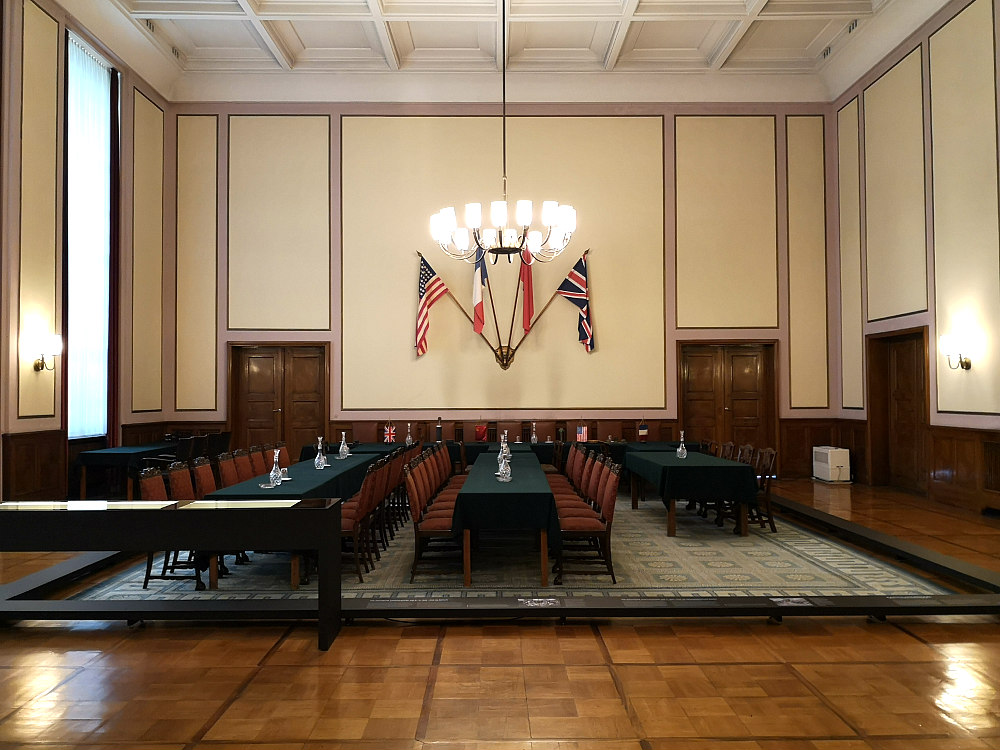
Founded in 1994 by Germans and opened to the public in 1995 — with a display of photos of World War II that offers a slightly different focus than the ones we know from history books — the Museum Berlin-Karlshorst was set up to recognize the heroic deeds of the Soviet Army during Nazi Germany. But, standing there, the visitor can feel the complexity of history. It’s no surprise that the museum has embarked on a continuous dialogue with Moscow, Kyiv, and Minsk about the culture of remembrance.
“Yet that culture of remembrance has drifted apart,” bemoans Jörg Morré, historian and director of the Museum Berlin-Karlshorst, as we meet on a sunny day at the beautiful garden of the premises. “Now I wonder if anybody knew what we were doing here at the museum,” Morré says.
In the work to which Morré has dedicated his career, and in more than a dozen visits from Berlin to Moscow and other Russian cities, the museum has stoically endured to stay away from politics and to advocate for a historical reappraisal based on academic research and testimonies.
Yet that culture of remembrance has drifted apart.
However, there is a long tradition in Moscow of avoiding ideological discourse. “History in Russia has never been discussed within an ideological framework. Nor has the German invasion of the Soviet Union been shown as a war of race. Even the Holocaust hasn’t played a role really,” explains Morré. The lack of an ideological narrative has made history easy to manipulate, and to quote an official statement of the Museum Berlin-Karlshorst, “history is being used by the Russian Federation to legitimise the current war.”
As we sit down in front of each other, with an old Soviet tank in the background, I ask Morré what it is like to do his job when the countries of his fellow partners are at war, and whether neutrality could be the only way for the museum in the future.
***
It was the morning of February 24th when the caretaker of the Museum Berlin-Karlshorst called Morré with a dilemma. He wasn’t sure which flags of the four countries represented at the museum he should hoist on that day. Still in their pyjamas, the whole museum’s team decided over Zoom that only the Ukrainian flag could wave amid the aggression of Russia. Later on, they decided that the museum would stick to its original name, Berlin-Karlshorst, rather than the Russian-German museum it was commonly known as.
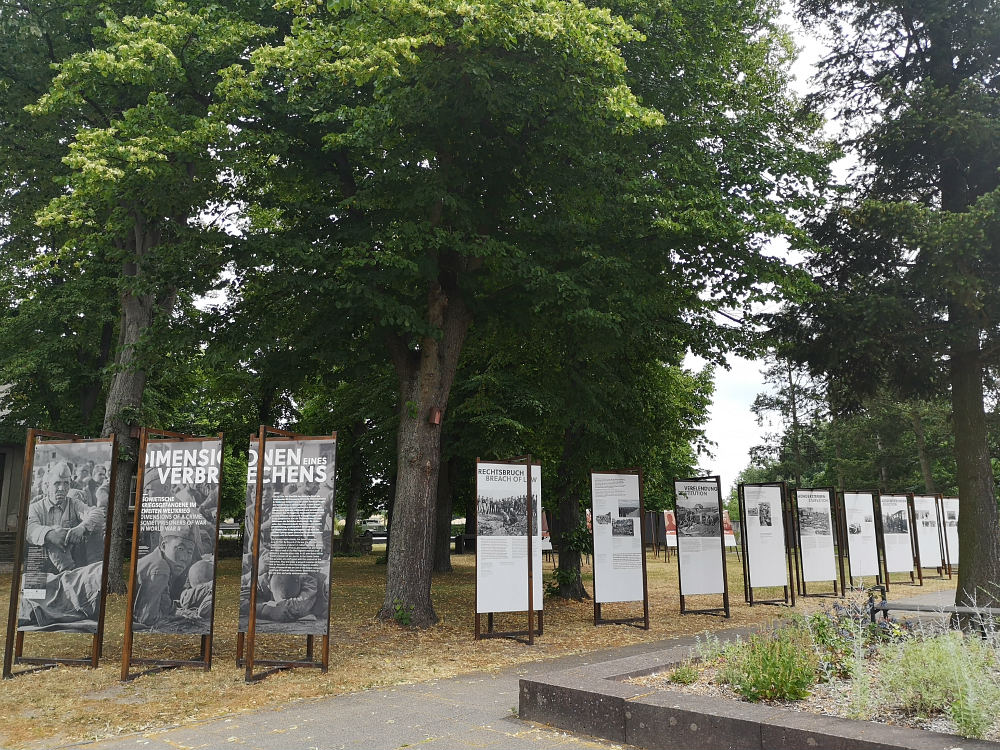
But before that decision, the Museum Berlin-Karlshorst had already challenged its neutrality when it began hosting the open-air exhibition called Postcriptum – ‘Eastern Workers’ in the German Reich on the deportations and forced labour of Soviets under the Nazis. The exhibition also aims to process the brutality of the Stalin regime after the war from a human rights perspective. One of its curators is the non-governmental organisation International Memoralia based in Moscow, which has been shut down following a decision by Russia’s Supreme Court.
This is a travelling exhibition that can’t return to Moscow any time soon, but in Berlin has found a home, and from here it will travel to other German cities. Quite often, the museums have shared exhibitions among Berlin, Kyiv, Minsk, and Moscow, and even with smaller towns in Russia. This historical educational work at the local level, from museum to museum, allowed specific exhibitions to go under the radar of the state in Moscow.
Once a year, the public event Intermuseum in Moscow was the meeting point of Russian museums of all kinds, to which the German Museum Berlin-Karlshorst was invited as a guest. “Contrary to German art museums, where the issue of art restitution was too polemic to ignore, we were able to attend the event. For us, it was essential to keep the dialogue among museum colleagues. We could meet our counterparts and exchange personal stories on the relationship between both countries,” explains Morré.
History in Russia has never been discussed within an ideological framework.
Before meeting Morré at the museum, I stopped by PANDA Plataforma, a non-profit association founded in 2009 that developed into an interdisciplinary platform for Eastern European art, politics, and culture. It is one of the central points of the Berlin Russian-speaking art scene in the Kulturbrauerei in the neighbourhood of Prenzlauer Berg. This cultural institution has openly expressed its support for Ukraine and, since the war, has organised many activities to support refugees fleeing the war. Every Sunday from 2 pm, PANDA Plataforma turns into a Safe Space — “a safe space for everyone who comes to Berlin, their relatives and friends. In the PANDA, you can get to know other people and exchange ideas, chat or be silent together, relax for a moment, and simply feel safe.”
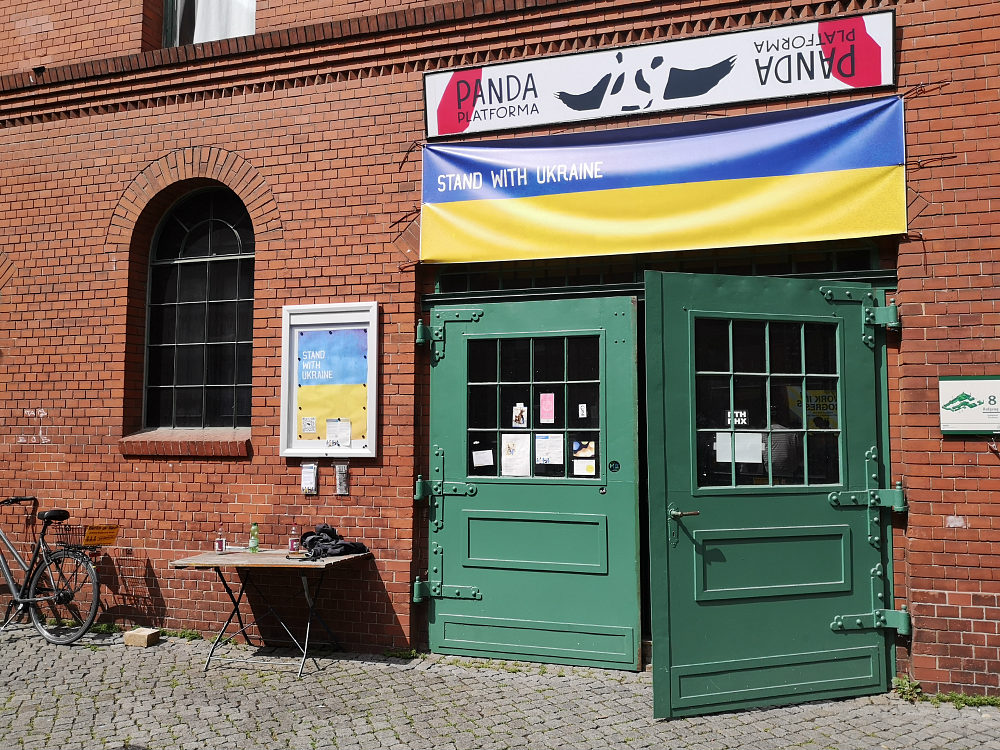
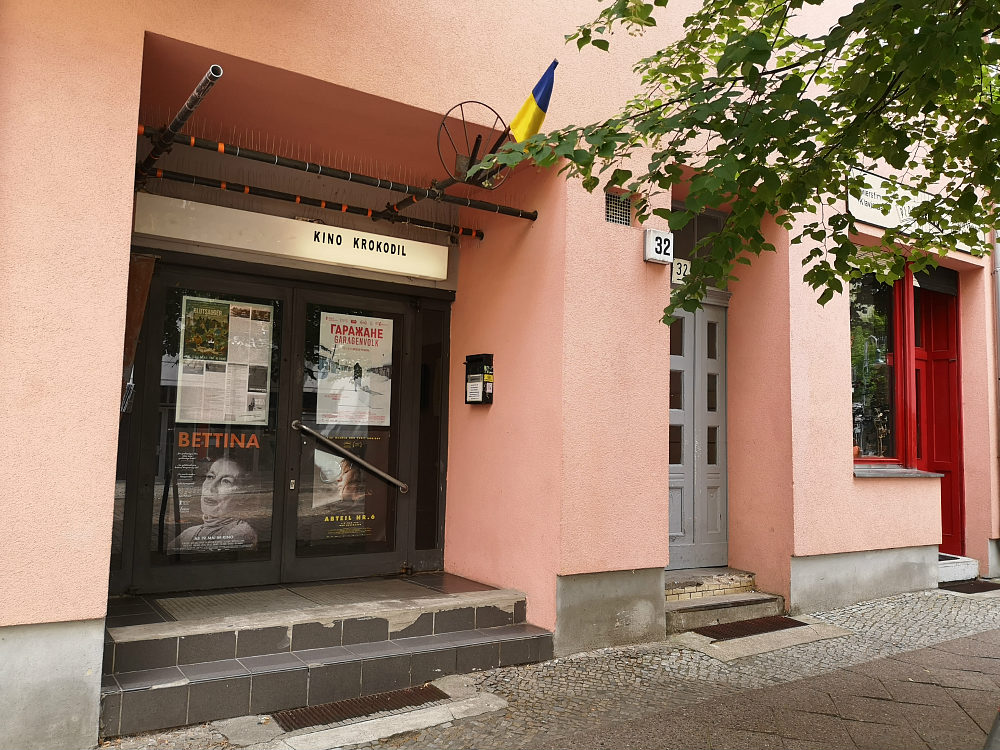
Neutrality no longer provides a refuge for Russian culture in Berlin. The repertoire of old and current films from Eastern Europe continues at the only Russian-language cinema in Berlin, Krokodil. But the Ukrainian flag waving outside is a gesture of outspoken solidarity.
I asked Morré how closely Russian museums and others in Kyiv and Belarus have worked with civic society, as well as how his museum has worked with civic society in the German context. “Collaborating with International Memoralia in Moscow has been an important step for us in that direction. Our museum also works with other human rights organisations in Belarus and Ukraine, especially since the war started.”
But it hasn’t been easy in the Russian context, noticed Morré. “In 2008, a new law issued by the Russian Government prohibited the falsification of history, which basically discourages any contribution from civic society to history and avoids ‘misuses’ of the one historical narrative promoted by the Government.”
While Ukraine has long focused its culture of remembrance on the civic society — victims of forced labour and the deportation of Ukrainian citizens to Germany by the Nazi Regime — and the devastation of the country (a similar narrative like in the International Memoralia exhibition), Russia focuses on the victory. Foremost, it is the Russian Army, not the Soviet Army, that suppresses other narratives and uses theirs as an “instrument for the Kremlin’s aggressive foreign policy.”
Morré suspects that their work may have fallen on deaf ears because of the public ownership of the museums, which are directly dependent on the ministries of defence and other state-owned organisations. The war in Crimea in 2014 already froze museums’ collaboration, especially between Kyiv and Moscow. Still, the Museum Berlin-Karlshorst took on an intermediary role that kept the work going, as Morré reveals.
Since the invasion of Russia in Ukraine, any communication between all the museums has stopped. “We and our colleagues in Kyiv, Belarus, and Moscow have kept quiet. We are all waiting to see how things develop, I would say. And save what can be saved.”
Almost thirty years of working together have provided a foundation that no one seems keen to see fall apart. “But there is so much work to do. Consensus will certainly replace neutrality where the museums will commit to promoting a culture of remembrance that goes hand in hand with the truth.”


