
Listen to the audio version of this article (generated by AI).
“I still remember clearly how much the street sign ‘Türkenstrasse’ (Turks Street) irritated me upon moving to Munich twenty years ago,” wrote art historian Gürsoy Doğtaş about one long street that crosses the neighborhood of Maxvorstadt in Munich. “I immediately sensed that Turks Street did not honor former kingdoms, queens, or kings. It did not sound like commemoration, but like an act of marking. It sounded like the “Other”, the “Foreign,” yet it stood there as a street sign visible to all.”
In 1683, Maximilian II, or Max Emanuel, ruler of Bavaria, successfully defended Vienna against an attempt by the Ottoman Empire to expand further into Europe. “Conquering Turks” is seen as a historical virtue in Munich, part of the politics of memory.
Following the Battle of Vienna, almost 1,000 prisoners of war from the Ottoman Empire were abducted to Bavaria for forced labor on building projects. A major infrastructure project intended to connect two palaces on either side of present-day Munich via a water canal network. However, in 1699, the prisoners were released, and soldiers from Max Emanuel’s infantry began the work. Despite this, the name “Turks’ Canal” persisted as a legend. It’s worth noting that the Turks were only one group among the abducted prisoners, who originated from various regions of the Ottoman Empire, but were collectively labeled in a way that obscured these differences.
In 1811, the canal was filled in, and a year later, Turks Street was named after the never-completed canal that once ran through it. Years later, a military complex constructed in the area in 1826 was named the Turks’ Barracks, referencing those prisoners of war. The Bavarian State Police took control of the barracks in 1920, returning them to military use under Nazi rule, where soldiers followed marching orders to the path of war. A couple of blocks down Turks Street lived Georg Elser, who attempted to assassinate Adolf Hitler in 1939, and was interrogated at the southern end of the street, where the Gestapo headquarters once stood—now replaced by a bank and a glass facade.
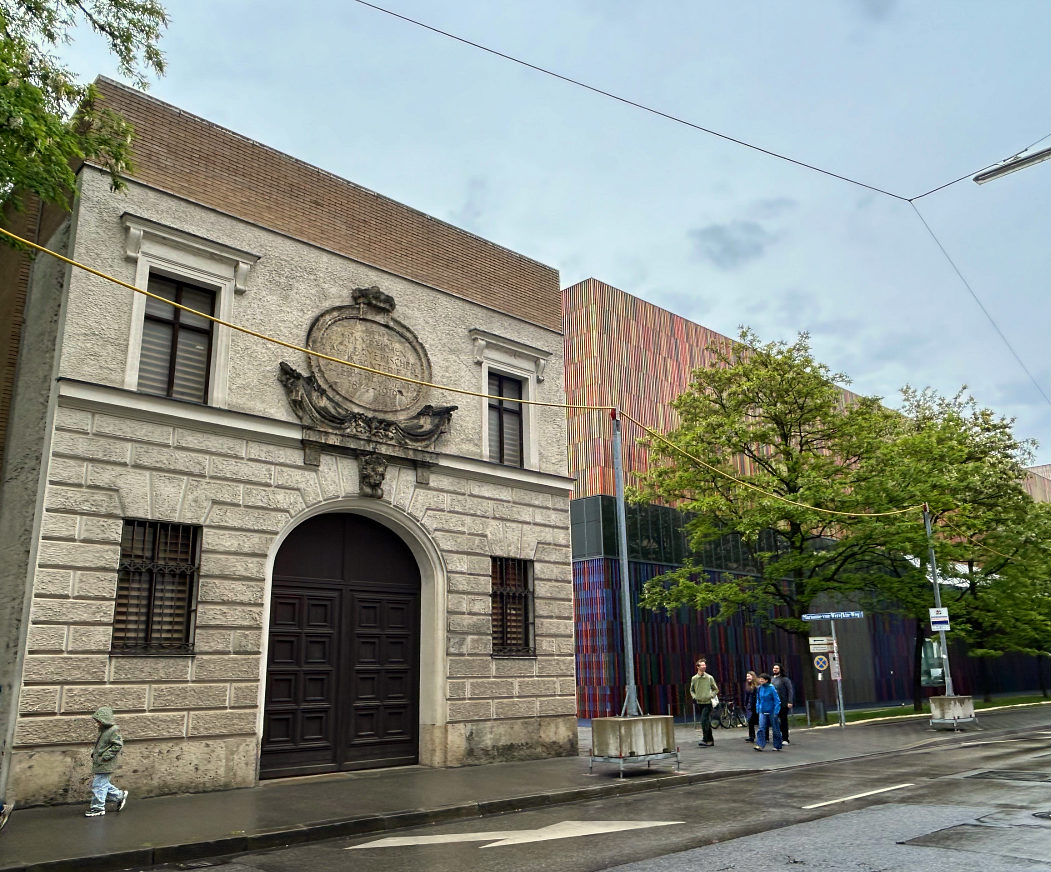
The film equipment company ARRI also had its headquarters on Turks Street—its film camera became the most widely used worldwide. But it was deployed from 1939 by the Wehrmacht and the Nazi regime for propaganda and war reporting. Bombing raids during the Second World War destroyed many of these sites. Years later, the Turks would return to Munich to seek jobs under a recruitment agreement between the Federal Republic of Germany and Turkey, amid a labor shortage in Germany during the “economic miracle” in the 1960s. They were labeled as “guest workers.”
Today, only the gatehouse of the Turks’ barracks, named Turks Gate, still stands and remains a silent guardian of power. Its name, as well as Turks Street, points to a history shaped as much by rumor as by fact, often overshadowing many other historical events. Over time, all these narratives condensed into simplified and sometimes misleading terms. The naming reflects a blend of military and enslavement histories with Orientalist fantasies, which continue to influence place and street names in Munich and beyond.
This is where the exhibition Carrying of the Museum Brandhorst, located on the same Turks Street, takes its starting point. It moves through its galleries into transitional spaces and the public realm. Carrying sets out in search of stories of war and violence, exploitation and cultural appropriation, debates over territorial boundaries, migration, and belonging. And it does so in a variety of ways—architectural interventions, performances, paintings, and sound and film works.
International artists occupy historically loaded sites and transit zones of the museum and public space, enter into dialogue with the public, and question the intertwining of military and cultural power. “The artists examine how such narratives are formed, how they persist, and how they can be questioned. These questions are particularly relevant for institutions like ours, places dedicated to knowledge production and cultural transmission,” said Dr. Monika Bayer-Wermuth, Chief Curator of Museum Brandhorst.
***
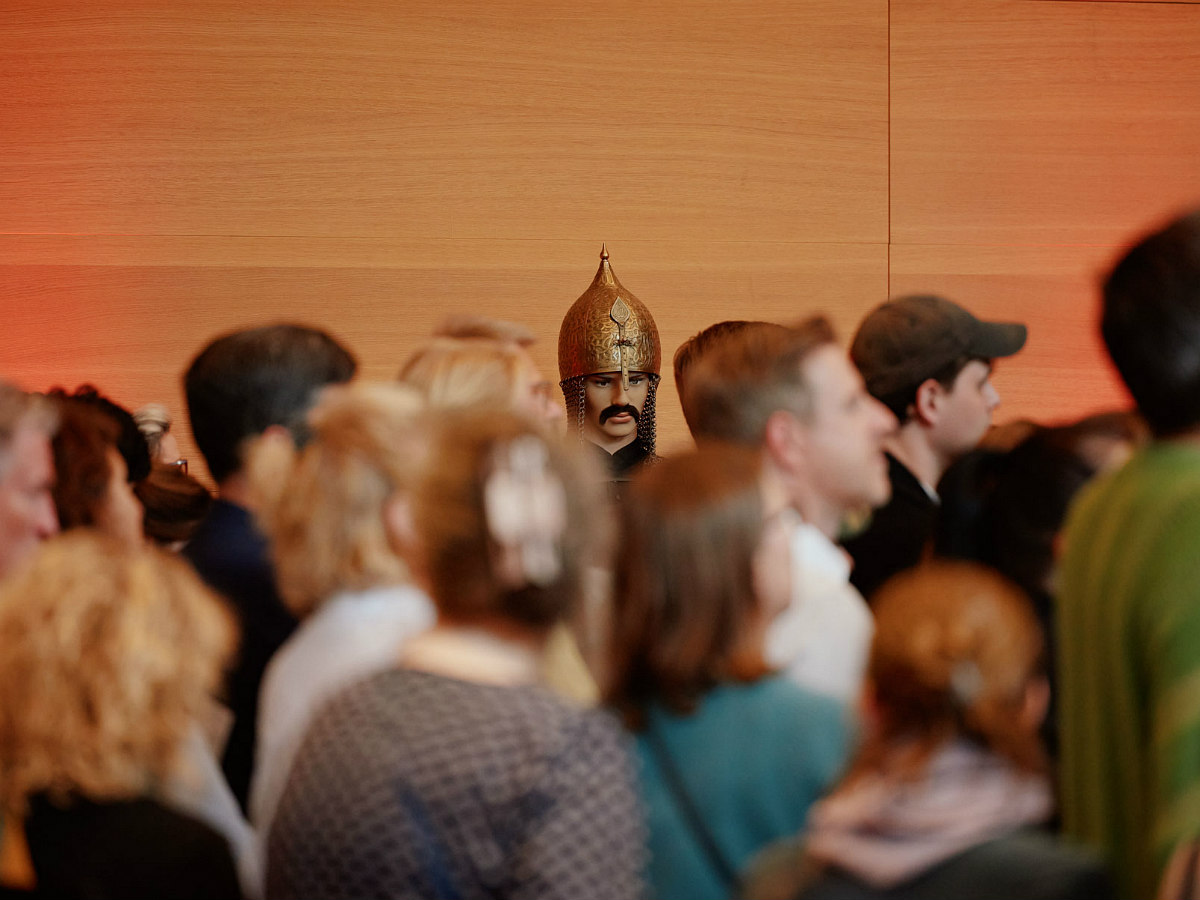
In the Museum Brandhorst foyer, the visitor encounters a meticulously reconstructed figure of an Ottoman soldier that the artist Hêlîn Alas discovered at the military museum in Istanbul, a copy of a copy whose original remains nameless. Such standardized types circulate across countless institutions worldwide and serve as instruments for national narratives, as constructions of the enemy, or as pop-cultural commodities.
“We are witnessing how rumors, how legends and attributions overlay historical as much as current realities, and how history and memory become entangled with constructed narratives, and how they are carried forward through images, through media, and through monuments,” said Franziska Linhardt, curator of Carrying. She emphasized how conflicts and wars unfold through these very images and how the boundary between true and false is increasingly blurred. The question of who tells a story and from what perspective is not merely an issue of cultural critique. The stories and rumors associated with Turks Street in Munich exemplify these politics of memory—whose stories are told, how they are shared, and who has the authority to tell them.
For art historian Gürsoy Doğtaş, Turks Street speaks of falling to notice that the uncritical civic memory of prisoners of war from the Ottoman Empire tells a story of subjugation for those people who came to West Germany as “guest workers” from Turkey.
In the Cosmos space, the museum’s media room on the lower level, artist Cana Bilir-Meier presents Ein neues Wort (A new word), a film work building on a competition held by the West German broadcaster WDR in 1970, which sought an alternative to the term “guest worker” and received over 32,000 submissions. Together with a Munich choir of former labor migrants, the artists developed a musical engagement of these proposals—a reappropriation of words filled with humor (Germany’s economy first responders, New-Germans) but also of sorrow (Partial Citizens).
When I asked Franzisca Linhardt, the curator of Carrying, what inspired her to create this exhibition, she first referred to the incredibly complex times we live in. On one hand, wars feel very close and have become a part of our reality. On the other hand, history often repeats itself; certain positions of power are exploited time and again, and there’s a strong emphasis on self-promotion and the expansion of empires. But then, she also shared a more personal and humane reason that provoked her discomfort: “Every time I wrote an email, my signature read ‘Türkenstraße 19.’ At some point, I told myself: We’re simply in a place where so much history lies dormant to the public.”
“It became incredibly important to me to occupy the spaces where the Brandhorst Museum stands—so heavily laden with history and stories, including omitted or invented histories—and invite artists to engage from their own perspectives. In doing so, we shouldn’t limit ourselves to Munich’s history and identity, but rather connect local topographies with urgent, broader questions—global questions.”
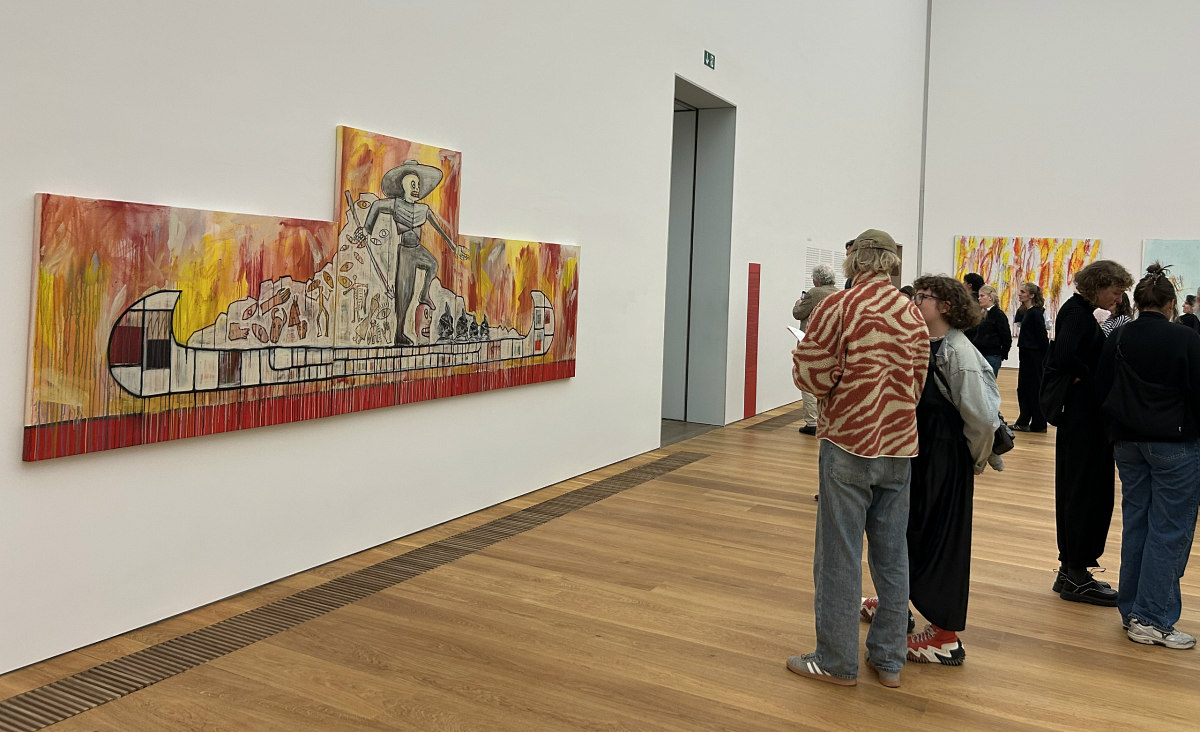
One significant anchor of the exhibition is Jaune Quick-To-See Smith’s Trade Canoe: Don Quixote in America, which enters into direct dialogue with Cy Twombly’s Lepanto and is possibly the most central work in the Museum Branhorst collection. Created in 2001 for the Venice Biennale, Twombly’s monumental cycle of 12 paintings refers to the naval battle of Lepanto in 1571, where the so-called Holy League defeated the Ottoman fleet, but avoids any direct illustration of the event. Instead, Twombly uses intense color, rhythm, and gesture.
Recommended Read: At Elmina’s Door of No Return, Custodians of the Past Speak
The battle marked a turning point in the balance of power in the Mediterranean and has been repeatedly reframed as a defining victory, often exploited for ideological and propagandistic purposes that reinforce narratives of opposition between the West and the East.
Thirty years later, Miguel de Cervantes, who fought in that battle, wrote Don Quixote. In Smith’s work, the novel’s main character symbolizes the transition from the “old” Mediterranean world to the Atlantic colonial order. Trade Canoe: Don Quixote in America, one of Smith’s last works (she passed away in 2025), is presented publicly for the first time at Museum Brandhorst. Building on two earlier paintings made in response to the US invasions of Afghanistan and Iraq after September 11, 2001, it continues to engage with the ongoing imperial violence of the United States. Patterns of global empires, colonial exploitation, and capitalist structures become visible—patterns that continue to shape our world to this day.
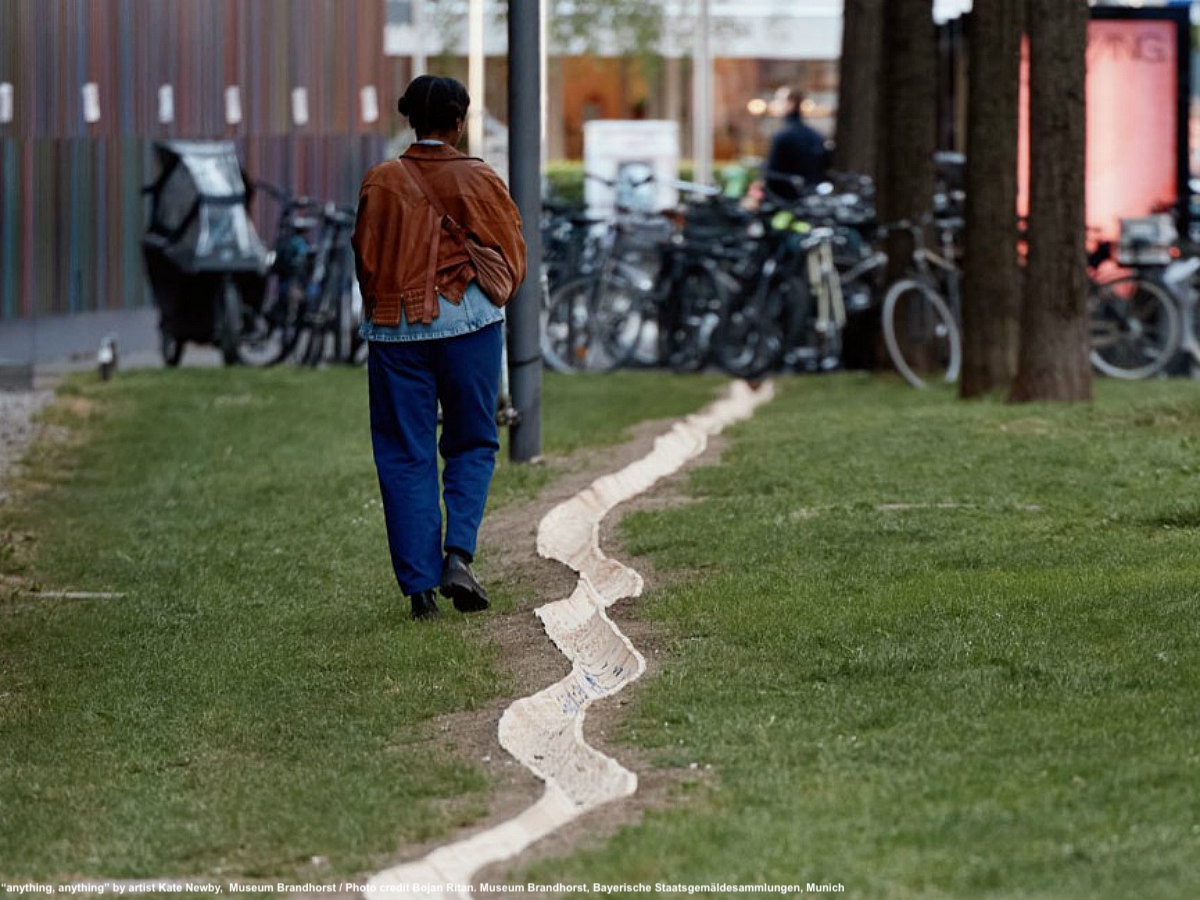
Franzisca Linhardt, curator of Carrying, sees public space as essential for presenting some of the works, noting, “because museums always have a certain barrier.” For example, Kate Newby’s site-responsive piece, anything, anything, consists of 1,000 bricks integrated into the ground in two long lines along the strip of green between the museum and the sidewalk on Türkenstraße. This installation will be on display for a year, encompassing a full cycle of seasons and engaging strongly with the stories, social events, and natural phenomena in public space, which are inscribed within the piece.
So many stories are packed into just 100 meters along Türkenstraße—stories of resistance, war, subjugation, and persecution. Today, it is an arts district filled with cafés, art galleries, and student life. “All these places do not speak aloud, but they do not forget. The places remember, even if we do not. But perhaps that is precisely our task: not just to walk through the city, but to read it, to perceive the visible and hidden stories, and to ask ourselves: What stories are being told?” said Anton Biebl, Director of the Bavarian State Painting Collections, during his opening speech for Carrying.
Places come to life, the past becomes tangible, and we recognize that we are part of this ongoing story. This realization deepens our connection to our city Munich, making it more meaningful and personal; and highlights our responsibility regarding the politics of memory: we must not overlook or forget our history, which aligns with the leitmotif of Carrying. We are all carriers of the past in order to move forward.