
Listen to the audio version of this article (generated by AI).
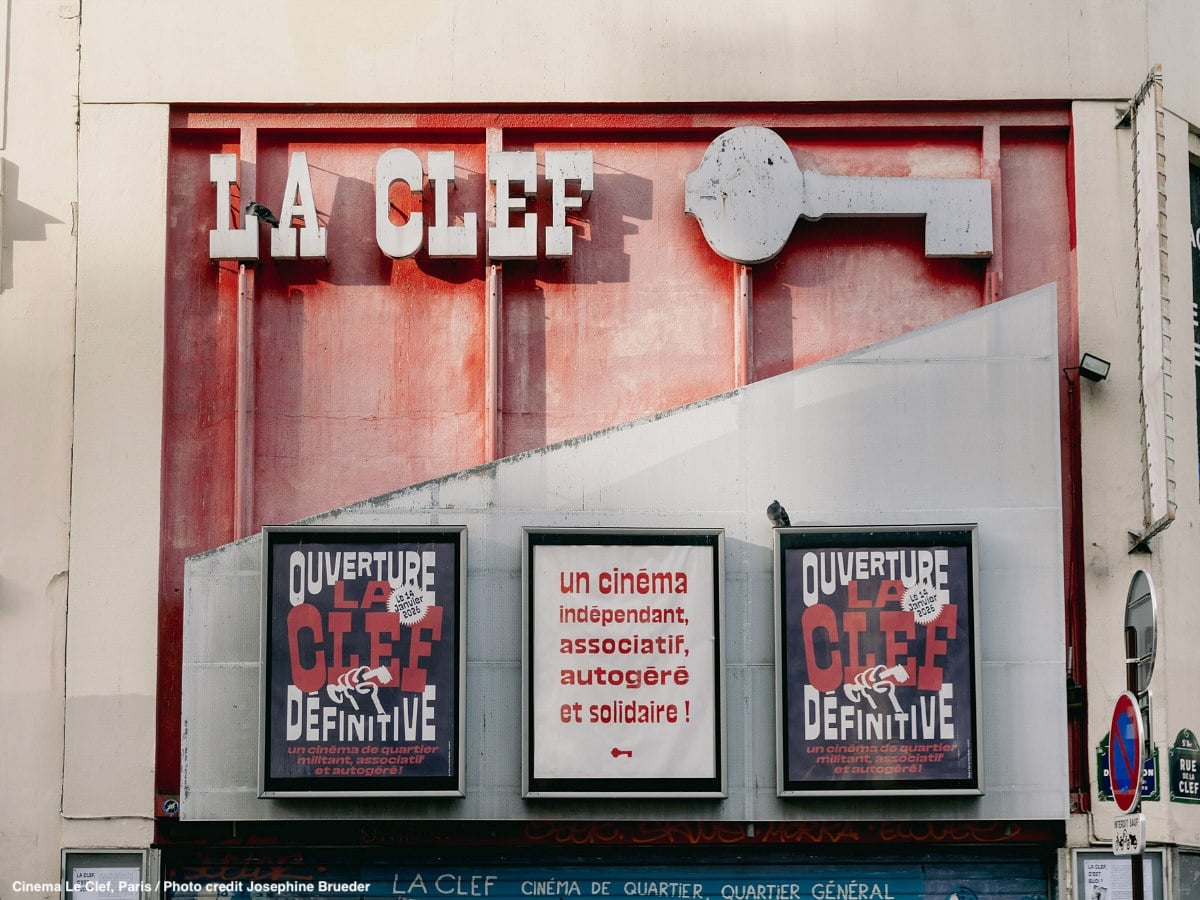
The early spring sunshine is beaming down on the fifth arrondissement when I arrive at La Clef, Paris’s only volunteer-run cinema in the city’s Latin Quarter. It’s noon in Paris, and the shutters are down, but inside, volunteers are busy preparing to open the space for another evening of independent cinema.
At an open side gate, I’m greeted by Kira, an ecologist and documentary producer, who is filling buckets to water a fig and a peach tree that grow at the front of the space. Kira is one of hundreds of volunteers whose collective efforts have saved this space from the grips of Paris’ prospective real estate market. In January, La Clef reopened its doors after an eight-year struggle to prevent the storied cinema from closing in an increasingly privatised city.
Founded in 1973, La Clef built a reputation as one of Paris’s leading arthouse cinemas, dedicated to screening independent films rarely seen elsewhere in France. From the 1990s onwards, it was programmed by a range of non-profit organisations, most notably Image d’Ailleurs, which showcased filmmakers from Africa, the Caribbean, and Latin America, as well as their diasporas.
But as the neighbourhood began to gentrify, the cinema came under pressure from real estate prospecting. The Commité Social et Economique de la Caisse d’épargne (the employee representative body inside a savings bank) owned the building. When it put it up for sale to cash in the profit, it looked as if La Clef’s days as a stronghold of independent cinema in Paris were numbered. In 2018, it closed its doors.
But the projectors didn’t stay off for long. In September 2019, a collective of students, local residents, and filmmakers occupied the building, determined to stop it from becoming yet another supermarket or car park. They reopened it as a squat cinema.
What followed was a rapid, improvised education on how to run a cinema. Volunteers taught one another how to work the projectors, organise screenings, and negotiate with distributors—many of whom waived their fees in solidarity. Films were shown to the public free of charge, often followed by late-night discussions, with filmmakers themselves sometimes in the room.
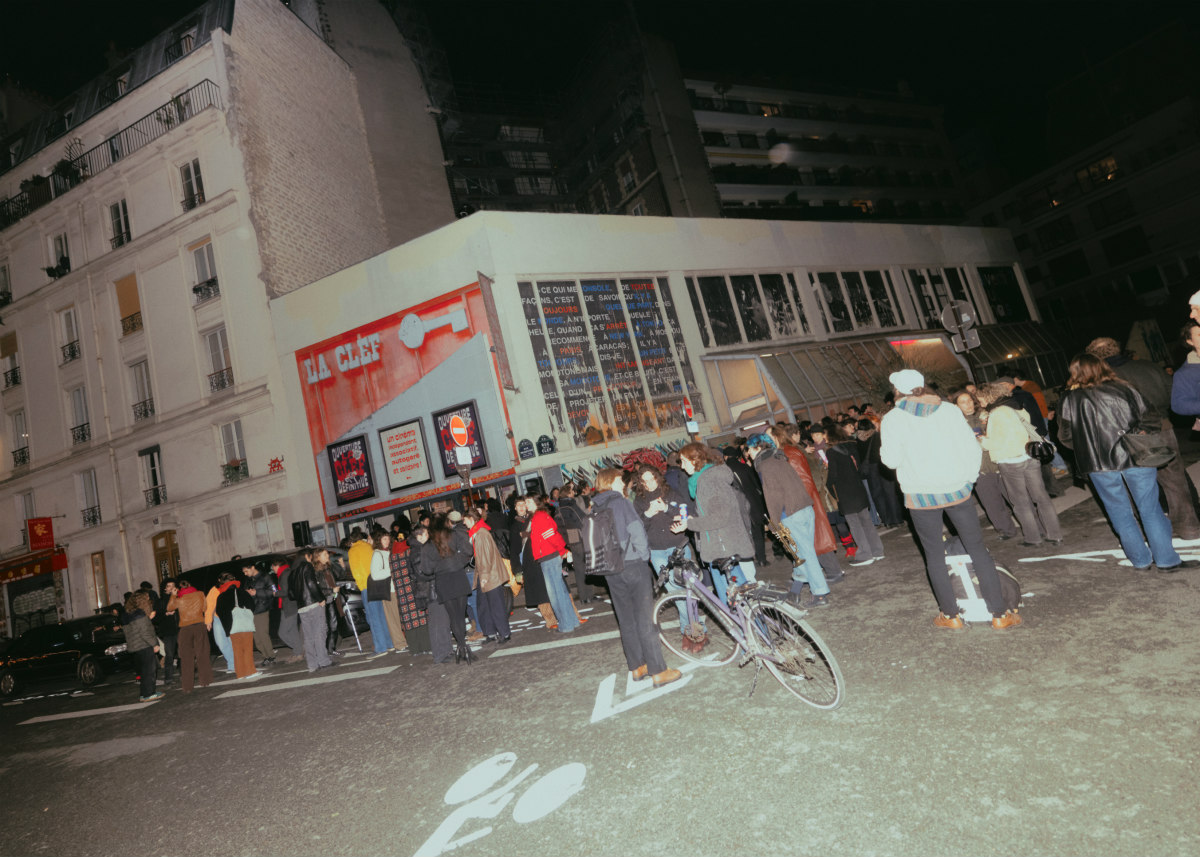
“The occupation gave us the opportunity to think about the space without the rules that govern how cinemas are typically run,” Albane, a collective member, tells me. She works in film distribution and radio. “We started to create a real community life: finding movies, cleaning the space, contacting distributors. Everyone was excited about this real utopia.”
Initially focused on protecting the building from market forces, the effort gradually became a testing ground for a decentralised, community-run cultural venue. “As the occupation continued, we thought that perhaps what was important wasn’t only preserving a cultural venue, but preserving the way we had been able to realise this horizontal, self-managed ecosystem,” says fellow collective member Chloé, a film scholar and translator.
When the French government toughened its response to unlawful occupation, the collective was forced to pivot. As eviction loomed, they ran the cinema in shifts from dawn until dusk, screening films right up until the police forced them out in September 2022.
“We realised that if we wanted to preserve this self-managed, horizontal way of working, the only solution was to become the owners ourselves,” says Chloé. This reckoning kick-started an ambitious, multi-year effort to bring the cinema into the collective’s legal ownership.
Recommended Read: Paris’s Unlikely Revolutionary: Its Philharmonie
As the cinema remained closed, the collective turned their attention to fundraising – soon capturing the attention of the global film industry, with heavyweights such as Céline Sciamma, Leos Carax, Quentin Tarantino, and Martin Scorsese amplifying the cause. Over just over 2 years, they raised a total of €450,000 from 5,000 donors, which, alongside securing a bank loan, enabled the collective to purchase the venue for €2.8 million.
To oversee the funding and purchase, the collective created an endowment fund, Cinéma Revival. This legal framework ensures the building is not owned by any single party, with all decisions subject to a collective agreement, protecting its status as a pay-what-you-can, community-run cinema for generations to come.
After a period of renovations—during which volunteers trained in carpentry and woodwork, building the bar and fitting out the space themselves—La Clef reopened to the public. Around 800 people showed up to the reopening night, far exceeding the capacity of the cinema’s two screening rooms. “That night we screened Talking About Trees, a documentary about four older Sudanese filmmakers who attempted to reopen an open-air cinema in Khartoum during a time when cinema was almost banned,” says Chloé.
“It was very symbolic for us, because it connects to the idea of trying to create communal spaces for cinema lovers in difficult contexts. The director, Suhaib Gasmelbari, attended the screening. He told us that the original title of the film was going to be Those Who Will Come After Us. That really resonated with us. We feel that we’ve managed to extract this space from real estate pressure and political struggles so that it can remain available for future generations.”
In the months since reopening, La Clef has turned the participatory vision forged during its days as a squat cinema into a working reality, now operating five days a week. The day-to-day operations are an enormous feat of coordination, sustained by just two paid staff members and a roster of around 90 volunteers each week, who contribute time to everything from bar and box office shifts to operating projectors and programming films. “The goal is to teach people so they become as autonomous as possible, because eventually we want to pass the torch,” says Chloé.
As La Clef operates as a non-profit, visitors who watch a film or drink at the bar join the association—typically for a yearly membership fee of €5–15, which allows the cinema to serve drinks and remain accessible to all. Screenings follow a pay-what-you-can model, with tickets starting from as little as €0.50, supported by donations and a pay-it-forward system that ensures those without means can still attend.
Enthusiasm to get involved has been overwhelming. Kira notes that at their most recent volunteer training day, 70 people turned up. “Of course, films are important, but everything that happens around them matters too,” she says. “When I’m tending the garden, people stop and ask questions. There are so many ways for the public to get involved, which feels especially important at a time when so much of the city is becoming spaces where you have to consume something, or be invited in. At La Clef, anyone can come in, take part, or simply observe.”
La Clef’s programming follows the same participatory ethos. The cinema continues its long-standing commitment to independent films rarely shown elsewhere in Paris—self-produced work, queer cinema, and films from marginalised communities—while opening the programming process up to anyone who desires to get involved. Any volunteer can propose and organise a screening, and other activist collective and associations can also make use of the space to host their own events: “It’s important for us to not only exist as a programming collective—we want to be a space and a tool available for other collectives, including those without a space of their own,” says Chloé.
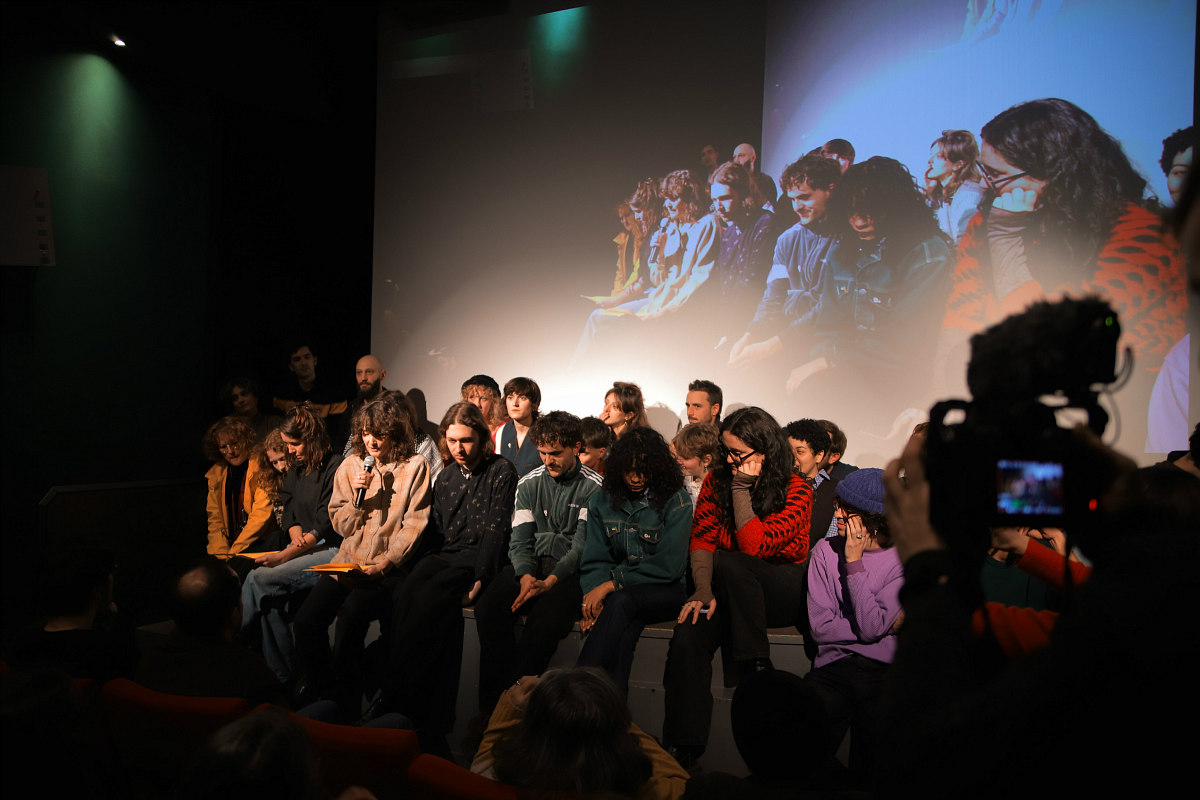
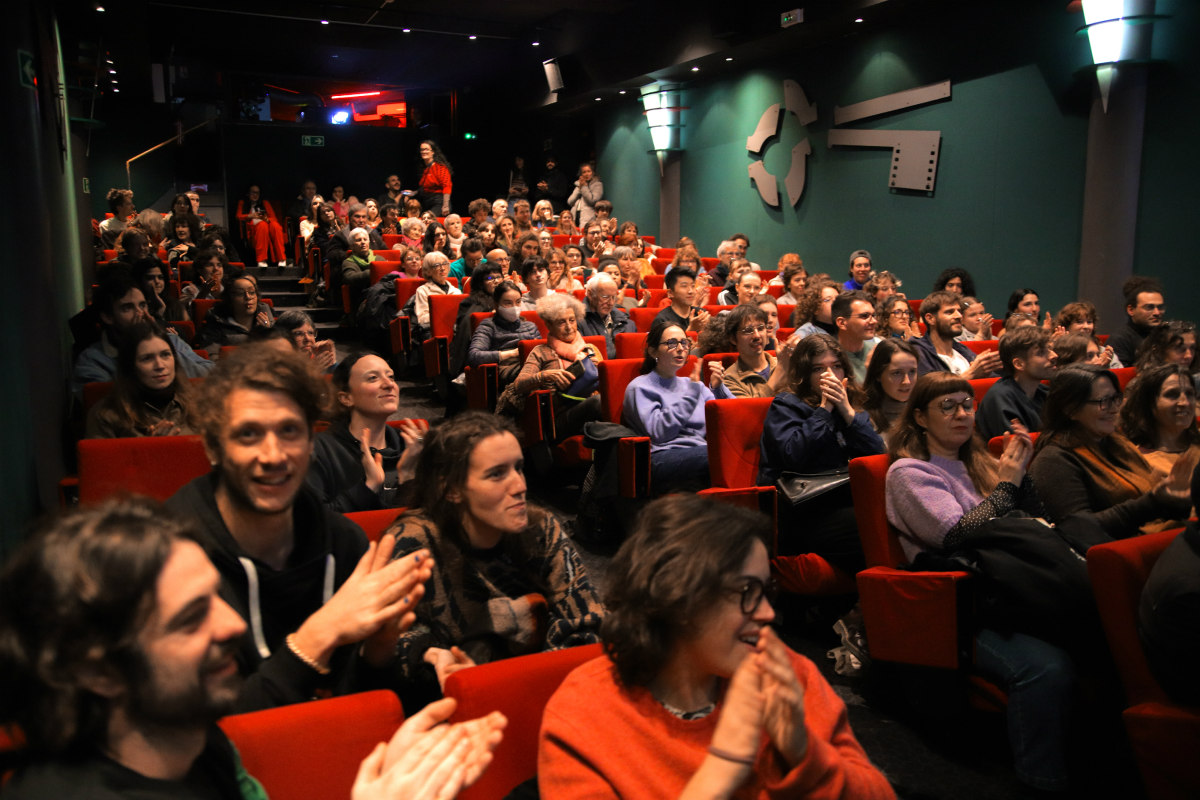
Whenever possible, those connected to the films—directors, producers, technicians, or relevant associations—are invited to take part in discussions before or after screenings. The result is a constantly evolving independent programme, rooted in a broader vision of cinema as a space not just for watching films, but for community life, open debate, and political exchange in Paris.
In the week I visit, the lineup ranges from Un Dessert pour Constance, a 1979 film following two Parisian street vendors, to a selection of shorts by Chilean-French filmmaker Tohé Commaret, alongside a programme of pigeon-themed films—followed, of course, by a guided pigeon walk.
The collective wants La Clef to be seen not simply as a success story about reopening an independent cinema in Paris, but as a model for preserving cultural infrastructure—protecting vital spaces from shifting political priorities and market pressures. They are clear, too, that none of it would have been possible without the support, shared resources, and hard-won knowledge of earlier activist movements.
Chloé points in particular to the influence of the ZAD movement—a coordinated effort to resist the construction of an airport on farmland in Western France— as a source of guidance and inspiration. “We were able to come this far because we benefited from the wisdom, the experiments, and sometimes the ideas that seemed crazy at the time from people who came before us,” she says. “The forces we’re up against—the market and political pressures—will always move faster than we do. If we aren’t connected and sharing what we’ve learned, we will always be behind.”
Back in the garden, Kira reflects on what the collective has achieved. “Of course it takes a huge amount of work,” she says, “but it’s been incredible to prove that it’s possible—financially, and on a human level.” Pausing to water the soil with the last of her bottle, she adds: “The hope is that by spending time here, people take what they learn and carry it into other forms of organising.”