Listen to the audio version of this article (generated by AI).
We never feature an elected official. This is a heavyweight exception.
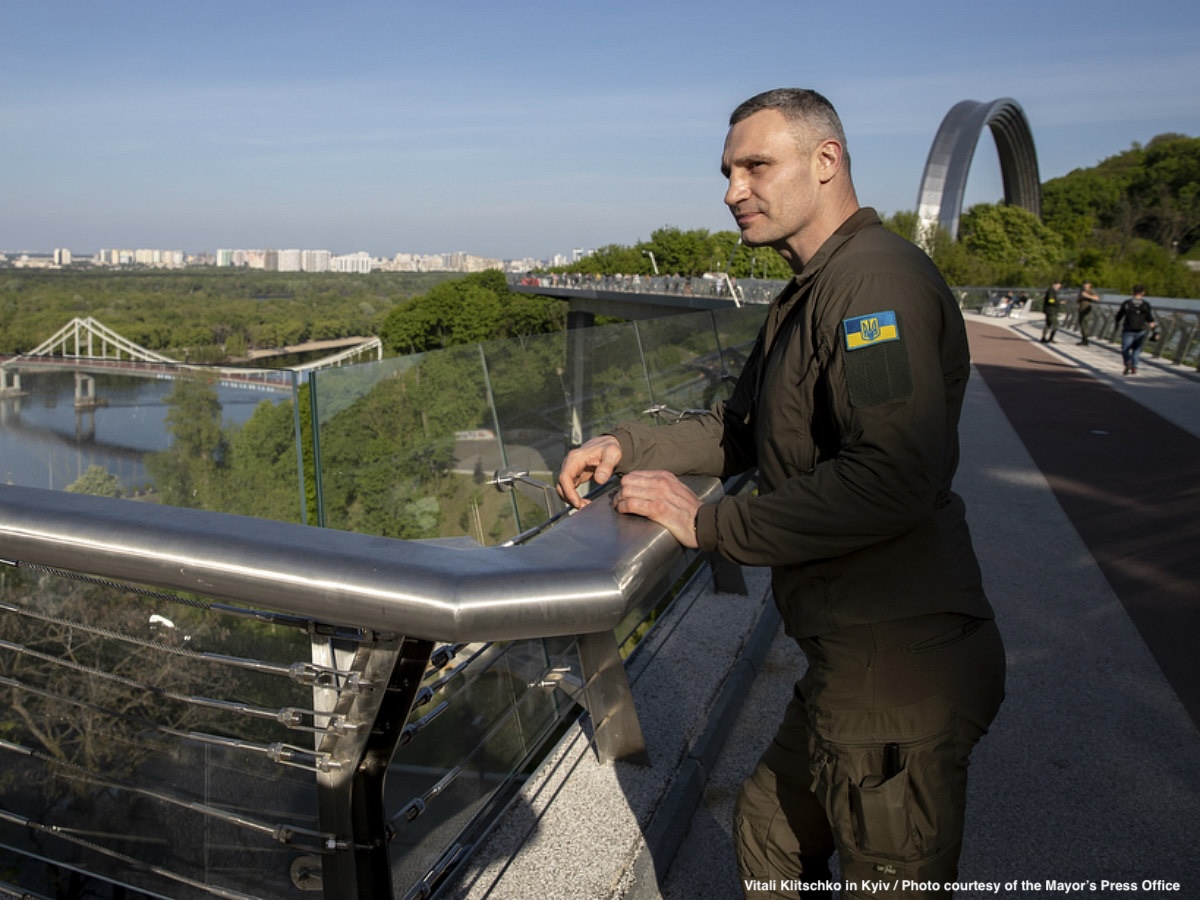
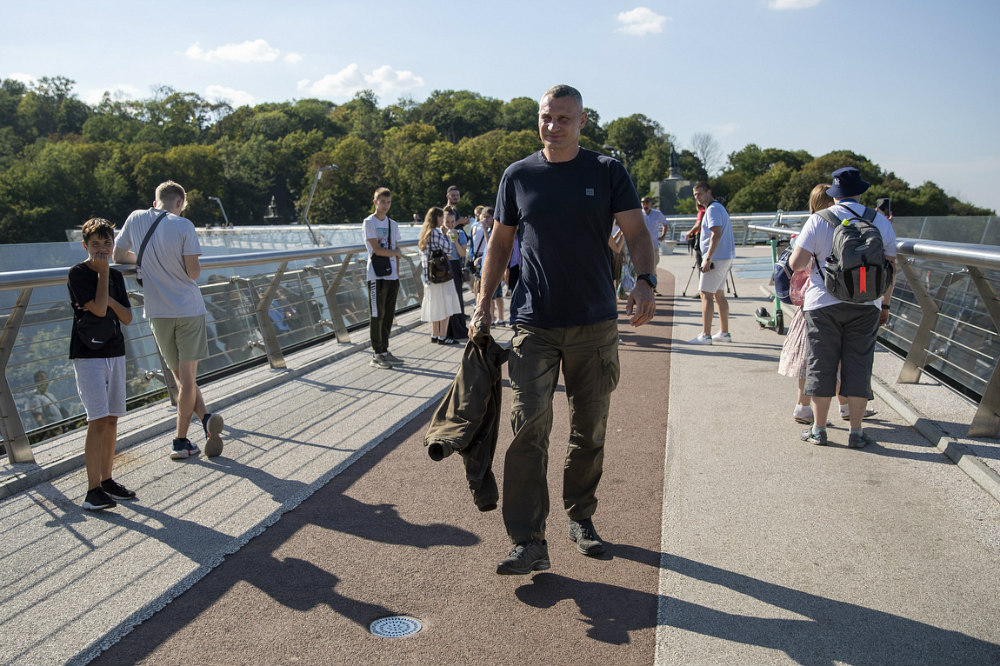
Former world boxing champion and Mayor of Kyiv, Vitali Klitschko, has become a symbol of the resistance of the people of Kyiv. The city is under constant threat, yet its residents exhibit a sense of every-ness and resilience. The capital keeps its basic services running—transport, utilities, schools, university colleges, and hospitals—until the air-raid alarms go on, people run to shelters, and explosions follow, often somewhere in the city.
The city has to coordinate defenses, manage evacuations, and respond to emergencies, but Vitali Klitschko reinforces the message that local leadership is still functioning.
This is a man running a city, whose Russia’s military strategy was specifically engineered to target at the beginning of the full-scale invasion of Ukraine on February 24 2022. “I want to remind all experts in the world, 4 years ago, they gave us a couple of days, maybe a couple of weeks, against one of the biggest and strongest armies in the world, the Russian army,” he notes during our conversation in Madrid after attending a session at the Bloomberg CityLab summit.
We take a seat at one of the tables with high chairs. Vitali Klitschko is 2 meters tall and maintains a fit, disciplined appearance with a closely cropped salt-and-pepper hair. His face features strong, angular lines and a pronounced jaw.
I am immediately struck by his amiable demeanor and intimidating yet composed presence. There is a palpable authenticity in his speech; it feels unscripted and carries an air of humility that catches me off guard, especially coming from someone with such an exceptional size and starlit reputation as a boxer. Together with his brother Wladimir Klitschko, they dominated heavyweight boxing for over a decade, rarely losing and never fighting each other.
Like Ukraine’s president Volodymyr Zelenskyy, Vitali Klitschko remained in Kyiv when the full-scale invasion began, despite being a likely target himself. Since then, he says, “I have a feeling the last 4 years are one long, long day.”
***
Kyiv is consistently on the frontlines, Vitali Klitschko emphasizes the need for strength within the city. “Kyiv plays a very important role as a resistance city, as the resistance of all Ukrainians. It is the heart of the country,” he pounds. So far, more than 4,000 buildings have been destroyed, with over 300 civilians—women, the elderly, and children—killed in Russian attacks. Last winter, residents faced extreme cold (temperatures plunging to -30 degrees Celsius) without water, heat, or electricity due to attacks on infrastructure. “Why would the Russian military do that? For a long time, I’ve asked myself this question, and I’ve found the answer. They try to bring a depressive mood to break the will of the Ukrainian people to fight. But it doesn’t— they won’t succeed.”
The word “fight” frequently comes up in our conversations. After twenty-five years as a boxer, nine years as a world champion, and having fought so many opponents and defeated them, he draws on his experiences to perform his duties as the Mayor of Kyiv. But, he says, “this time it isn’t a fight I have started;” however, under “clear rules in life,” you have to defend your family, your home, your city, your country, your vision, your future.
“I never expected to have as a mayor so many challenges as we have right now in Ukraine. We are fighting to survive. Every day we hear air alarms. Every day, our citizens go to shelters. We have bad news every day, and we lose our heroes who defend our homeland. It’s actually a big drama,” he laments, while he reminds us that this is the largest war in Europe since World War II. The front line spans over 1,500 kilometers, with countless villages and cities destroyed, millions of refugees both inside and outside the country, and hundreds of thousands of lives lost.
This fighting spirit is critical for Ukraine. There is a mass mobilization of individuals from various professions and skills, including athletes like himself, who are joining the army to defend their homeland. “We want to say to our heroes, who do this difficult job, they pay the biggest price ever, with their lives for our freedom.”
“But we have to fight, and we don’t give up because it’s our vision to build a modern European democratic country,” he says. Vitali Klitschko has long been dedicated to a democratic Ukraine. From November 2004 to January 2005, he supported the Orange Revolution, which arose in response to the 2004 Ukrainian presidential election run-off, widely criticized for significant corruption, voter intimidation, and electoral fraud.
Vitali Klitschko became actively involved in Ukrainian politics in 2005 and combined this with his professional boxing career until he retired from the sport in 2013. He also played a significant role in the Maidan Uprising from 2013 to 2014, a wave of demonstrations and civil unrest that began on November 21, 2013, in Maidan Nezalezhnosti (Independence Square) in Kyiv. Protests erupted when President Viktor Yanukovych refused to sign the European Union–Ukraine Association Agreement, opting instead for closer ties with Russia and the Eurasian Economic Union.
Recomended Read: We Reported on Tehran’s Defiant Djs and Artists. Now, at War, They’ve Fallen Silent
It is particularly poignant to see this brawny man, with big hands often closing as a feast on the table as we speak, talk about how this war affects him mentally and the hardship of leading a city the way he has to, while seeing all the destruction on a daily basis.
“It’s hard, but I always have to be strong. Everyone in the city has to trust me because, without trust, it doesn’t work. It’s a big part of my job. Sometimes it is difficult, sometimes you need psychological treatment, sometimes it is a very unusual situation. But anyway, you have to show your vision for people to follow you.” The Klitschko Foundation, founded by his brother Wladimir Klitschko eleven years ago, has pivoted some of its programs to restore the psycho-emotional well-being of Ukrainian youth and reinforce their resilience in response to the full-scale invasion. Teenagers also create communities to express their thoughts, discuss, find like-minded people, and shape their own vision for Ukraine’s future.
I wonder how Russian youth view their future and whether there are discussions in small circles regarding their prospects amid the ongoing war. When asked if he is disappointed that not enough Russian athletes have spoken out against the invasion, Vitali Klitschko understands that they may fear repercussions for themselves or their families. However, he believes that unless they are “ready to live as slaves,” they must show their disapproval of the war.
“I was born in the Soviet Union. I know how propaganda works in the Russian regime. It’s not easy—but no fight, no win. Everyone has to fight for freedom, for peace. This war is a drama not just for Ukraine, but also for Russia, because the Russian people died too. For what? For the crazy ideas of Putin to rebuild an empire. That’s why we expect the Russian sportsmen to say their word out loud to stop this senseless war. Say this word to Putin, because it depends on him. He began this war, and he can stop this war.”
Recommended Read: In Aleppo, Women Clear Landmines Before Rebuilding
But he’s quick to also discredit Putin’s ability to occupy Ukraine due to the Ukrainians’ will to win. He acknowledges that European politicians actually understand that Ukrainians are not just defending their homeland but the entire Europe because there is a significant risk that Putin will push further into Europe if he is allowed to, threatening nations such as the Baltic states, Poland, the Czech Republic, and Slovakia—all former parts of the Russian Empire.
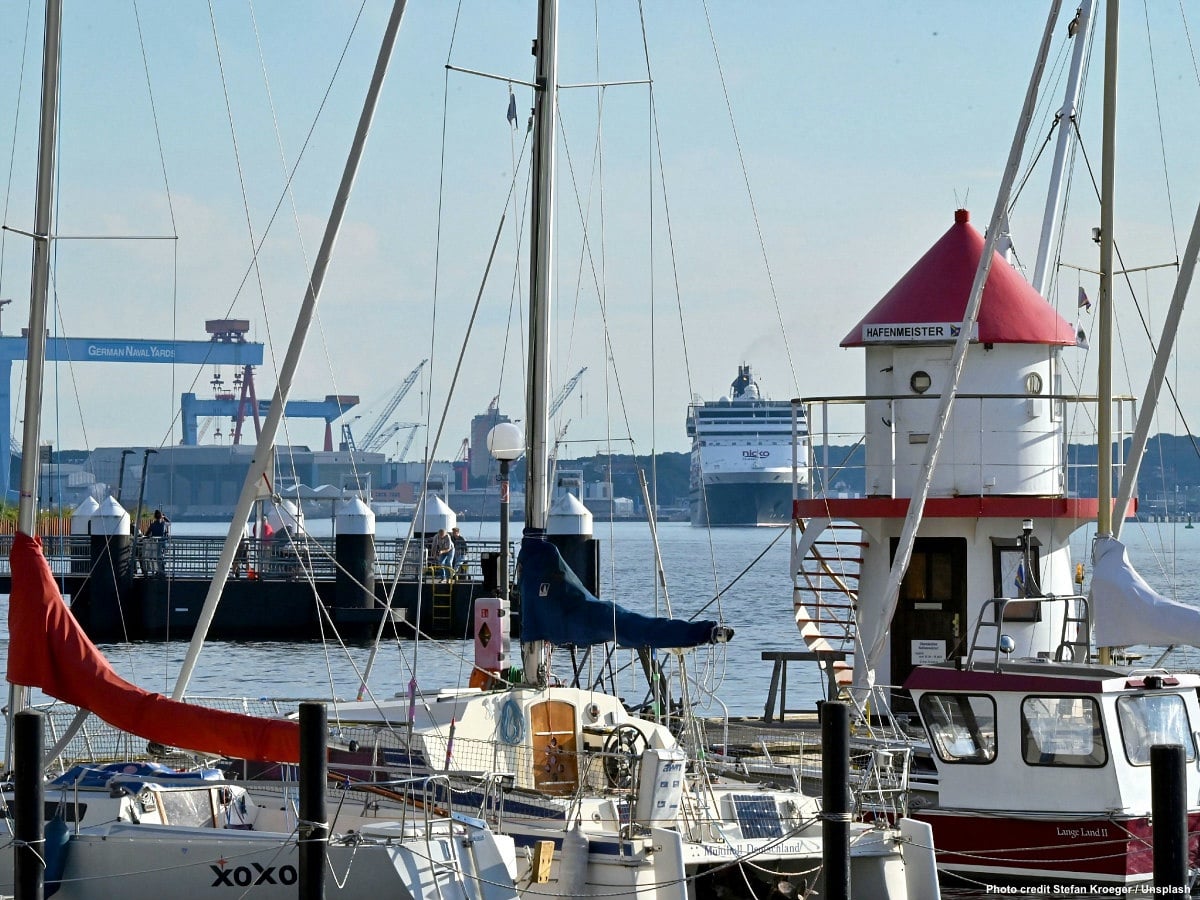
He has cautioned Germans, the country that welcomed him and saw him and his brother rise in their boxing careers over the past 25 years: “Please never underestimate this invasion because in the sick vision of Putin, Germany belongs to the Russian Empire also. Putin speaks German and spent years as a KGB agent there. It’s very important to support Ukraine. Together we can stop this aggression.”
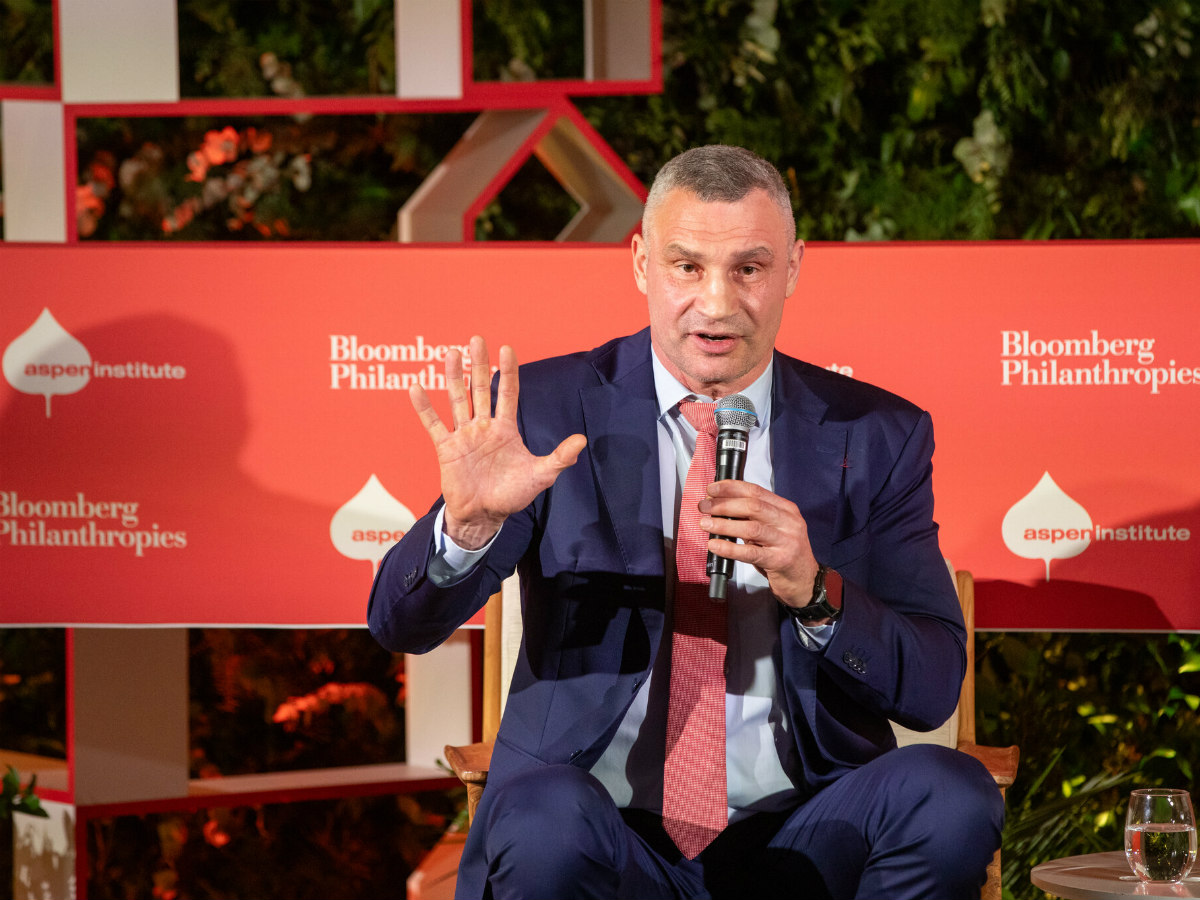
Just minutes before our conversation, Vitali Klitschko addressed an enthusiastic audience at the Bloomberg CityLab summit, stating that while “one finger is strong, five fingers together are even stronger,” as he showed his fist. His impressive knockout ratio should not be taken for granted.