
Listen to the audio version of this article (generated by AI).
In 1980, singers Joe Strummer and Mick Jones of The Clash adopted the BBC World Service’s station identification used during World War II as the title for their song “London Calling.” This evocative title reflected their concerns about current world events. Joe Strummer expressed this sentiment, saying, “We felt that we were struggling and about to slip down a slope, grasping with our fingernails. And there was no one there to help us.”
That same feeling is circulating through communities in London amid an “urban renewal” obsession. In council corridors, property development is believed to provide much-needed housing and to bring growth that can positively impact ordinary people at the ground level.
Indeed, there is a critical shortage of affordable housing in many neighborhoods, as demonstrated by the voices raised during a National Housing Demonstration in London last weekend. However, community groups argue that not all property development is beneficial. They contend that new projects often lead to the loss of low-cost workspaces and community-serving local businesses in the name of housing.
That loss might be intentional; a different kind of tenant, and future local clientele, is projected in developers’ business plans to move in.
Property investment tends to target more profitable markets instead of supporting the existing economic activities and clientele of neighborhoods. Ironically, this strategy prices out the very residents and businesses that contributed to the area’s social vibrancy, which initially attracted developers in the first place.
Let’s consider central London for a moment. “It has already become a place dominated by chain shops, leisure and tourism, often only for expensive consumption,” said Tim Lord, the chairman of The Soho Society. In April 2024, we reported on Soho London’s Dreary Battle: A Chain Supermarket or a Premium Office. Redevelopment efforts by private landowners in London’s edgy Soho are so damaging that the survival of a Tesco chain supermarket became a cause for Soho residents, after the loss of local businesses serving the community, such as its oldest traditional Italian deli (I Camisa and Son), and the erosion of everyday-ness due to the proliferation of restaurants.
But Soho residents did prevail in getting their Tesco supermarket back. God knows how supermarkets work, but Soho residents were hopeful that the returning Tesco would be larger and adopt a lower pricing model. Tim Lord added, “All of this revolves around price discrimination, with supermarkets essentially setting higher prices in city centers, even though we have a whole load of social housing tenants in the neighborhood who aren’t any wealthier just because they live in the city center.”
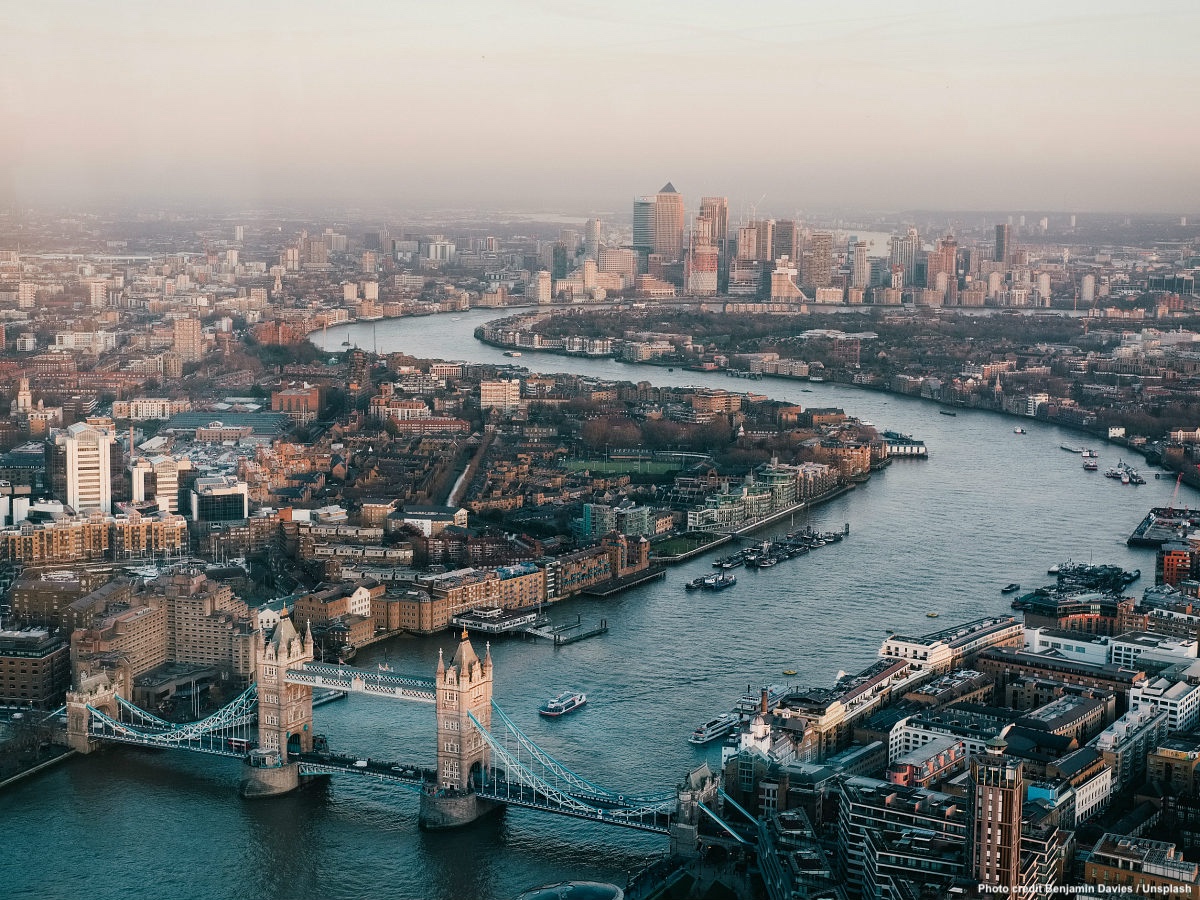
Property development in Central London is water under the bridge. If you want to experience the beating heart of the city, many ordinary Londoners suggest wandering through the markets and high streets of the outer boroughs. Bursting with shoppers, food, and rhythms from Turkish, African, Jamaican, Asian, Indian, and Middle Eastern traders, these places feel like a central hub for residents who do their weekly shopping and catch up on neighborhood gossip. So far, these neighborhoods have managed to fend off urban development, but now the threats are real.
***
It is 10:30 am and Ridley Road Market, in Dalston, Hackney, is lined with street market stalls selling clothing, jewelry, herbs, spices, and food, yams, scotch bonnets, mainly vegetables used in African and Caribbean cooking. On Ridley Road, there is also an indoor market, but the lights are out. It’s completely dark inside. “I’ve been in this market more than 12 years,” explained Fatmata. She sells bedding, and most of her customers are from the area. “I’m so social with them. Some are pensioner ladies; they come, sit down, and chat. Some of them say, ‘Fatmata, let me give you this. When they pay me, I will pay you.”
“We sell to the world, white, black, blue, pink, every color, darling. Every color. We are Caribbean people. Look, England, you know, you don’t feel the sun shine. We shine,” chanted Wayne, another indoor trader.
Some other traders have moved their stalls with clothes outside the indoor market, but other sellers, like Errol, can’t. He sells used vinyls, Rolling Stones, rock, pop, jazz, and theme music for films, but his rickshaws can’t go out. “I also definitely can’t deal with the weather because of my age. I know that the weather does take a toll on people,” said Errol. His shop is scanty “because I don’t know what’s going to happen.”
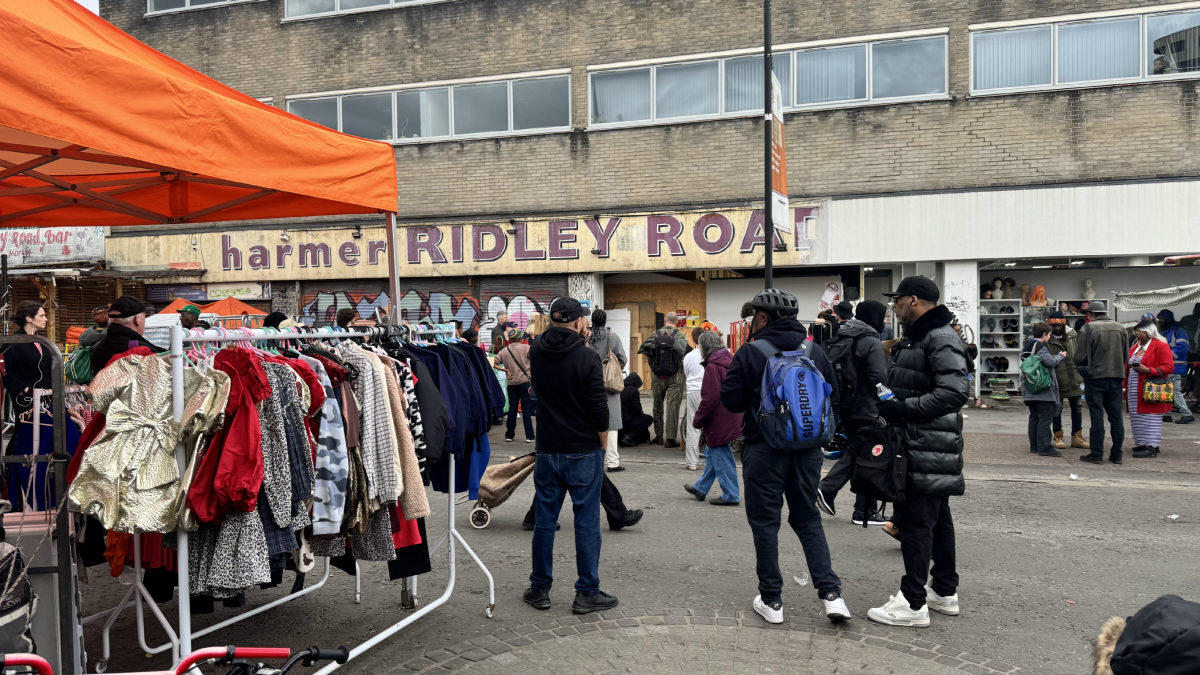
Outside the market, two banners read “Ridley Road outdoor market is here to stay” and “We’ll support traders to compete with the changing high street.” Another sign by the Hackney Council reads “We’re investing over £1 million to make improvements to shoppers and traders.” But these promises, traders feel, haven’t come to fruition with the indoor market. They said the investments the Council put in haven’t been for the traders but rather for security. Facial recognition cameras have been installed throughout the street, and some benches point out other improvements by the Council.
In Hackney, more than 2/3 of its territory has been identified as Opportunity Areas (OAs) in the Mayor’s London Plan with potential for new homes, jobs, and infrastructure of all types. According to the Plan, “These sites are central to the city’s growth, focusing on high-density housing and commercial development.”
In 2016, Larochette Real Estate, a subsidiary of Larochette Real Estate Inc, a company based in the British Virgin Islands, bought Ridley Road’s indoor market. The first eviction letters were issued in 2018 to demolish the building and make way for luxury flats and offices. The same year, Hackney Council listed the building as an Asset of Community Value (ACV), which partially protected it from full redevelopment, citing its benefit to the local community. Yet, for more than seven years, traders have been fighting to stay, only to be told this year to leave the indoor market by 31 March, as their leases won’t be extended.
Larochette argued they are unable to operate the building’s ground floor as a viable business while complying with the safety recommendations set out in the Community Protection Warning issued by the police.
On 17 March, the indoor market traders, representatives of Hackney Council, Hackney Police, and Larochette Real Estate, held a public meeting. Larochette (behind is Ziser London) committed to the traders in front of Hackney council members that they would use a temporary closure to speed up long overdue investment in the building, allowing it to reopen and for responsible businesses to return this summer. The closure will affect the ground floor that houses independent retail units. The first- and second-floor studio spaces and offices will operate as normal. Hackney Council offered indoor traders the option of temporary stands outside the street market.
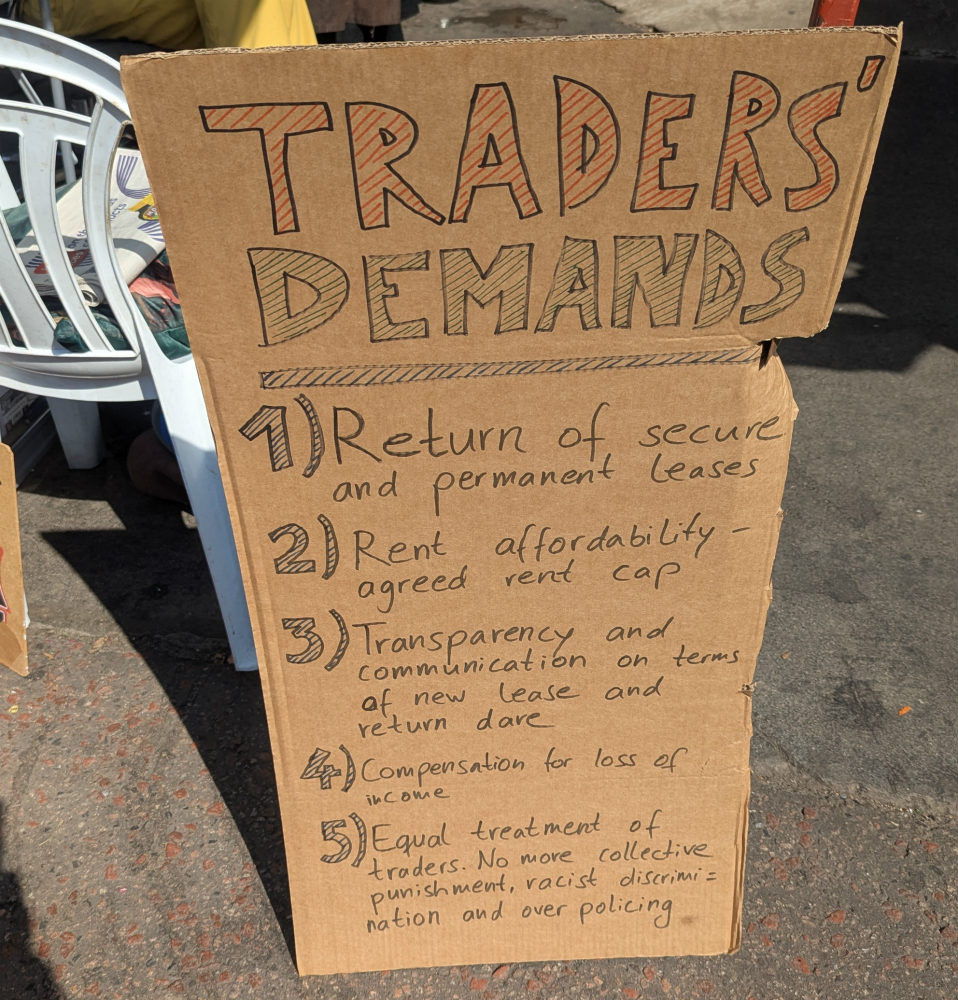
But traders think their landlord won’t keep their word. They have a long track record of broken promises regarding refurbishment, dating back to 2022. In addition, the indoor market on Ridley Road serves a community very different from the middle-class urbanites that Ziser London advertises on its website. What would make a property in a borough where 40% of the children live in poverty, and the elderly are deprived, financially attractive, unless the investor is willing to sacrifice financial profit for a social purpose? In other words, what’s the rationale of refurbishing a new market with higher rents in a neighborhood with low-income customers? We contacted Ziser London but had not received a response at the time of publication.
On Tuesday, 31 March, security attempted to evict traders at Ridley Road indoor market, but they resisted and have stayed since doing shifts (including nights). On the Instagram account Save Ridley Road, they said the police warning doesn’t directly require its closure. “In theory, there is no legal risk to volunteers on site either,” they posted. “This is a civil matter; it’s not a criminal offense until the dispute is handled in court. If the police say they have a lawful reason to enter, always ask ‘On what grounds?’” they recommend. There are some reasons the police can enter and search.
***
Two years ago, the local business PLUSHSE16 on Rotherhithe New Road, in Southwark, had a different fate. Its owner, Michael Clinkett, believes he would have acted differently if he had been more informed about the eviction process. Back in 2024, we reported on the loss of its barbershop, ladies’ hair salon, car wash, food truck, and music studio, all local businesses serving mainly black and brown residents in a predominantly white neighborhood and providing him and his employees with an honest living for the last twenty years.
Although a new Southwark Local Plan required the site owner to develop a “Business Relocation Strategy” for Clinkett to relocate his business, the developer, Regent Land and Developments, used delay tactics and attempted to avoid relocating PLUSHSE16 by exploiting the complexities of planning and contracts. The site owner was already under pressure to sell to Regent Land and Developments due to her debts.
Recommended Read: London’s Housing Voices Offer Solutions for Whitehall
Today, the planning application, subject to relocation requirements, remains pending and has not been approved. The site is currently marketed for sale at approximately £3 million, a discounted price for a London location that remains in limbo and will be difficult to develop without an agreement with Clinkett. “From a legal perspective, in terms of development, I’m theoretically a developer because I have studied the ins and outs of the process,” says Michael Clinkett with a smile, even though his long fight continues. He and his wife, Carmen Gowie, have become avid campaigners under the “NoPriceOnCulture” banner to prevent the loss of community-serving local businesses like theirs to speculative development.
Last week, on 14 April, Carmen Gowie sat at an event with other community groups and campaigners in London. The occasion is the launch of the report, the Alternative London Plan for a caring city, issued by Just Space, an informal alliance of over 70 community groups, campaigners, and independent organizations affected by current property development in the city. The network has links to universities in London, such as UCL, CASS, and LSE, whose staff and students provide research that the network presents alongside their own grassroots evidence at London Plan hearings and in other events. Since the first London Plan in 2004, Just Space has worked to bring Londoners into the process of its production, and into the Examination in Public, to make the authorities aware of how their strategic policies impact ordinary people at ground level.
Over the past 25 years, they claim, the London Plan has encouraged the financialization of property and the building of speculative housing that does not produce the homes Londoners need or can afford. “We have to contend with the deep pockets of property developers and other special interest groups, who lobby strongly to get the Plan’s policies to benefit their interests.”
According to the Alternative London Plan for a caring city, London has about 600 high streets and town centers, with 47% of businesses outside Central London located on high streets and 1.45 million employees working nearby. These areas contribute to local economies, support startups, and provide jobs for young people and immigrants. In the 1980s, the GLC adopted a ‘Community Areas’ policy to safeguard working-class residential communities on the edge of Central London, at that time particularly vulnerable to displacement by speculative commercial development. The principle was that social housing and facilities which served the local community would take precedence over proposals designed to cater for wider demands, such as tourist-related activities.
Twenty years later, states the report, “successive London Plans began the focus on growth, of soulless new ‘quarters’ of high-rise development aimed at investors, sometimes only barely occupied and unsuited to community life.”
***
Across the Thames from Ridley Road, a campaign has erupted in Brixton in response to Lambeth Council’s decision to approve the development of International House and an adjacent site. International House has long been a vital asset for its local community, serving as the largest affordable workspace in London. This building, previously a council block, was vacated in 2018 and operated as a “meanwhile space” for over 150 organizations, including startups and charities focused on social services such as mental health care and domestic violence prevention, providing immense social value to the neighborhood and London.
The Council plans to enter into a joint venture with developer London Square, which was purchased in 2022 by Aldar Properties—a property branch of Abu Dhabi’s sovereign wealth fund—to transform the entire block into market housing.
“From the profits the developer makes, they will provide social housing on the other site. Just a month ago, Lambeth Council approved planning permission for this housing scheme,” explained Joe Cole, a part-time Master’s student and a member of Just Space. He is actively involved in the campaign opposing the International House housing scheme through the planning system to protect it from potential speculative development.
“They’ve claimed throughout the process that there is a ‘Business Relocation Strategy’ for current tenants, but I know for a fact that they don’t have any specific places in mind. There has not been any meaningful engagement with the tenants to assess their needs,” said Cole.
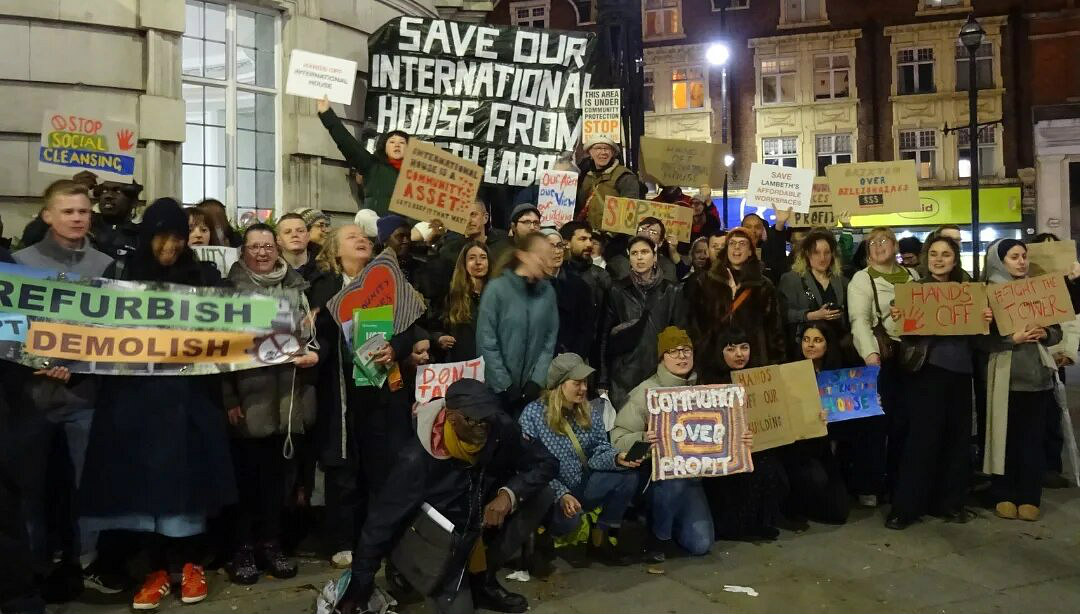
As part of their campaign, Cole and other members are working to map better the social benefits of the activities taking place in the building because, as Cole pointed out, “there hasn’t really been any effort to understand what’s there.” For example, an organization that engages with individuals at risk of gang involvement needs to be situated within gang territories to effectively carry out its work, which, in London, limits the areas where such organizations can operate.
Just Space advocates that councils conduct comprehensive audits of high streets, in partnership with local businesses and communities, to evaluate the economic and social value of various activities, including fresh food shops and independent services. This audit will help prioritize non-monetized productivity and establish a foundation for protecting high streets from displacement and the loss of local businesses, which particularly benefits low-paid citizens and diverse working-class communities.
“Without meaningful policies based on risk or impact assessments, we end up with poor policymaking, in my opinion,” lamented Cole.
Meanwhile, London’s loss of local businesses serving communities is a consequence of a 21st-century global city’s moral decay. The influx of foreign capital and offshore property developers, following a spree of urban development with eyes on Opportunity Areas, will change London’s character. Housing for a new clientele is driving commercial shifts, replacing longtime residents and losing community-serving businesses with upscale services or chains.
Ridley Road, International House, Shepherd’s Bush, Old Kent Road (a demonstration announced for the coming 25 April), Brixton Plaza, Lewisham Shopping Centre. The list keeps adding new sites. Grassroots groups, urban planning students, and residents are addressing a financially compromised London through the tale of massive development plans that could mark their communities’ murky end.
Just Space plans to present the Alternative London Plan for a caring city to the Mayor later in 2026, when he will reveal a draft of the new London Plan. There is hope that such plans can be halted by a change in local administration during the upcoming elections in three weeks or, at the very least, through judicial reviews of the different sites. Community groups will keep fighting for all Londoners, for a city that they say is not put up for sale.