
Listen to the audio version of this article (generated by AI).
This article was produced independently with support from the non-profit organization Nobel Women’s Initiative.
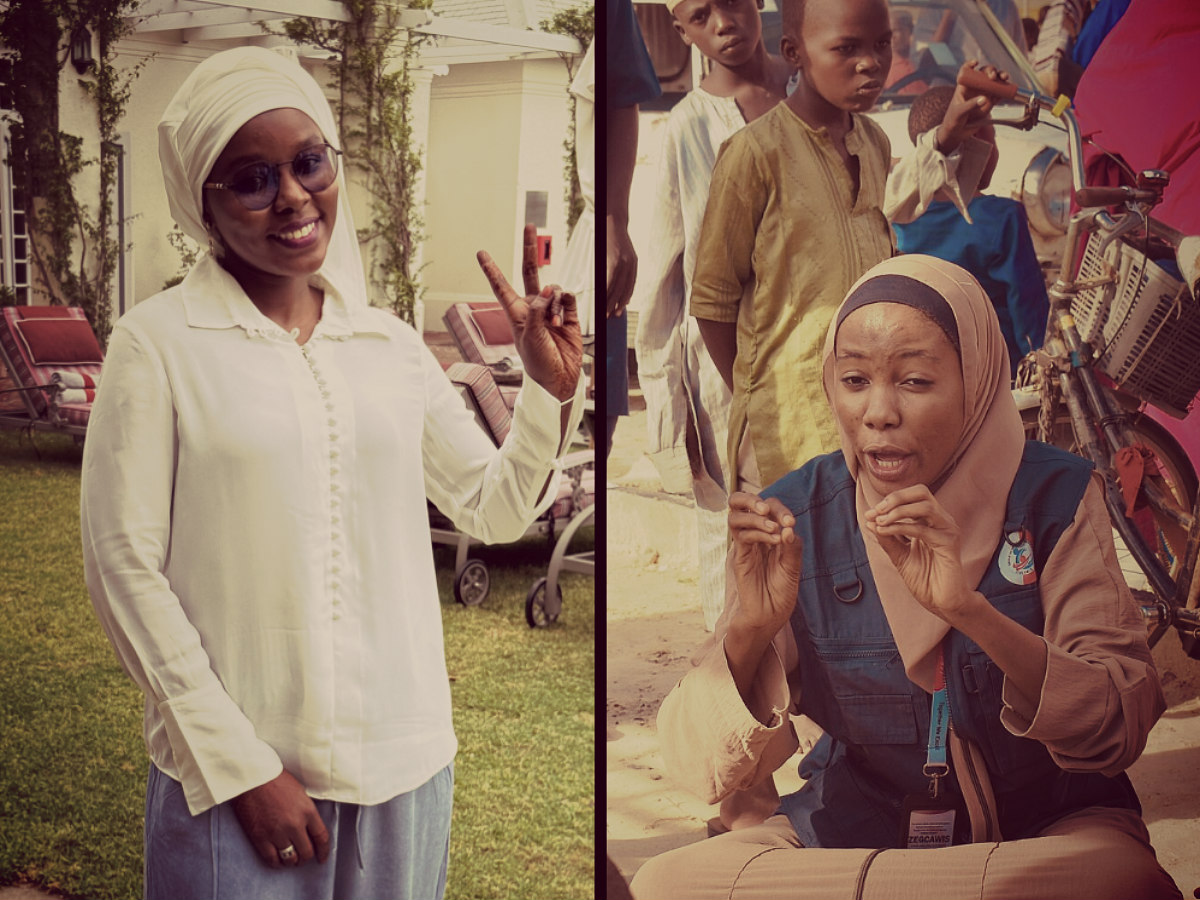
“It was 6 a.m.; the sky was purple. I remember the birdsong and the cold,” recalls Fanna Abdu Muhammad in a speech at the One Young World Summit in Cape Town this November. In 2012, her family fled northern Maiduguri, a large city in northeastern Nigeria, after receiving a warning of an impending attack. They moved to the southern part of the city.
Days later, Boko Haram fighters burned down their home. Fanna’s father was a civil servant who supported his children’s education, believing in the value of the very Western schooling the group sought to eradicate.
Aishatu Kabu was also forced to flee. She left her hometown of Damboa for Maiduguri at 17. “The beginning of the northeastern Nigerian displacement started with my community in 2014. They burned down our houses to ashes.”
Yet displacement and fear did not put an end to their education. Muhammad, now 33, and Kabu, 29, continued their studies despite being forced to flee their homes. Having experienced first-hand how education can change lives, they are now working to promote community-led girls’ education in Nigeria, giving other children the same opportunities and helping build peace in the north.
Boko Haram, founded in 2002 in the town of Maiduguri, in Borno State, and whose name means “Western education is forbidden” in Hausa, has devastated girls’ education in northeastern Nigeria since its insurgency began in 2009, killing 2,295 teachers and destroying 1,400 schools. Last May, the group abducted more than 50 children from three schools in the communities of Musa and Lassa. Nearly 200 days later, they are still being held captive. Boko Haram uses abducted children as bargaining chips, seeking the release of detained leaders or ransom payments, sometimes in the form of money, food, and other basic supplies.
Muhammad graduated with a Diploma in Education, a BSc in Biochemistry, and two separate master’s degrees: a Master’s in Information Management and a Master’s in International Affairs and Diplomacy. “As I grew up resettled and safe in southern Maiduguri, I noticed pain and despair in young women and children affected by conflict. I decided I could not remain silent. A lot of people are losing hope in continuing with their education and losing hope in life entirely,” she says.
Nigeria has over 20 million children not attending school, many of whom live in conflict zones. One in three women in Nigeria experience some kind of gender-based violence, in the form of child marriage, sexual exploitation, or domestic violence. Today, of the 2 million people internally displaced because of the conflict, 56% of displaced children in the region remain out of school, widening the gender literacy gap, increasing forced adolescent marriage, and mental health problems.
***
The threat of kidnapping and sexual violence has driven many parents to withdraw their daughters from school.
A defining moment for Muhammad to promote community-led girls’ education in Nigeria was helping her sister return to her studies. “My younger sister said she does not want to go to school because we were targeted for attending Western education, and she said she wanted to be safe.” Today, through extensive guidance and encouragement, her sister is studying Peace Studies and Conflict Resolution at university. She says, “Supporting her is when I realized listening is a form of peacebuilding.”
To further support young women affected by conflict in Maiduguri, Muhammad started a mentorship program called “Catch Them Young.” Her initiative began by bringing together young women from her community, offering them a safe space to share their experiences and find support through weekly meetings and peer-to-peer sessions. As a result, many have since returned to school, started their own businesses, or become peace ambassadors. The initiative has also expanded into internally displaced persons (IDP) camps, where women facing protection concerns, including gender-based violence, are referred to specialist services.
Recommended Read: In South Sudan, Youth Turn to Theater to Build a Nation
So far, the program has supported 500 displaced young women, advancing community-led girls’ education in Nigeria by helping them return to formal schooling or acquire practical skills to earn a living. “There are women who have never been in the education system and are unwilling to go back, so we provide livelihood support for them to develop their own skills and enroll them in skills acquisition programs,” she explains. Many learn fashion design or traditional crafts such as making earrings, bracelets and caps—Maiduguri is a major center of traditional cap-making in Nigeria.
One of Muhammad’s mentees, Aisha, walked 71 kilometers barefoot with her two daughters after Boko Haram abducted her. When Muhammad first met her, she was traumatized and unable to speak. Today, she earns a living making caps, and her daughters are back in school.
Another turning point came in 2018, when Muhammad supported a 14-year-old girl who had been sexually assaulted while living in foster care after fleeing her village. Pregnant and stigmatized by her caregiver, the girl considered taking her own life. Muhammad persuaded her to continue living. She gave birth, returned to school, and eventually became a community volunteer advocating for sexual and reproductive health and rights. “She was my first inspiration after my sister,” Muhammad recalls. “Her story strengthened my commitment to gender equality, women, peace and security.”
Muhammad aspires to start a business to fund her women’s survival network, which she envisions, as she also sells perfumes and designs fashion. For her, working towards ending violence in society includes listening, rebuilding trust, and bringing survivors and young people into conversations about peace. She believes that education is critical to this effort. As she puts it, “We need to help survivors see themselves not only as victims of conflict, but as people who can shape what comes next.”
***
Through her humanitarian work in Maiduguri, activist Aishatu Kabu also believes that children from communities like her own need access to education to ensure they have a seat at decision-making tables in the future, where they can help shape policies and speak for their communities. This conviction led her to found the Zenith of the Girlchild and Women Initiative Support (ZEGCAWIS) in Maiduguri. The organization advocates for community-led girls’ education, raises awareness of gender-based violence, and trains young people to hold the government accountable in Nigeria. International partners, including the Malala Fund, have supported this work.
“Unlike many girls, I continued my education,” Kabu states. She studied for a diploma in social work, which she describes as “That single opportunity changed everything for me,” because during her second year of study she started volunteering with Save the Children International and later joined Plan International.
Recommended Read: The Cultural Ambassadors of Bolgatanga, Ghana
After some time working in the IDP camps, she saw the need for more hands-on work beyond what NGOs were offering. “Bringing people outside the conflict zone to come and respond to humanitarian needs comes with consequences, because they don’t even understand the local language or culture. Sometimes you wonder how someone who doesn’t speak the local language can talk to your mother about breastfeeding or nutrition, or create awareness of sexual and gender-based violence and the need for you to have clinical management of rape within 72 hours.”
This realization prompted her to resign and go back to university to pursue a degree in mass communication. She wanted to influence change. Kabu observed children in IDP camps not going to school because they didn’t connect with the concept of education. “Whenever I walk into an IDP camp, I tell the parents that I am equally an IDP. Immediately, they can relate to my story. I tell them, ‘Why I don’t stay in these camps is because of my access to education; I’m working, I’m earning, and I’m supporting my family’.” Drawing on her own experience, Kabu uses her story to persuade parents in northern Nigeria about the importance of girls’ education.
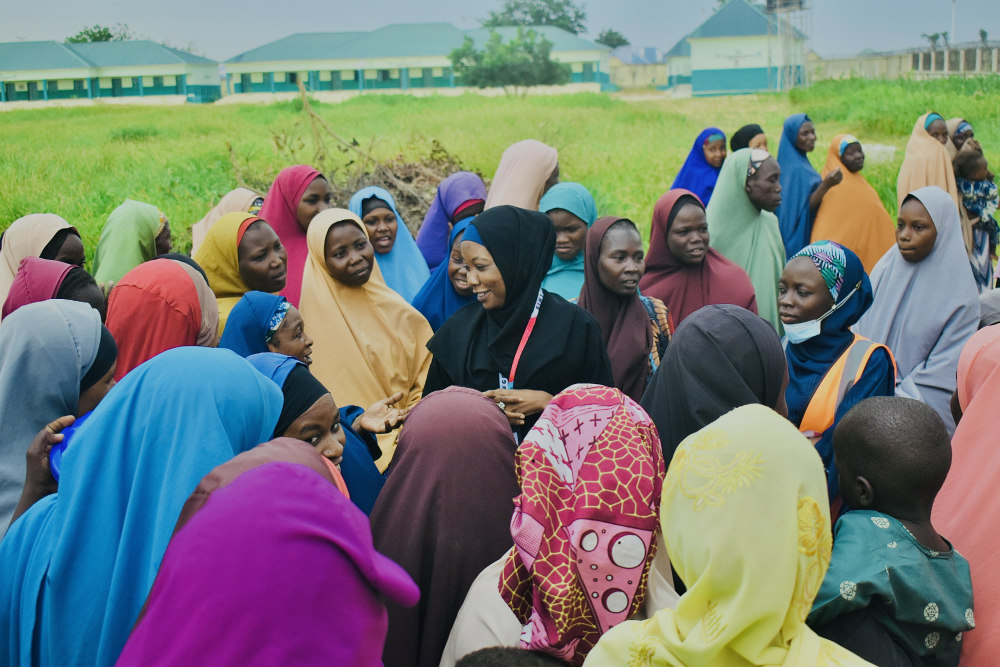
Boko Haram claims that its motivations are religious, but Kabu argues, “That is obviously not true. As a Muslim, we know that the first surah in the Quran is Iqra, meaning to “read,” and Islam always encourages seeking knowledge. Islam even encourages you to travel so that you can learn more. They claim they are fighting to establish Islamic states. But Nigeria is a secular nation. We all know that these are acts of terrorism.” While the guise of Boko Haram is Islamic jihadism, it must be noted that Borno shares borders with Chad, Cameroon, and Niger and lies at the heart of Lake Chad, making the region incredibly economically viable, as the lake is a lifeline for nearly 40 million people, driving industries like fishing, mining, and petroleum extraction.
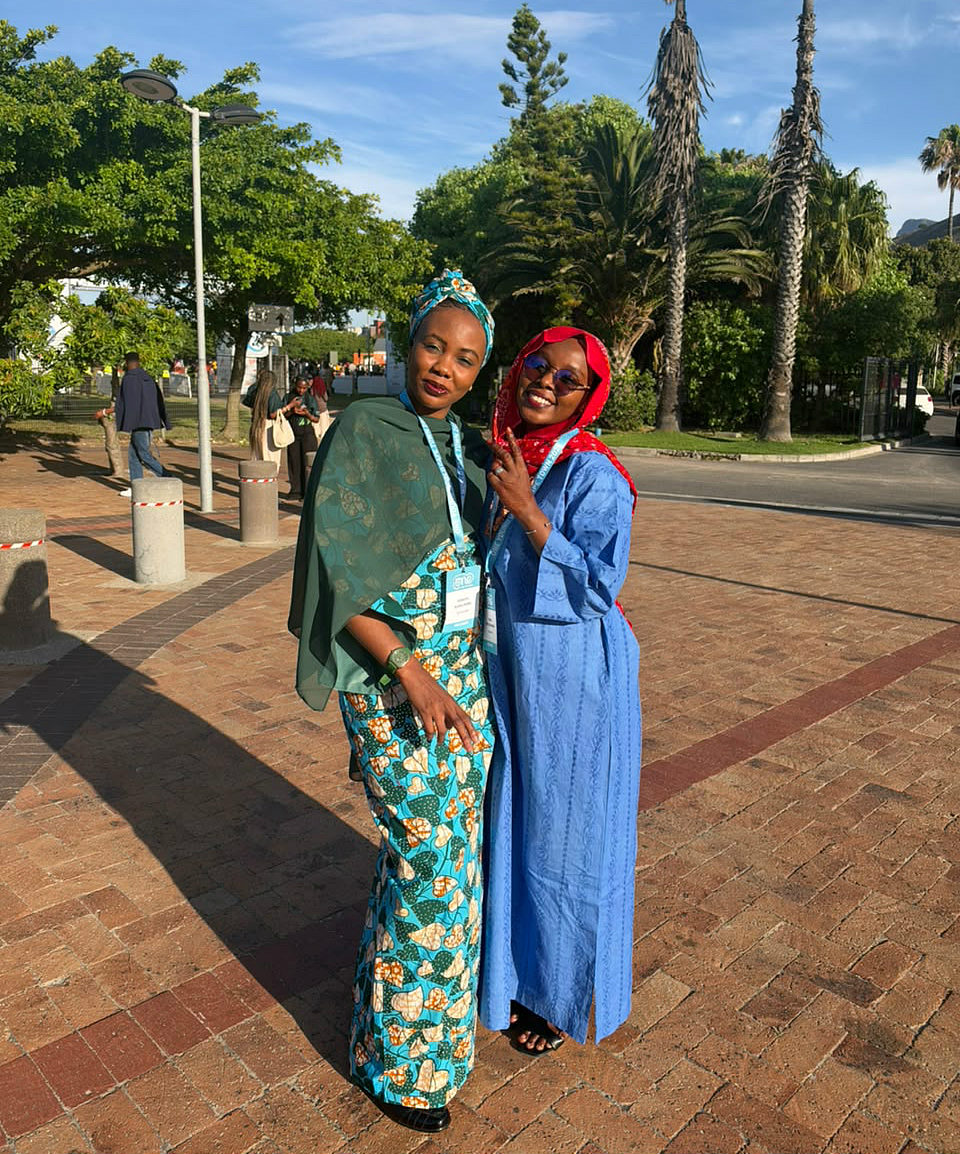
In 2021, both Kabu and Muhammad joined the Nobel Women Initiative (NWI) Sister-to-Sister Young Feminist Leadership Program—a six-week intensive program for young women. “Since then, my life hasn’t been the same,” Kabu says, adding that the program trained her to be more diplomatic and taught her the need to build allies with men. “My approach has totally changed from seeing men as perpetrators. Now I would even rather engage male colleagues to speak together on certain subjects. When you build allies, when men speak up, when you see men as champions as ‘he for she’s’, they will stand with you. They will amplify your voice.” Her organization also builds alliances with traditional and religious leaders, even developing sermon notes using both the Qur’an and the Bible.
“As someone who experienced displacement and survived, I want to see Nigeria, and those affected by conflict, to view themselves equally, not just through the lens of victimhood, but also as individuals who can rise and initiate peacebuilding processes that will go into supporting their communities to heal stronger than before.”
Muhammad echoes this sentiment, emphasizing that women need to get involved in decision-making tables and not wait to be invited, “Because those making decisions for women are not necessarily women. We also don’t have women supporting other women, especially in my community. If we can support each other, we can have each other’s back. We can create our own table. This is what we are lacking, and this is what we look forward to creating in the future.”