
Listen to the audio version of this article (generated by AI).
This article was produced independently with support from the non-profit organization Nobel Women’s Initiative.
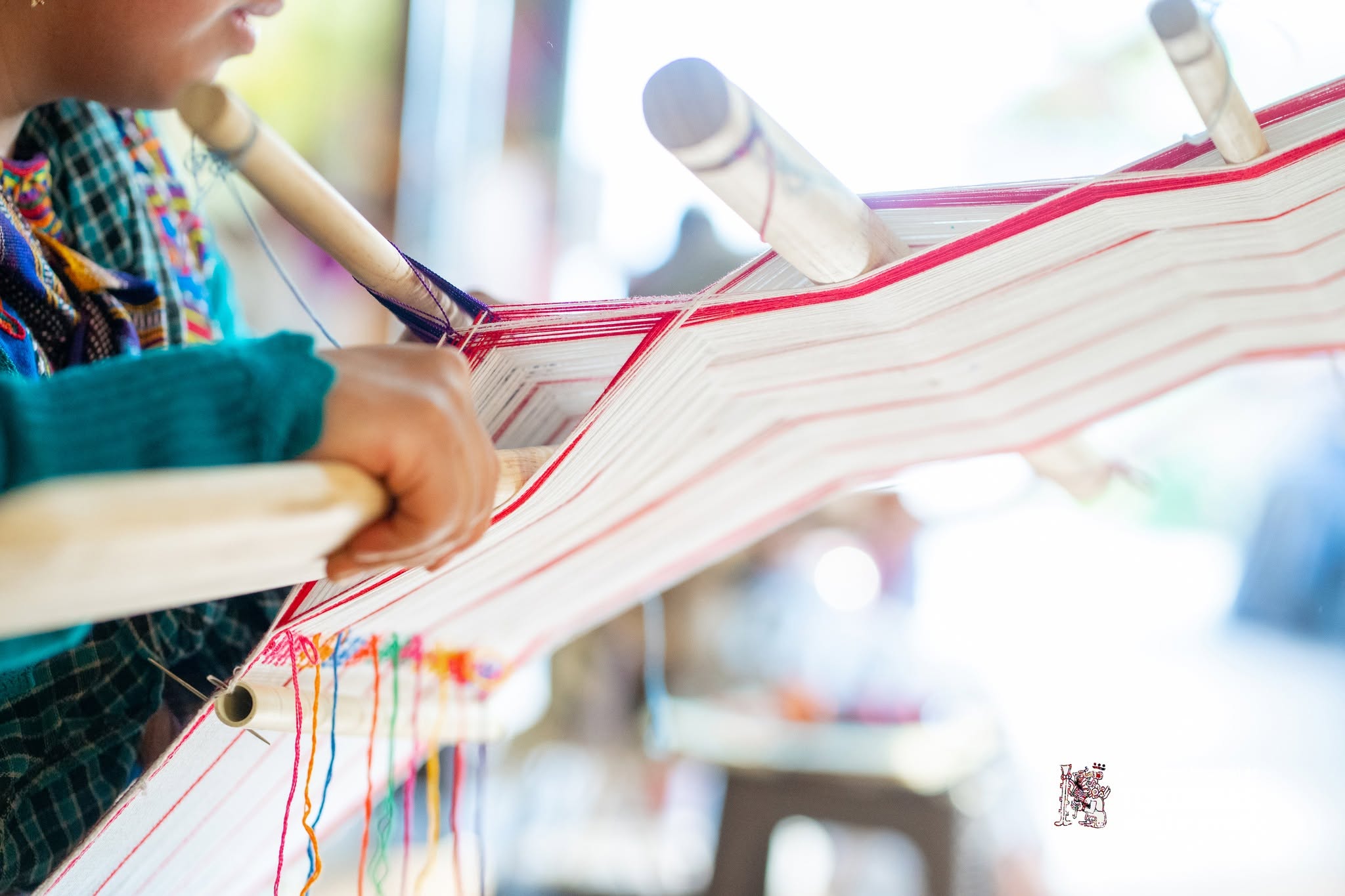
For the Maya, mountains, rivers, forests, volcanoes, stars, birds, and corn are all part of a larger cosmic order. The interlacing warp and weft threads of traditional textiles reflect this worldview, expressing through intricate geometric patterns how human beings are expected to live in harmony with the natural and spiritual worlds.
Today, the fashion industry frequently incorporates Mayan textiles, blending the visual appeal of an ancient culture with contemporary design trends. Often marketed as “ethnic” or “folk-inspired,” these creations rarely acknowledge the Indigenous intellectual property claims associated with the Mayan designs. Yet for the Mayan women who weave them, the knowledge embedded in these textiles is a collective inheritance—developed by their ancestors and passed down through generations over centuries.
That inheritance extends far beyond weaving techniques. The Maya developed sophisticated systems of mathematics, astronomy, and calendrical knowledge, many of which are documented in surviving codices. Their understanding of the cycles of the sun and moon, the four cardinal directions, and the agricultural calendar continues to shape community life today.
The Madrid Codex, one of the four Mayan codices that survived, contains astronomical tables, calculations on the cycles of Venus, ritual predictions, and calendars. On page 79 c, Grandmother Ixchel (translated to “Lady Rainbow”), the goddess of the moon, weaving, midwifery, medicine, and fertility, is depicted weaving alongside a man, thereby providing evidence that this skill was embraced by both women and men.
“However, today this ancestral knowledge primarily resides in the hands of Mayan women. Even when they were not allowed to speak their language or wear their embroidered clothing, Mayan women have consistently passed down their knowledge. They have always resisted,” explains Milvian Aspuac, a member of the indigenous authorities of Santiago Sacatepéquez, leader of the Women’s Association for the Development of Sacatepéquez (AFEDES), and part of the Weavers’ Council of this town and coordinator of the National Weavers’ Movement.
As I meet Milvian Aspuac over Zoom, we dig into history. The arrival of the Spanish ravaged Mayan culture and radically transformed the region. Wars, epidemics brought from Europe, forced labor, and colonial reorganization led to a significant decline in the indigenous population during the 16th century. Mainly, the Mayan populations of the Guatemalan highlands, Aspuac’s community, the Kaqchikel, resisted.
In 1749, after the Spanish conquest, the Kaqchikel had to buy property titles for the lands around Santiago Sacatepéquez that had belonged to their ancestors in order to gain recognition from the Spanish Crown. Today, the municipality has a strong Indigenous Kaqchikel Maya majority, comprising 82% of over 35,000 inhabitants.
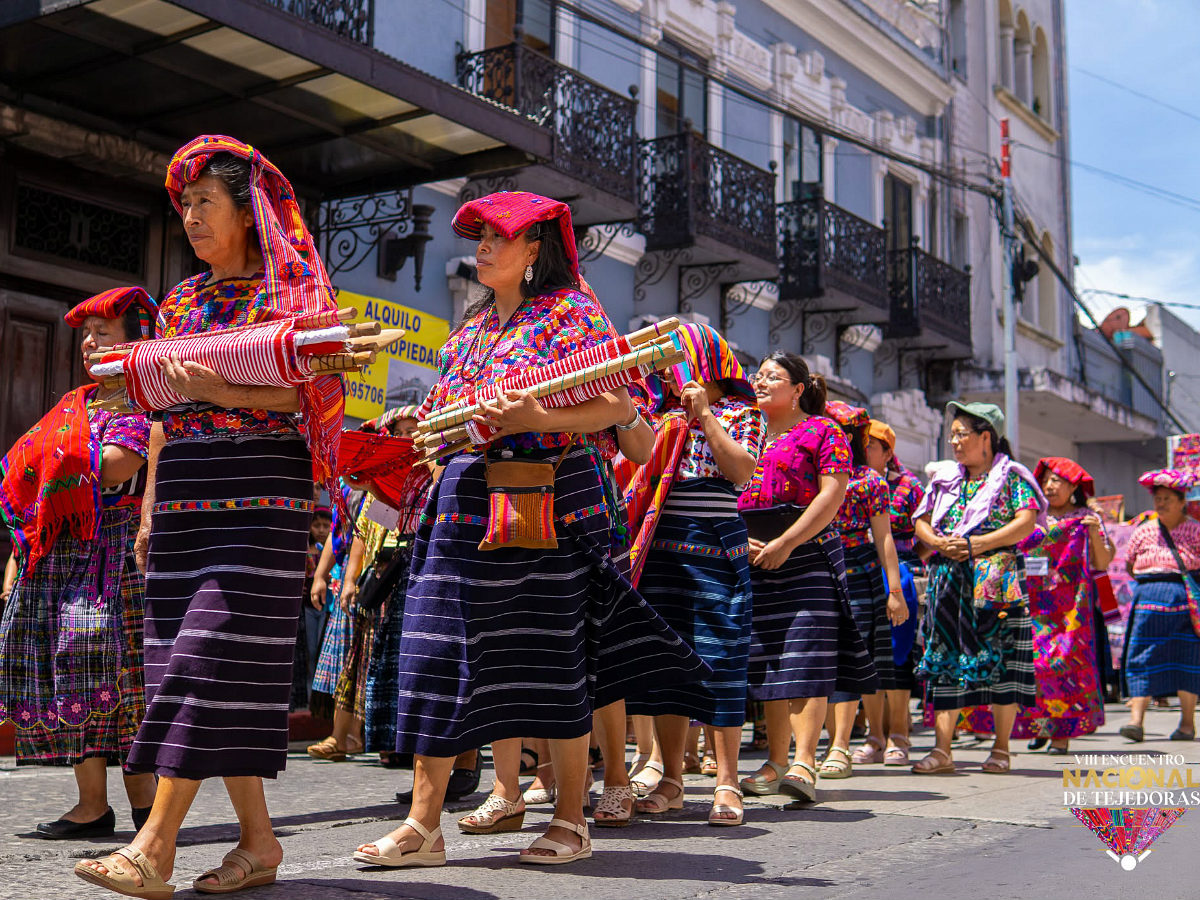
Through Aspuac’s description, I can envision the notable presence of her community in Santiago Sacatepéquez, with women wearing the colorful textiles on the streets. Most weavers sell their creations, or huipiles (embroidered blouses), to other indigenous women at prices that do not reflect the thousands of hours spent creating each garment. The women operate on the principle of reciprocity. For instance, if I am a weaver who makes a huipil for my neighbor, I consider not only the time and materials I invested but also how many times she has supported me—caring for my house, looking after my children, visiting me during illness, or bringing me food. All these factors influence how I set the price for her.
Textiles are so valuable to indigenous women that clothing represents the only significant part of their personal wealth, along with livestock, if they have any, since they are often denied the right to inherit land or property. When an urgent need arises, and financial resources fall short, these women consider selling their livestock first, then their clothing.
“They sell them with great sorrow, and the buyers of these used clothes take advantage of the situation, saying, ‘Well, it’s used clothing.’ This is how many companies acquire garments that took, on average, six months to produce for shockingly low prices—often around 200 quetzales (approximately 20 USD), depending on the size and condition,” Aspuac explains. After purchasing these garments, particularly ceremonial textiles that feature unique patterns and hold significant spiritual meaning, companies or designers often alter them—“mutilate them,” as Aspuac describes it—to create a variety of products like bags, shoes, and belts, “showing a complete lack of respect for indigenous peoples.” Once on the market, these items are sold at prices many times higher.
The problems around Mayan textiles are numerous. One is cultural appropriation; the commodification of textiles; the exploitation of the labor of some weavers who work for certain companies; and, finally, the plagiarism of designs. Aspuac explains that in 2012, Guatemalan designers threatened to register the designs in their names, a move that would have had legal consequences, including imprisonment, for the Mayan weavers.
“This was the last straw,” Aspuac states emphatically. “It prompted us to investigate the laws in our country to see if we could file a criminal complaint, but we couldn’t find any laws that could support our case.” However, they did discover a legal loophole in the Constitutional Court, which states that the State must recognize and protect Indigenous peoples, their knowledge, and their ways of life. Unfortunately, no legislation has been developed to protect these rights, particularly for women, who are the guardians of this knowledge. If they were given the chance to manage this resource, it could provide a means for indigenous women to generate income, contributing to their economic autonomy with all the positive benefits that entails.
In 2017, the Constitutional Court acknowledged the need for a law to establish collective intellectual property rights for works produced by Mayan weavers. This is a significant step in the country’s jurisprudence, yet the Congress has been slow to enact such a law. “We advocate for the Indigenous people’s collective intellectual property rights regarding Mayan designs, as we are not individual authors but rather one collective author,” Aspuac explains. Within the framework of Indigenous rights to self-determination, they hold assemblies in their communities—known as weavers’ assemblies—and have established weavers’ councils.
These councils serve as a bridge between the community and third parties interested in their weavings, such as companies, institutions, or designers. The weavers’ movement in Guatemala comprises 25 councils from municipalities in various departments, including Sacatepéquez, Chimaltenango, Guatemala, Sololá, Alta Verapaz, Huehuetenango y Quiché.
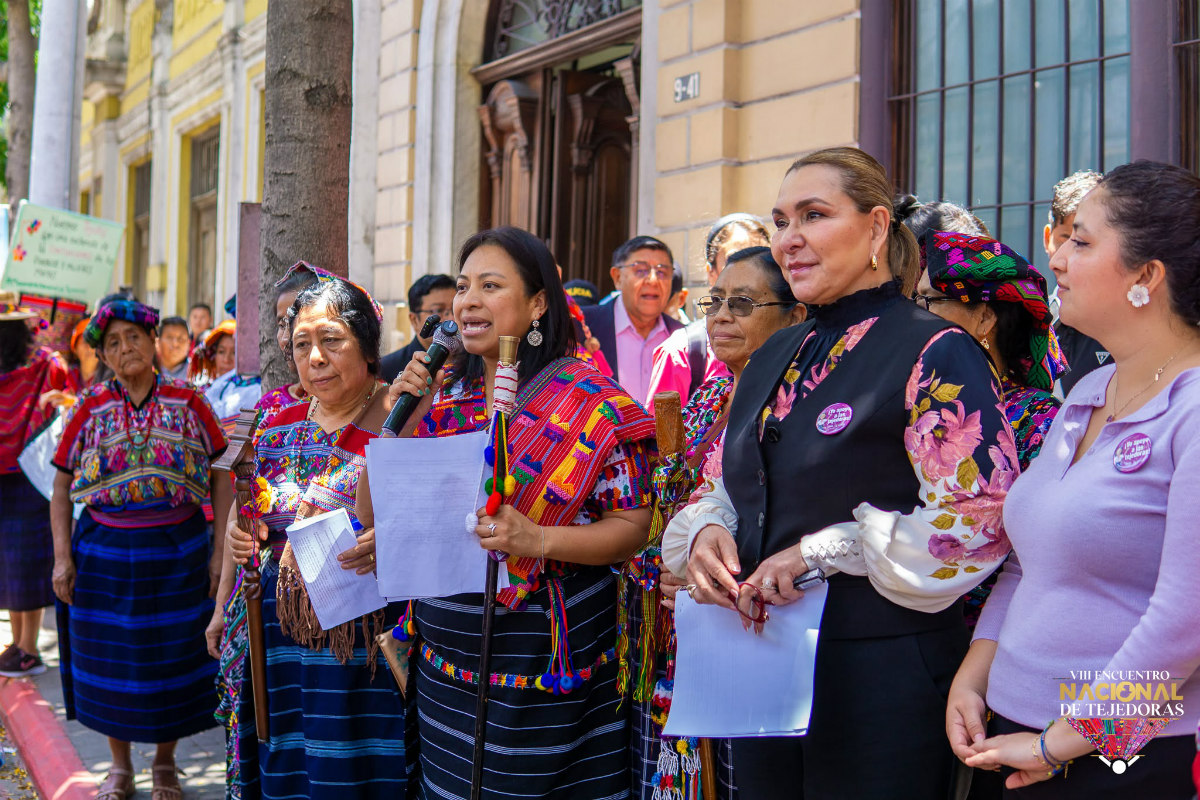
“We seek to engage in bilateral dialogue and active listening. If companies genuinely want to provide work for the weavers and support Indigenous communities so that we can thrive economically while preserving our identity, they could request fabrics, and the weavers could create a fabric specifically for a particular product,” explains Aspuac. They want companies to recognize them as bearers of rights. If someone wants to use indigenous Mayan textiles, they should ask for permission regarding what can and cannot be sold, such as ceremonial huipiles, and, as with any other intellectual property, compensate the creators like any other work, whether it’s a book or a song.
A striking parallelism can be made between a Guatemalan huipil and a Japanese kimono. Both involve skills passed down through generations, strong regional identities, significant labor and expertise, and cultural symbolism embedded in their designs. Japan has developed a highly institutionalized system for protecting and marketing traditional crafts, including recognition of certain artisans as Living National Treasures. As a result, the labor and cultural value embedded in kimonos is reflected in their market price. In contrast, the Guatemalan government has historically not afforded the same recognition to valuable Indigenous textile traditions in the country, even though a handwoven huipil embodies generations of accumulated knowledge and requires months of work.
Recommended Read: The Women Disrupting Hate, From South Sudan to Myanmar
On the contrary, Aspuac notes that in the past, Mayan weavers had to file a criminal complaint against the Guatemalan company María Bag’s, which massively purchased used regular and ceremonial huipiles in Guatemala to create handbags for international export. According to Aspuac, the US fashion giant BCBGMAXAZRIA also frequently uses designs from Indigenous peoples worldwide without seeking consent.
Aspuac is speaking with me from Panama, where she is attending the Annual Forum on Business and Human Rights, established by the UN Human Rights Council in 2011. In 2000, Panama approved the first sui generis (of its own kind) Indigenous Intellectual Property system in the world that granted Indigenous groups exclusive, collective, and perpetual rights to their Traditional Knowledge (TK) and Traditional Cultural Expressions (TCEs), which are also what Aspuac seeks for Mayan design. Both concepts are fundamental in international law regarding the rights of Indigenous peoples and local communities.
“I believe an international call to action is essential. We must address the issues of appropriation, dispossession, and cultural extractivism, as they significantly affect Indigenous people, especially women,” says Aspuac. “In Guatemala, we are experiencing something we call ‘folklorization.’ Our images, our ways of life, and our clothing are being ‘folklorized.’”
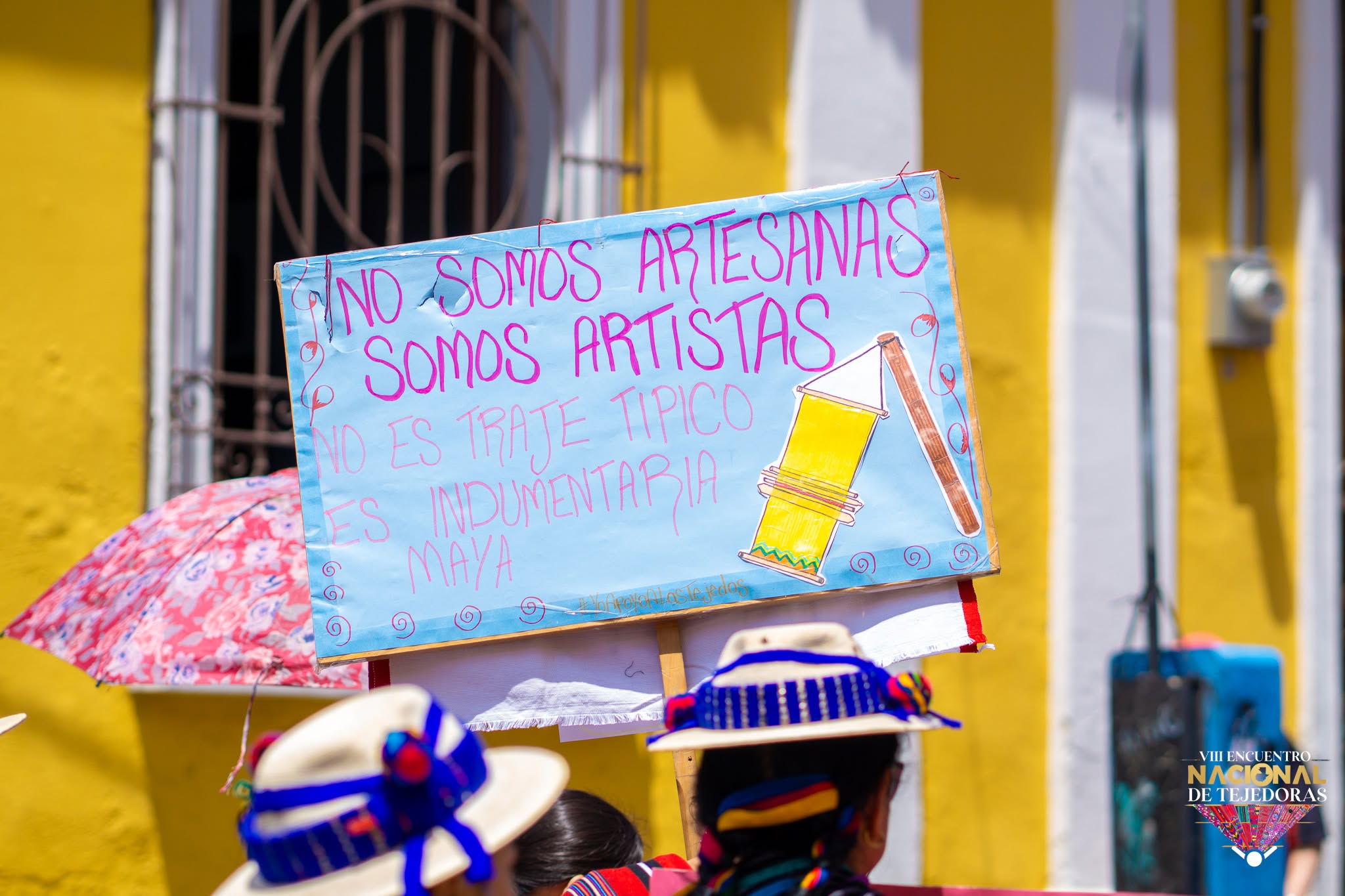
In 2020, the Constitutional Court ruled in favor of the weavers’ petition, ordering the Guatemalan Tourism Institute (INGUAT) to stop misusing Mayan images in its advertising campaigns, “as if Indigenous children and women living in precarious conditions were some kind of spectacle to be viewed,” laments Aspuac. Instead, INGUAT was instructed to establish mechanisms for the effective participation of Indigenous peoples, through their legitimate representatives, in designing and formulating public policies, plans, and programs to attract tourism to the country. “Winning this ruling has been very symbolic, and we are now engaged in political dialogue with INGUAT for its implementation.”
Currently, two important pending rulings are on Aspuac’s plate: the effective participation of Indigenous peoples to ensure that the State stops reducing them to mere folklore, and the legislation regarding the recognition of collective Indigenous intellectual property for Mayan design. Both initiatives aim to benefit Indigenous women and contribute to the country’s progress. These efforts will challenge outdated colonial narratives, revealing “the deep-seated racism that exists in Guatemalan society, in public institutions, and in the country’s laws,” as noted by Aspuac.
While Aspuac attended the Panama Forum last week, an op-ed in a media outlet by some of the world’s leading economists appeared in a media outlet. This piece urged political leaders at all levels to support a “roadmap for eradicating poverty beyond growth,” developed by experts from UN agencies to grassroots movements. It highlights that “In a world richer than ever before, roughly one 10th of the world’s population still lives in extreme destitution. Millions of people cannot afford enough food, proper housing, or basic healthcare, while a tiny minority accumulates unprecedented wealth and power.”
The op-ed further states, “We do not agree on every policy detail. But we are united in the conviction that our economies must be redesigned around the fulfilment of rights and collective wellbeing within planetary boundaries, rather than maximising output at any cost. Human rights here are not an afterthought; they are the organising principle for how we measure progress, set priorities and resolve trade‑offs.” Based on this statement, Indigenous communities deserve protection for their intellectual property.