
Listen to the audio version of this article (generated by AI).
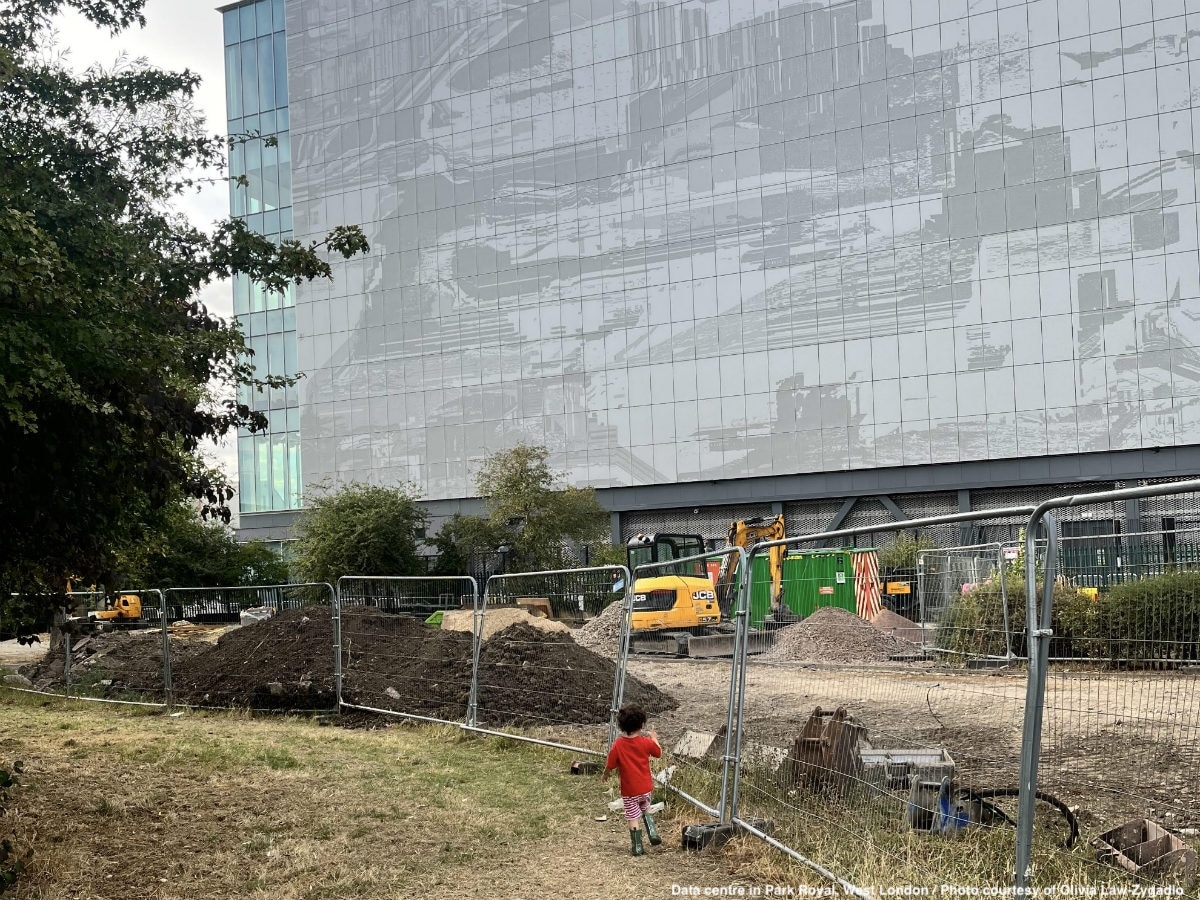
The first time Olivia Law-Zygadlo took her son to a playground in one of Park Royal’s few green spaces across the Wesley Estate in West London, she heard a constant buzzing from a grey-walled hangar behind it. Later, she developed a headache at home. “I had no idea what that building was until my husband told me it was a data centre. So I started researching and talking to neighbors,” she explains.
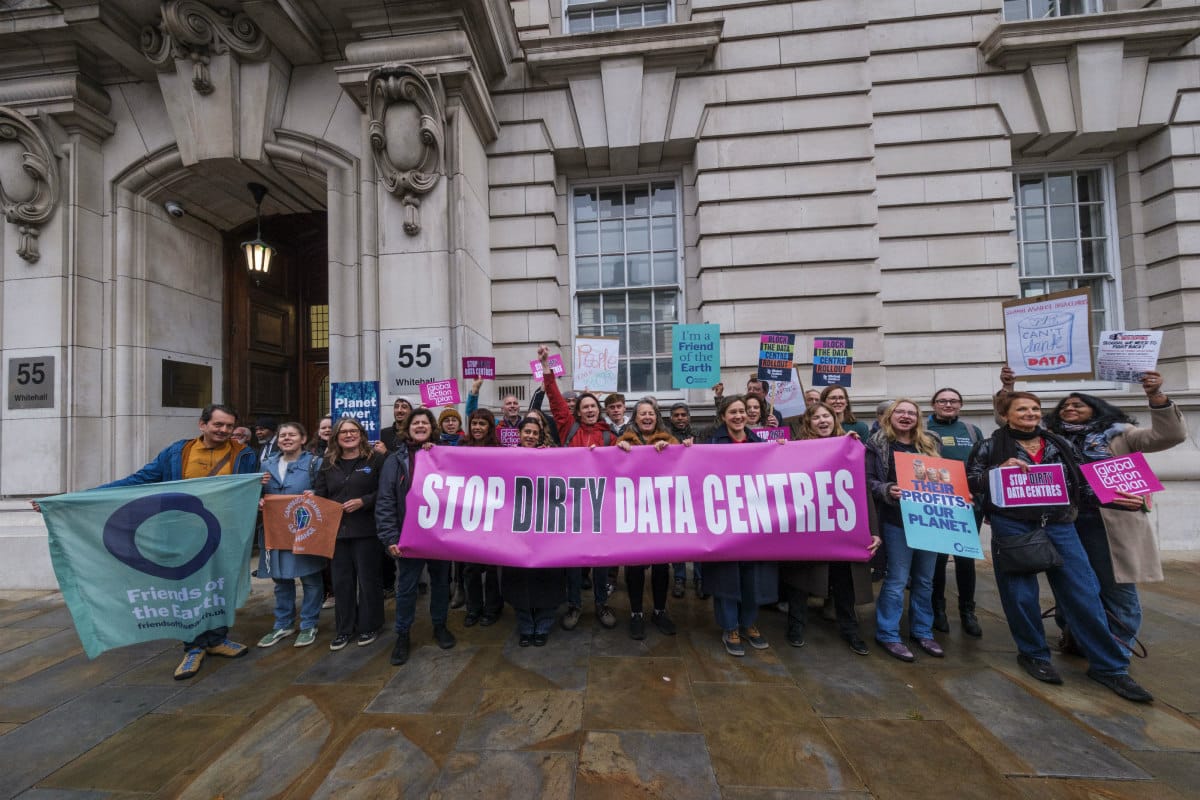
Barely a week goes by in Europe and the US without chatter about the impact of resource- and power-hungry data centres. Last week, community opposition led to the formation of the collective campaign Stop Dirty Data Centres across Europe, organizing public meetings, walking tours, and other events to call for an immediate moratorium on new data centre developments, particularly hyperscale data centres.
An HR and data analysis professional, Olivia Law-Zygadlo had never been involved in planning or data infrastructure before joining Stop NW10 Data Centres. However, she took on the formidable task of gathering evidence and bringing together fragments of information to get closer to something rarely available to the public: individual data centre-level information that city councils, national governments and the European Commission keep closely under wraps.
“I do want to acknowledge the residents of Wesley Estate, who’ve been fighting for this long before I joined. I’m only building on their work,” she notes.
During the past summer heatwave, an 83-year-old housebound Wesley Estate resident recorded 39°C inside her home—two degrees higher than the temperature shown on her phone. The estate, with around 240 homes, faces the data centre at 37–39 North Acton Road near the playground. Residents can hear its noise when they open their windows.
“Over the past year, my son has encountered breathing difficulties. We cannot say it is related to the data centre, but we’ve been trying to understand the cause,” says Law-Zygadlo. Some neighbors have raised concerns about respiratory problems as well.
By mid-July, demolition had begun on an old building opposite Wesley Estate, announced only by a notice on a lamppost that few residents saw. A letter later invited them to an informal consultation about a new data centre. The developer, Kao Data, plans to build directly beside the Wesley Estate’s homes in NW10, close to the existing data centre at 37–39 North Acton Road.
This was how a community opposition to data centres came to Park Royal, London. Not through media reports about protests or misinformation on social media—though both are plentiful—but rather because a small group of residents accidentally got wind of a new data centre planned for their community.
In West London, Park Royal is already one of the largest data centre clusters after Slough, becoming a hyperscale cluster with 8 operational data centres, 3 proposed or under construction, and one extension for Microsoft. This residential area is characterized by a remarkable mix of food production, logistics, and manufacturing. The Mayor’s London Plan has identified Park Royal as an Opportunity Area (OA), highlighting its potential for large-scale development that could generate substantial new jobs and housing across the boroughs of Brent, Ealing, Hammersmith, and Fulham.
Supporters of data centres point out the benefits—jobs, heat energy, taxes, and the many advantages of AI itself.
However, when Olivia Law-Zygadlo challenged developers on apprenticeship figures and permanent employment, the answer was essentially that they didn’t yet have a plan, despite already operating other sites for years. Only Kao Data told residents their 48 MW site will provide 30 to 40 permanent jobs. Also, the Old Oak and Park Royal Development Corporation (OPDC), the Mayoral Development Corporation established by the Mayor of London to secure the regeneration of the Old Oak and Park Royal area, sent a presentation with job numbers (February 2026). OPDC’s own planning data shows 855 claimed jobs for five data centres totaling over 205,485 square meters.
Here, the comparison with other uses of the same land matters. The Greater London Authority’s employment density benchmarks show that 205,000 square meters of light industrial use could support approximately 4,000 to 5,700 jobs. For example, Greencore’s food manufacturing facility at Park Royal employs more than 1,000 people in a significantly smaller footprint.
Independent research by Verdant (2026) found UK data centres deliver approximately 1.6 permanent jobs per Megawatt. Using data from the National Energy System Operator (NESO), which found that all data centres in Brent and Ealing alone required 490 MW, and Verdant’s calculation, you get fewer jobs than the 855 OPDC provided. OPDC later confirmed to Law-Zygadlo that it does not track whether the employment promised by developers has materialized.
Regarding air quality monitoring, neither the developer, the council, nor the planning authority has provided any information to date. Only Ealing Council confirmed (EIR 26-1225) that since January 2024 they have received no air quality alerts, dust breach notifications, or monitoring data from any data centre construction or demolition site in North Acton ward.
Through the Freedom of Information Act, Olivia Law-Zygadlo obtained S106 carbon offset contributions for two data centres: nearly £7 million from Bashley Road and nearly £4 million from North Acton Road. Section 106 is a legal planning agreement between the developer and the local council under which a developer pays toward infrastructure or services needed to mitigate the impact of their development. When a development cannot meet its on-site carbon-reduction targets, it pays to offset the remaining emissions. Unlike voluntary global carbon markets, S106 funds are specifically invested within the local borough or city to offset the impact of the local construction directly.
A substantial portion of these S106 funds went toward the Old Oak and Park Royal Energy Network (OPEN), in partnership with Hemiko. This low-carbon district heating network, designed for West London, aims to capture and recycle waste heat from local data centres to heat nearby homes, including a nearby hospital. In addition, OPEN has already received over £50 million in central government grants through the Green Heat Network Fund.
In principle, utilizing waste heat is an excellent idea. However, the heat network raises several questions. Law-Zygadlo believes that OPDC has used this heat network as evidence of community benefit to justify approving more data centres. “They use it as proof that the data centre has environmental benefits. So, they pay more carbon offset credits to the planning authority— and they continue to approve the next data centre, based on something that doesn’t exist yet,” she adds.

The developers also claim that the heat network will serve more than 9,000 new homes. But that’s the keyword: new homes. Connecting an existing older property to a heat network isn’t automatic or free. It requires a Heat Interface Unit to replace your existing boiler, new pipework, and potentially modifications to radiators. Hemiko’s own program information says connecting existing properties is not necessarily cost-effective in the short term. “So what we’re saying as residents is why the grant funding hasn’t gone toward the required infrastructure for the heat network?” Law-Zygadlo questions.
The average UK air source heat pump running cost is around £51/month for a two-bedroom flat. In contrast, based on the Worthing Heat Network—a major low-carbon district heating initiative in West Sussex—Law-Zygadlo estimates that the Hemiko tariff could be around £31 per month, but OPEN has not disclosed any tariff thus far. “People want to know what the impact on their bills will be, because that’s what they’re selling to us,” notes Law-Zygadlo.
Wesley Estate has received approximately £300,000 to £400,000 in direct community benefits from years of construction. “We are questioning whether that is a fair return and whether future S106 contributions—such as those from the nearby Kao Data center—will include a commitment to connect Wesley Estate to the heat network, covering the full cost of doing so,” she says. Her calculations show that the planning authority has both the data and the mechanism to calculate a fairer community benefit figure, and it could choose to do so.
Recommended Read: Kiel’s Quiet Revolt Against Big Tech
“This is a national issue, not just a local one,” says Law-Zygadlo. Data centres in West London are driving grid capacity constraints. The current local distribution network for Brent and Ealing is 47.4 MW, while data centres have formally secured a grid connection agreement of 490 MW from the National Transmission Network (NESO). Together, that amounts to 537.4 MW, equivalent to Bristol’s electricity demand, excluding homes, schools, and hospitals. When they asked the Office of Gas and Electricity Markets (OFGEM) how the electricity network would accommodate all of this, OFGEM refused to disclose relevant information under Section 35.
The facts about energy, heat benefits, air quality, and jobs, though important, are not the crux of the matter. Community opposition to data centres stems from a deeper concern than NIMBYism, resource misuse, or environmental damage. Over and over, Olivia Law-Zygadlo, as well as Ambily Banerjee, a speaker from Slough Against Data Center, expressed a feeling of being misled, ignored, disrespected, betrayed—of lacking a voice in fundamental aspects of their own everyday lives.
Recently, OPDC published a register of gifts and hospitality received from companies linked to data centres, included in Appendix 1 of its Audit and Risk Committee report dated 2 June 2026. The entries range from a ticket to the Chelsea Flower Show to dinner invitations. To residents, the data centres appeared to be an arrangement made among insiders—OPDC and far-off entities in Silicon Valley or who knows where, as well as the local leaders of their own city.
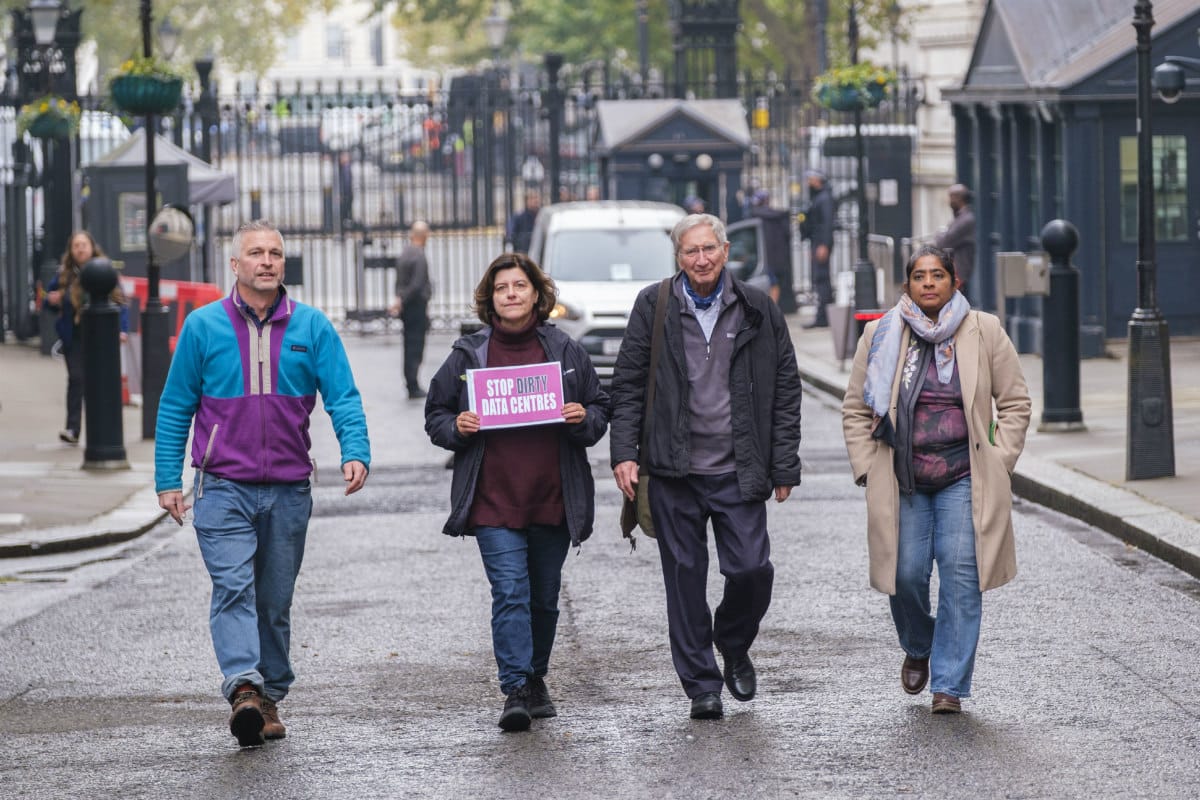
It comes as no surprise that people are mobilizing. The Stop NW10 Data Centres campaign has begun conducting independent air quality monitoring with help from Ealing Friends of the Earth. The campaign placed its own sensor at the boundary closest to an operational data centre. On 7 August 2026, the 24-hour average PM2.5 reading was 23.6 micrograms per cubic meter, around 57 percent above the WHO daily guideline of 15 micrograms.
Using the S106 carbon offset contributions for the two data centres and the Greater London Authority’s carbon offset calculation, Law-Zygadlo estimated an implied rate of approximately £221 S106 carbon offset liability per square meter. Consequently, she estimates that the existing and planned data centres together will produce over 19,000 tons of CO2 yearly, equivalent to the emissions of around 4,000 passenger cars driven for a year, and 500,000 tons of CO2 within the next 30 years. “That calculation is an estimate, not an official figure, and we excluded the oldest sites or applied a lower rate to them,” she cautiously explains.
The Stop NW10 Data Centres campaign has now secured funding from Greenpeace for professional-grade continuous outdoor monitoring of air quality, noise, vibration, and infrasound to gather more accurate baseline data.
At the local level, across Europe, campaigners are asking fundamental questions about our digital future: How many data centres do we actually need? What are they for? Who benefits? And how can we ensure that AI and data centres serve people and the planet, not private profit?
The four demands of the Stop NW10 Data Centres campaign include a moratorium on new data centre approvals across the Park Royal cluster until a full, independent cumulative impact assessment is completed. This assessment must examine air quality, noise, vibration, heat, electricity demand, water, traffic, and property values for the entire cluster, not just on an application-by-application basis. Additionally, OPDC must be held accountable for approving applications without an Environmental Impact Assessment (EIA) and without a cumulative assessment policy. Lastly, if the Kao Data application proceeds, it must include enforceable community benefits in writing, including a commitment to connect Wesley Estate to the heat network at no cost to residents.
The meteoric emergence of community opposition to data centres through grassroots movements across Europe and the US is a response to the speed and scale of data centre construction, which in turn reflects local governments’ failure to listen to their constituents.