
Listen to the audio version of this article (generated by AI).
This article was produced independently with support from the non-profit organization Nobel Women’s Initiative.
Hours before Mexico faced England in the World Cup round of 16 on July 5 at Estadio Azteca, another match was being played in the heart of Mexico City.
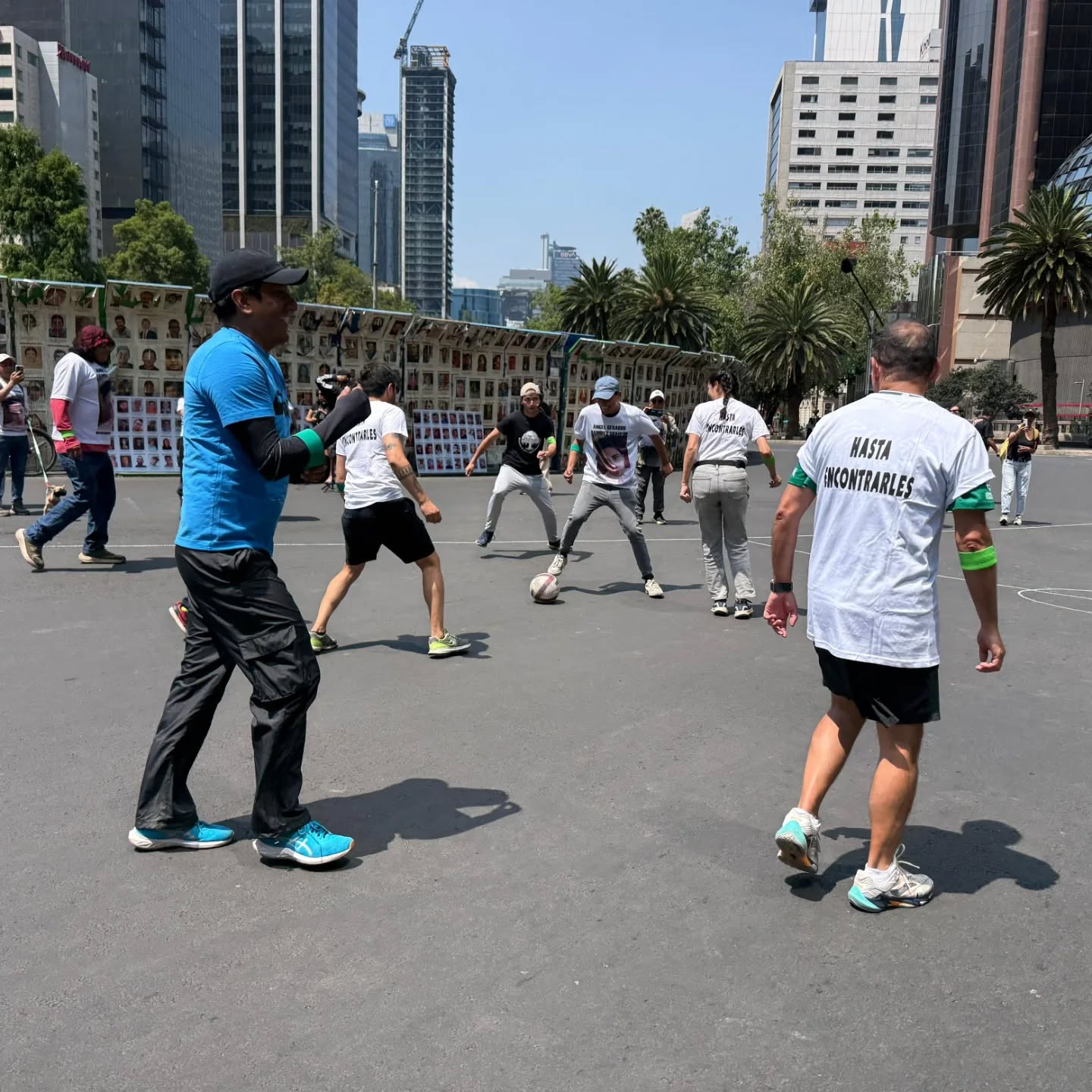
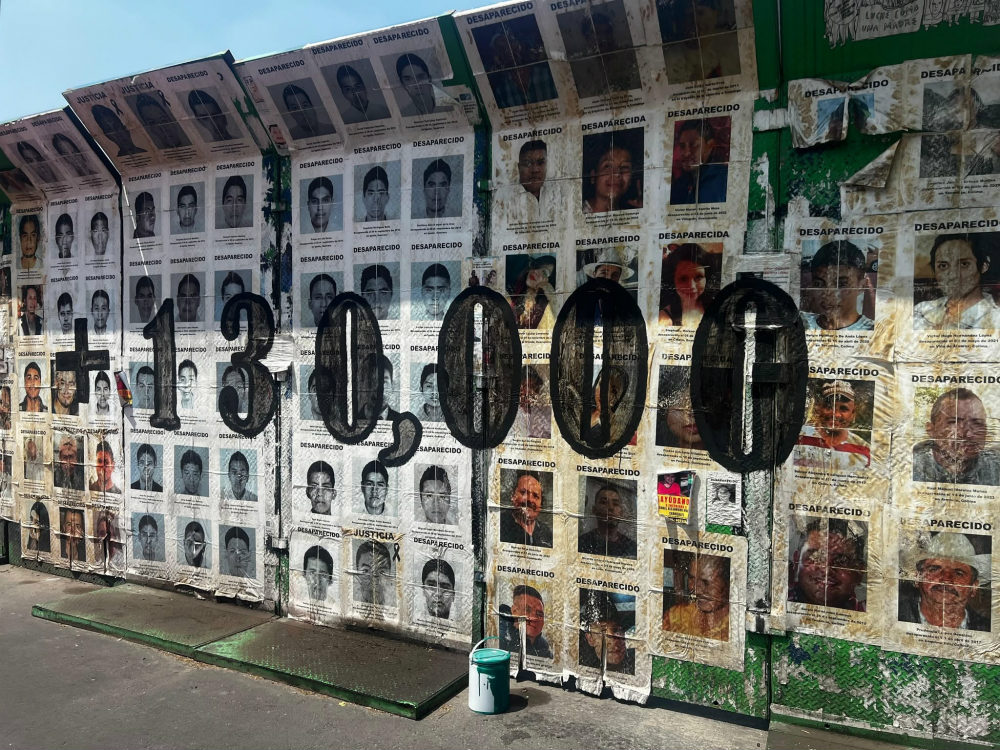
At one of the large roundabouts on Paseo de la Reforma, dozens of people gathered to play a cascarita, the Mexican term for an informal street soccer game. They did so just steps away from a wall completely covered with photographs of missing persons in Mexico.
On the sidelines, relatives of the disappeared—mostly mothers—talked to passersby and players. Between matches, they handed out flyers featuring the names and faces of their loved ones, taking advantage of the World Cup’s attention to raise awareness of one of the country’s biggest human rights crises.
In the last 20 years, the number of people who have disappeared in Mexico, especially women and young people, has increased exponentially, a crisis that has worsened particularly in the capital. Currently, an estimated 135,408 people remain missing in Mexico since the first records in 1952.
“This is a crisis on a staggering scale — there are more disappeared and missing people in Mexico than will attend the opening match of this World Cup,” said Edith Olivares Ferreto, executive director of Amnesty International Mexico, in a press release last month. These disappearances are linked to gender-based violence or femicide, in the case of women, and to human trafficking and forced recruitment. In the latter scenario, individuals seeking employment are recruited without knowledge of the tasks they will be required to perform. They are coerced into working in activities related to drug trafficking, being deprived of their freedom in clandestine recruitment centers. Additionally, some homicides are covered up and subsequently become disappearances due to the prevalent impunity surrounding these crimes.
“This speaks volumes about the magnitude of the crisis, where disappearances and impunity are entangled. There are not enough official investigations to clearly establish the reasons behind each disappearance,” explains Alexia Martínez Montalban, a Mexican human rights defender. She currently works for Centro Prodh, an NGO that has been operating for nearly 38 years, supporting cases of serious human rights violations and assisting families searching for their missing relatives.
In Mexico, civil society—especially mothers, grandmothers, sisters, and aunts—has spent years playing the match the State chose to walk away from.
“It’s a crisis that has been deliberately ignored, yet it has been met with the unwavering determination and dignity of the mothers searching for their missing children, who are literally there every day. The State does not adequately address the search for the disappeared due to the scale of the crisis; ultimately, it would have to confront its own inability to combat the crime and the complete impunity within the State,” explains Martínez Montalban. Even the current mayor, Claudia Sheinbaum, has not met with the mothers searching for their missing children, despite being in office for almost two years.
The World Cup has been a good opportunity to amplify the voices of those searching for their loved ones. It coincides with the activation, for the first time in its history, of Article 34 of the United Nations Convention for the Protection of All Persons from Enforced Disappearance. The responsible Committee has determined that there is well-founded evidence that enforced disappearances are occurring in Mexico in a “widespread and systematic” manner. Due to the State’s failure to address this crisis, the Committee has decided to urgently bring it to the attention of the UN General Assembly.
“The Mexican State reacted in the worst possible way,” says Martínez Montalban, dismissing a Committee that has been assessing the situation in Mexico for years.
“The mothers searching for their missing loved ones are filling the void left by the State, often sacrificing their own safety in the process. They dedicate themselves to the search for their disappeared relatives nearly around the clock, which disrupts their lives completely; many stop working. No mother should have to search for her child in a forensic medical service or in garbage dumps and clandestine graves, putting their lives at risk without adequate protection from the State, especially in such violent environments,” adds Martínez Montalban.
Since 2010, more than 35 women searching for their missing loved ones have been murdered.
Yet, women organize themselves into colectivos to search; while others choose to search on their own. Many avoid contacting the police due to the potential risks involved. Occasionally, they search specific locations with the help of local or State police, or even the military, as they have already conducted their own investigations and determined “that’s where we have to dig deep.”
Martínez Montalbán points out, as we speak, that just this morning a girl who had been missing since June 21st—only days after the opening match of the World Cup in Mexico City—was found dead. She was located in a mountainous and dangerous area known as Ajusco, south of the Azteca Stadium, where many go to search.
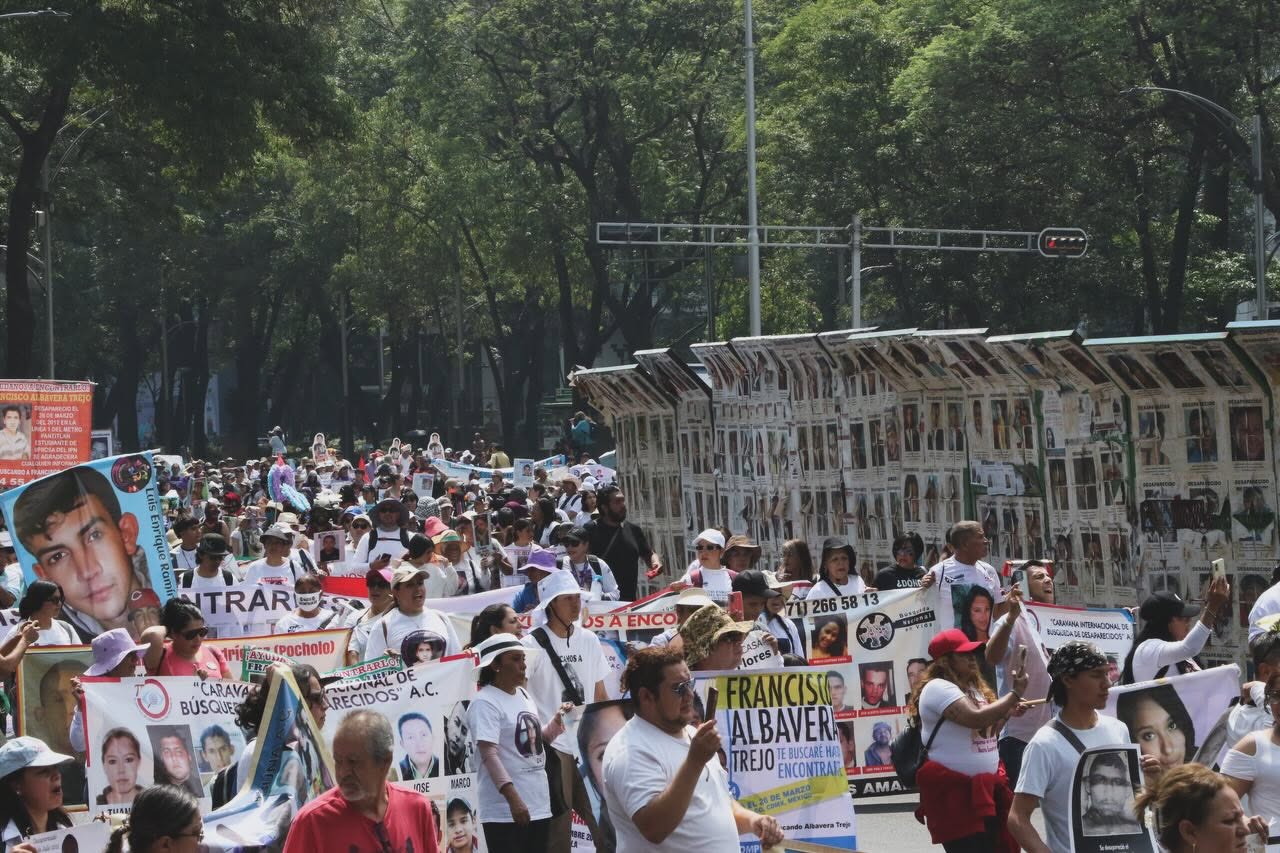
The team at the Prodh Center supports families throughout the processes of searching, seeking justice, and uncovering the truth. They provide legal representation and advice on specific issues, such as requesting security camera footage from the area where a loved one has gone missing. Martínez Montalban explains, “In many cases of disappearance, families are told they have to wait 72 hours before they can take action. However, the initial hours are critical for the search for their children. Valuable evidence can be lost due to a lack of investigation, and we know there is collusion between the State and organized crime. The State of Mexico often responds by denying its responsibility on multiple levels.”
But now, when a disappearance occurs, civil society mobilizes. This was the case with Leonardo, a Colombian professor at the Ibero-American University of Puebla, who was found two weeks after his disappearance in January 2026. First, the case is made public to ensure that relevant information about his whereabouts is accessible immediately. Second, a public demand to search for the missing person is activated through networks and support organizations.
The Prodh Center has created a predesigned online template, developed by lawyers, which allows families of missing persons to quickly file their cases with a judge or public prosecutor. They also conduct workshops on topics such as forensic identification. “There are very clear and recent cases of families who have been searching for their sons and daughters for one, two, three, or even seven years, only to discover that shortly after their disappearance, their remains were in some forensic medical service in the country. The necessary cross-referencing of information was never done to inform them that their child was there,” laments Martínez Montalban. This situation, which sounds like science fiction, is known in Mexico as the forensic crisis.
When forensic services receive a body, they often fail to properly carry out all necessary procedures for genetic identification, dental examinations, and other protocols, which hinders the ability to cross-reference with genetic data of family members. There is no official registry or database that includes all the unidentified bodies held by state authorities in various locations. The number of unidentified bodies in Mexico is an estimate, based on information from families of missing persons and civil society organizations. Without effective cross-referencing and the assignment of names to unidentified bodies, it is impossible to determine if some missing persons may still be alive in clandestine recruitment centers.
Recommended Read: Can a Community Own a Design? Mayan Weavers Say, ‘Yes’
In some cases, families of missing persons in Mexico have received the wrong body due to the overwhelming demands on forensic medical services. For instance, in 2018, a shocking scandal occurred in Guadalajara when two refrigerated trailers belonging to the Jalisco Institute of Forensic Sciences were abandoned after roaming the city because they had run out of storage space for unclaimed bodies.
The ineffectiveness of authorities in Mexico at both the federal and local levels is almost incomprehensible. “In relation to unidentified bodies, it is clearly a matter of administrative failure that also highlights a lack of investigation,” says Martínez Montalban. “However, there is also an intentional lack of political will on the part of the state, compounded by a lack of capacity in the prosecutor’s offices and search commissions.”
There is a very particular relationship between certain disappearances and forced recruitment, which, according to Martínez Montalban, is intertwined with drug trafficking, organized crime, and also the involvement of municipal police and the army in what are known as macro-criminal networks. These networks have allowed the whereabouts and fate of many people to remain unknown to this day. The most prominent case is the disappearance of 43 students from the Ayotzinapa Rural Teachers’ College on the night of September 26, 2014. This incident took place in Guerrero, southern Mexico, when a group of students commandeered several buses to travel to a demonstration in Mexico City. On their way, they were intercepted by municipal police from Iguala and members of the Guerreros Unidos criminal group.
Martínez Montalbán laments, “To this day, the families of the young men have been denied access to crucial information needed to find them, and international oversight by the Inter-American Commission on Human Rights has been refused.”
Mexico’s participation in the World Cup concluded on July 5th with their elimination against England. However, at that square in downtown Mexico City, called the Roundabout of the Disappeared, the match continues. There, the final whistle won’t blow until all the missing people in Mexico are found. For mothers searching for their missing loved ones, the match will only end when they manage to find each and every one of them.