Listen to the audio version of this article (generated by AI).
There is strength in numbers. But in Israel and the West Bank, when it comes to peacebuilding, that idea may need re-imagining.
When the so-called peace process was announced in Oslo in 1993, dozens of Israeli-Palestinian peace groups emerged, alongside hundreds of millions of dollars in international funding and more than three decades of experiments in dialogue, reconciliation and peacebuilding. Meanwhile, none of the dialogue or reconciliation efforts have successfully translated into political change.
After October 7, 2023, the space available to Israeli-Palestinian civil society organizations has shrunk. Palestinians can’t get permits to meet their fellow peace activists in Israel. In the West Bank, the restrictions are even more serious. CIVICUS, the global alliance of civil society organizations and activists, continues to downgrade Palestinian civic space to “Closed.” Alongside the physical insecurity, legislation and administrative measures are being weaponized to delegitimize Palestinian civil society and cut it off from funding and international solidarity. None of this makes for a conducive civic space.
Yet there is a microcosm of peace activists and community organizers who continue to operate despite restrictions, greater polarization, funding problems and political hostility, and if they’re Palestinian peacebuilders, at greater risk of extrajudicial execution, torture and arbitrary imprisonment. Israeli-Palestinian peace groups hold fast to the boldest ways, rooted in their unique stories, from ex-combatants and bereaved families becoming nonviolence advocates, to taking psychedelics and mapping a different future, from Tel Aviv to Bethlehem.
For those of us outside Israel and Palestine, it is difficult to differentiate the groups. Their names can be evocative, their missions overlapping, their websites full of familiar language about peace, dialogue, reconciliation and coexistence.
In addition, it is difficult to read the room from far away. According to CIVICUS, legitimate Palestinian organizations have been labeled as terrorist entities, and restrictions on registration, banking, and foreign funding are making it harder for them to operate and for partners to support them. For Israeli organizations, this is not an issue, but the threat remains heavy in the air, often silencing people who might otherwise join the struggle for peace.
More than four years ago, the General Union of Palestinian Women (GUPW), a longstanding umbrella organization for Palestinian women’s groups founded in 1965, condemned a feminist event at the Dead Sea that it said was part of “normalization” activities. Israeli and Palestinian feminist groups reportedly organized the event. The incident received little international attention; the Palestinian newspaper Wattan was among the few outlets to report on the GUPW’s call to reject feminist normalization activities that, in its view, could “cover up the crimes of the occupation.”
The episode points to a difficult question at the heart of Israeli-Palestinian peace groups: where does genuine locally-led peacebuilding end, and normalization begin?
“When we speak about peace, it cannot be limited to bringing people together for a conversation. We have to begin by acknowledging inequality. Palestinians cannot simply be invited to share their pain, while others decide what that pain actually means or what the solution should be like,” explains Palestinian CEO of the Parents Circle — Families Forum organization, Nadine Quomsieh, over a video call.
Founded 31 years ago, Parents Circle brings together around 900 Palestinian and Israeli members, all of whom have lost an immediate family member to the conflict, transforming their experiences into public action. Since October 7, 2023, around 200 people have sadly joined the organization following the loss of family members on October 7 or in Gaza.
Parents Circle conducts workshops and runs youth programs. A well-known program organizes dialogue meetings in Israeli schools and Palestinian community centers in the West Bank. Before October 7, 2023, Israel’s Education Ministry disqualified the Israeli side of the program under the new government’s laws, and it struggled in court for three years. They won a court case in June, allowing the program to resume in Israeli schools.
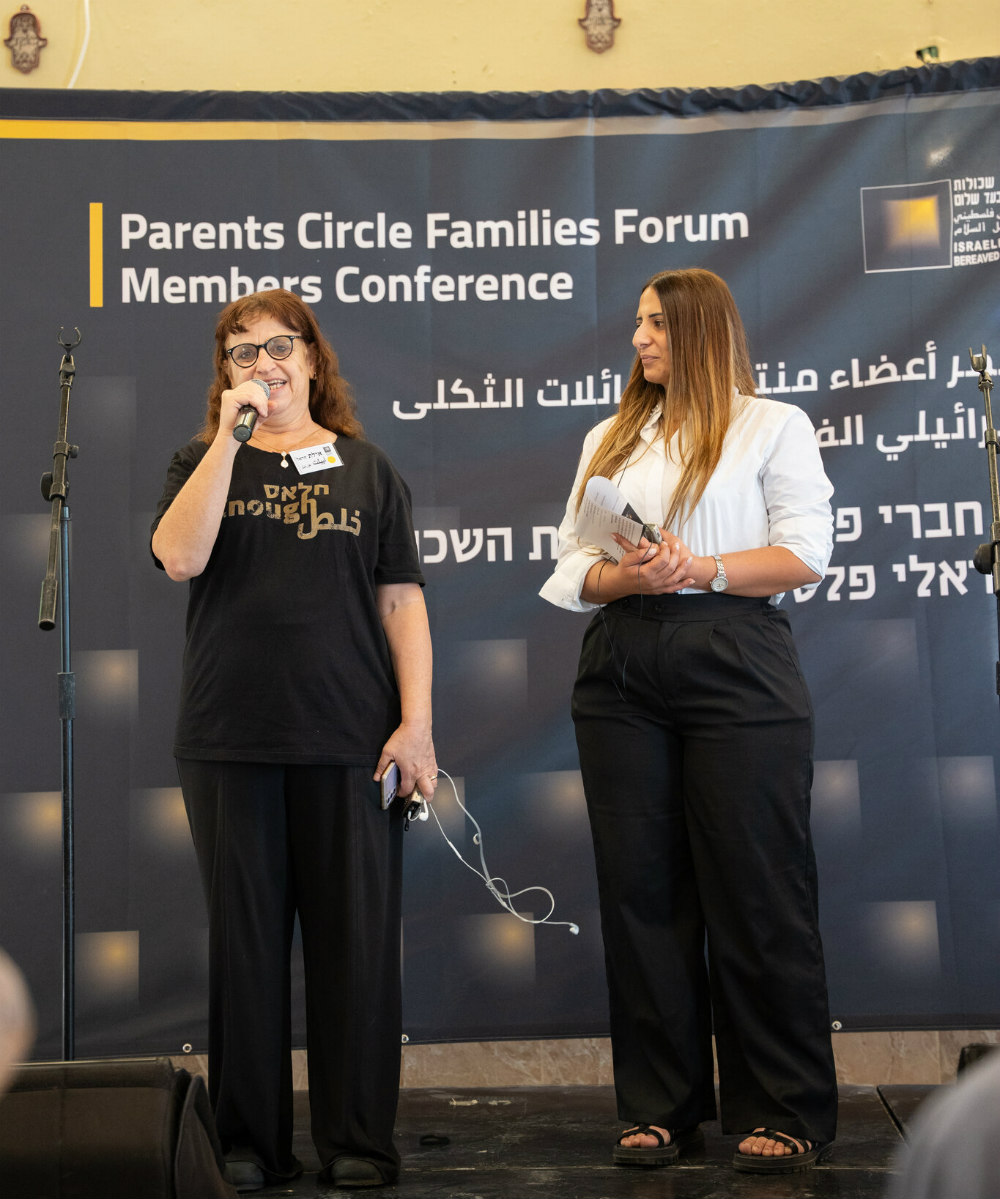
This year they’ve been nominated for the Nobel Peace Prize. With a very calm voice, Nadine Quomsieh reassures me that being part of a peace organization does not shield Palestinian members from harsh realities. A young ambassador from their summer camp was killed by the Israeli army in Jenin. Additionally, two members, aged 16 and 17—one from Jenin and the other from the Deheishe refugee camp in Bethlehem—were arrested by the Israeli army and have been held in Israeli prisons since 2025.
Despite this, it is remarkable that the parents of these young people continue to participate in the Parents Circle Families Forum. Many of the Palestinian members endure exhausting six-hour journeys to attend dialogue sessions, arriving tired and anxious, says Quomsieh, yet driven by the desire to have their voices heard, too. This is perhaps why there are so many more Israeli members than Palestinian. She adds, “We cannot expect everyone to be ready to meet, listen, or speak at the same time. Sometimes, we must start by listening separately to understand what each person needs. There must be space for expressing anger and disagreement.”
Accountability is a big component of the peacemaking process because reconciliation can become a request for people to move on while injustice continues. “We need to acknowledge what has happened and what is happening and who is responsible and what needs to change to prevent it from happening again.”
Ayelet Harel is the Israeli CEO of Parents Circle, and a member since 2009. She lost her brother in the First Lebanon War in 1982. From Tel Aviv, she explains over a video call that she believes “the occupation needs to end, and our goal is to reach a political agreement to end the conflict – yet our main focus is to use our members’ stories as a tool for emotional breakthrough in society.”
The Parents Circle’s best-known project is the Israeli-Palestinian Joint Memorial Ceremony in Tel Aviv, organized with Combatants for Peace to grieve together and stand strong in demanding an end to the occupation and violence. “We are really making efforts to collaborate more with other organizations because this government in Israel is against us. We need to be strong together to make an impact, but it’s still difficult when you are alone,” points out Ayelet Harel.
Recommended Read: In South Sudan, Youth Turn to Theater to Build a Nation
One week before I spoke to Harel, I was on a video call with Combatants for Peace co-founder Sulaiman Khatib from Ramallah. The organization’s name evokes conflict, but what stands out is the founders’ warmth; both turned to nonviolence through their personal journeys. At 14, Khatib started a 15-year prison sentence, during which time he studied other world conflicts and Hebrew before an early release after a decade. In 2006, he and the Israeli Chen Alon, who is an ex-combatant, founded one of the only Israeli-Palestinian peace groups that is exclusively open to Israelis who no longer serve in the army. From their two offices, one in Tel Aviv and one in Beit Jala, Combatants for Peace coordinate actions on the ground, from supporting Palestinian locals under settler attacks to running their Freedom School, where they teach a young generation about identity, nonviolence, and trauma-informed narratives.
“I can’t say that the organization reaches the mainstream; that’s not really true,” says Sulaiman Khatib immediately. But their group shows it is possible. “The trust we built within the group can be a model for the bigger community,” he notes. I asked him if he felt that peace activists failed on October 7, 2023. He replies that the fact that many have stayed together is a powerful experience that pushes you to find innovative ways to deal with these harsh times—“it’s not in theory, it’s something we live daily—it’s very personal,” he adds.
Five days before we spoke, Combatants for Peace went to the Jordan Valley with another organization called A Land for All and organized a fun day for kids in a Palestinian school that is threatened by Israeli settler violence that also prevents Palestinian people from going to their agricultural land.
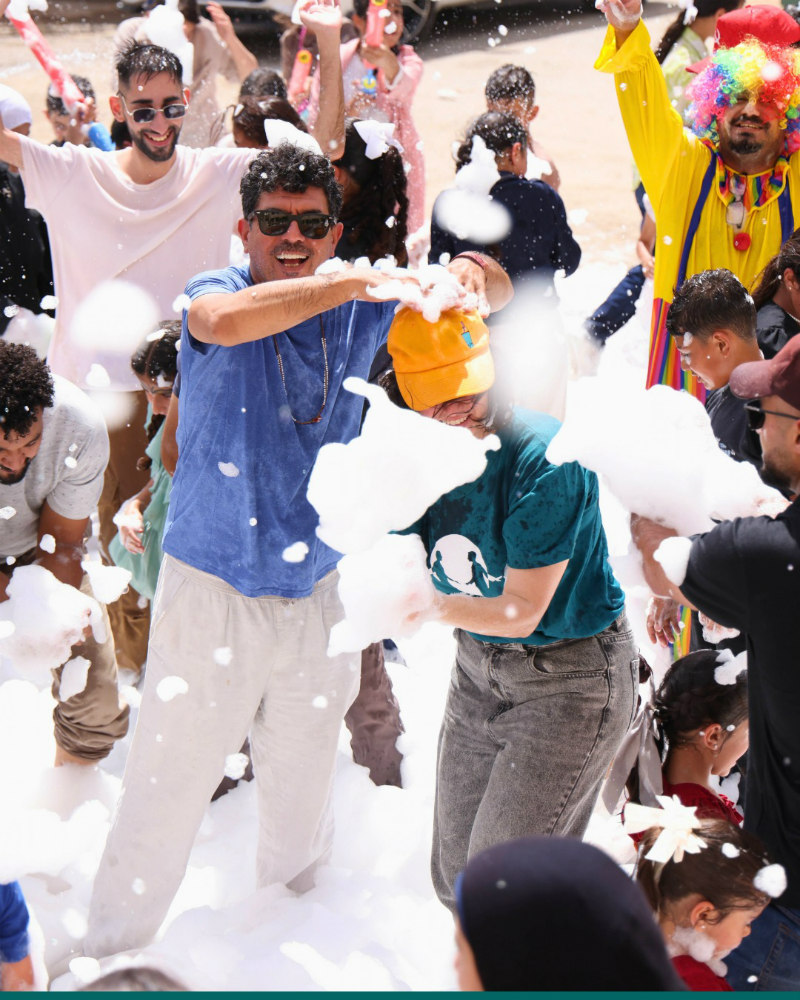
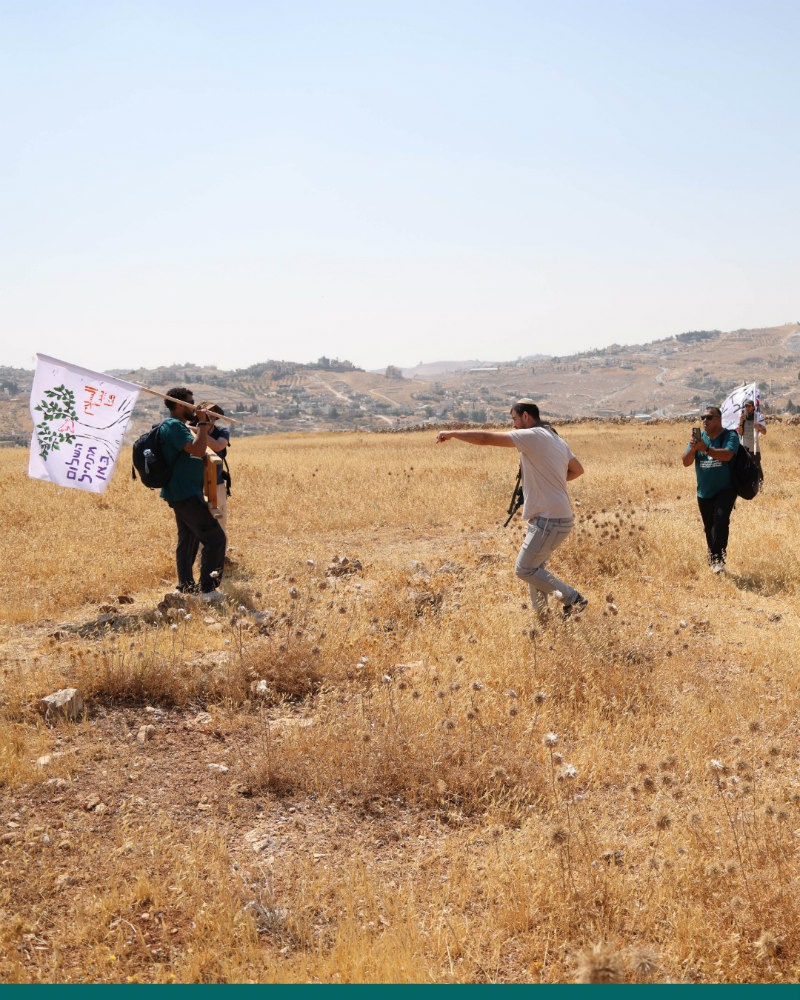
“There is more cooperation among different groups because they all feel threatened right now. Still, I don’t think cooperation is enough overall, and that is a problem. Honestly, I think if all the peace groups that work in the field of coexistence and co-resistance to the settlers cooperate with their different strategies, they would be much more effective,” says Khatib. “We don’t find common ground; sometimes ego and different agendas come in.”
This reality doesn’t hinder a system that doesn’t want to make any change and prefers to maintain the status quo, as Khatib suggests, thereby perpetuating the injustice that has stifled any vision of a better future.
At Ars Electronica in Linz, Austria, I met Mushon Zer-Aviv, a board member of the Israeli-Palestinian peace organization A Land for All, which promotes a new co-liberation model based on partnership rather than separation: “Two States, One Homeland”—an Israeli-Palestinian confederation. Zer-Aviv runs political imagination workshops with Israeli and Palestinian groups—locally and internationally—asking them to create images of their future.
I participated in one of Zer-Aviv’s workshops, where he prompted us to imagine our everyday lives in those futures as notifications on our mobile phones, as locations on a map, or as ratings we write on paper cards. After this exercise, we collectively mapped our visions, which encouraged us to explore other people’s future scenarios and ask, what room is there for me in your future? Another direction: What room is there for me to work with you to promote it? Or if I agree that this is a future that we need to prevent, how do we prevent that future? That becomes a political question. Mushon Zer-Aviv adds that there is a version of the workshop that is much more built around strategic action. They use future screenshots to inform action, so they can imagine how we’re positioned as a group to affect change.
“When October 7 happened, we were unprepared to imagine one another in each other’s futures. We did not even know how to do it. And when you cannot imagine the future, you become savage. This is happening to Israeli society. And it’s savagery that comes from the top. From extreme trauma that is fueled by political interests,” says Zer-Aviv.
As a designer whose practice centers on urbanism, he tells me where the idea for his workshops came from.
“The settlers and the army had left the Gaza Strip in 2005, and the army had effectively blockaded the area soon after. In the Israeli public’s mindset, Gaza was seen as a resolved issue; it was as if it no longer existed. This disengagement was more than political or military; it was first and foremost emotional. We wanted to address this disconnect, so together with Palestinian blogger and activist Leila El-Hadda, we created a tour of Gaza through the streets of Tel Aviv,” explains Zer-Aviv. On the back of a tourist map of Gaza, they included a 1-to-1 street map of Tel Aviv. When held up to the light, the streets of Tel Aviv would become visible through the streets of Gaza. To visit a location in Gaza, one would go to the corresponding spot in Tel Aviv, where a sticker on the street would display a telephone number and an extension. By calling the number and entering the extension, callers could listen to an audio tour of the corresponding location, written and recorded by Leila El-Haddad.
One experience that has stayed with him from that project is when a participant shared that while walking from one point to another in Tel Aviv, the project came alive for him. He began to see the cars, trees, buildings, and people around him and, for a moment, imagined that these could be the people in Gaza. That moment was when true humanization occurred. It made me realize that imagination must bridge two points: what we are told and what we observe around us.
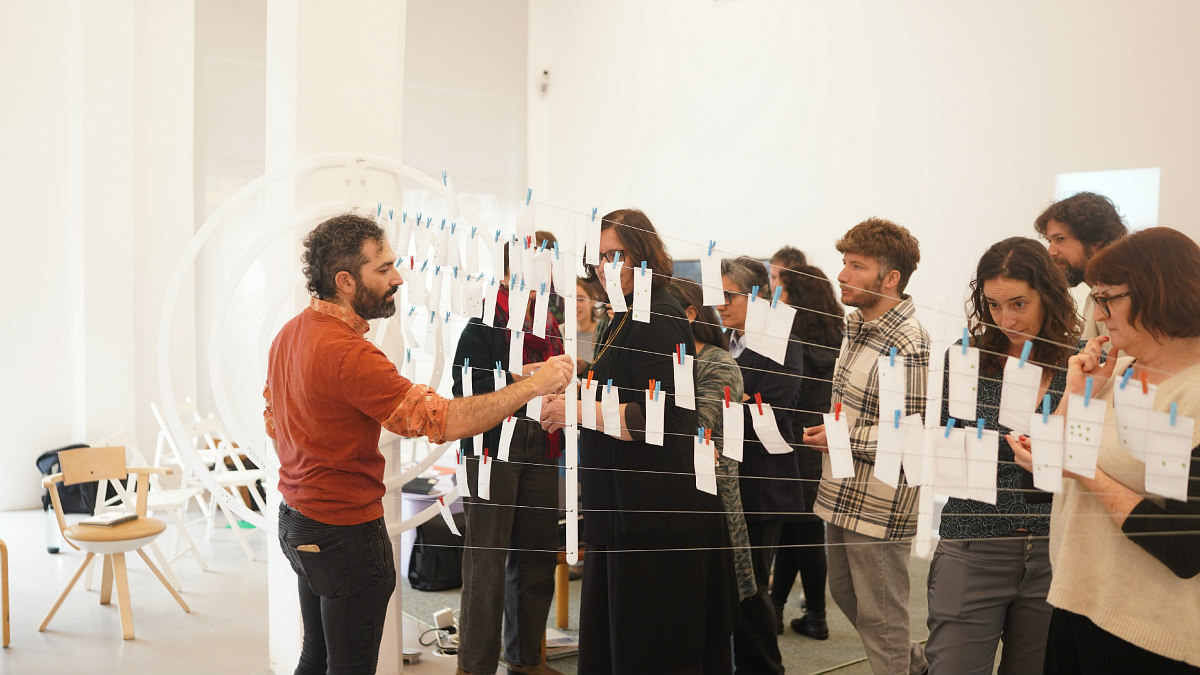
“In our workshops, people get very excited and full of emotion. For instance, while Israelis often imagine freedom of movement in a borderless Middle East, one Palestinian woman imagined being able to get her son married. Her son was taken by the Israeli army 2 years earlier, and she had no idea where he was. Or other Palestinians simply imagined a day with no checkpoints.” In such an environment of stark inequality, Zer-Aviv explains that Israeli participants finally realize that what Palestinians are imagining are basic human rights.
On June 23, 2023, Palestinian activist Sami Awad shared his first encounter with researcher, scientist, and activist Leor Roseman during the Psychedelic Science event in Denver. He recounted the moment with a hint of irony: “Here we go again, an Israeli who thinks he has the answer to the problem and tells me, as a Palestinian, what to do.” The audience responded with laughter.
Leor Roseman, who had been working in the field of psychedelic research for over a decade, had initially operated within a niche, but the field was on the verge of revolutionizing therapy.
Together, he and Sami Awad began to create psychedelic circles where Jewish Israelis and Palestinians could come together to take ayahuasca and engage in collecting experiences and stories. Later, Roseman co-founded the non-profit organization Ripples with Sulaiman Khatib of Combatants for Peace. Their goal was to explore not only the personal healing potential of psychedelics but also the collective healing necessary to address the inherited trauma both Palestinians and Israelis carry from their ancestors, which contributes to cycles of violence.
Recommended Read: The Women Disrupting Hate, From South Sudan to Myanmar
“The work we do with psychedelics has multiple facets,” Leor Roseman explains over the phone from the UK. “It’s not just about healing collective trauma; there are several layers to this work that can support forms of collective liberation and foster solidarity and co-resistance that can also drive action.” In recent years, he notes that he believes peace organizations in the region are fewer and often disempowered, lacking support from various sides. “One of my hopes is that these organizations can evolve into a movement, rather than just an ecosystem of groups where no single organization takes the lead.”
As of October 7, 2023, the psychedelic rituals have been suspended, but Roseman has expressed hope that they might resume in 2027: “That’s why we’re currently fundraising,” he says. While the psychedelic approach may not resonate with everyone, there is a substantial body of global academic research indicating that these rituals can provoke psychological tension, offering an opportunity for catharsis for both Israelis and Palestinians. In fact, various successful movements for liberation (women’s liberation, civil rights, etc.) arose from the work with psychedelics in California in the 1960s.
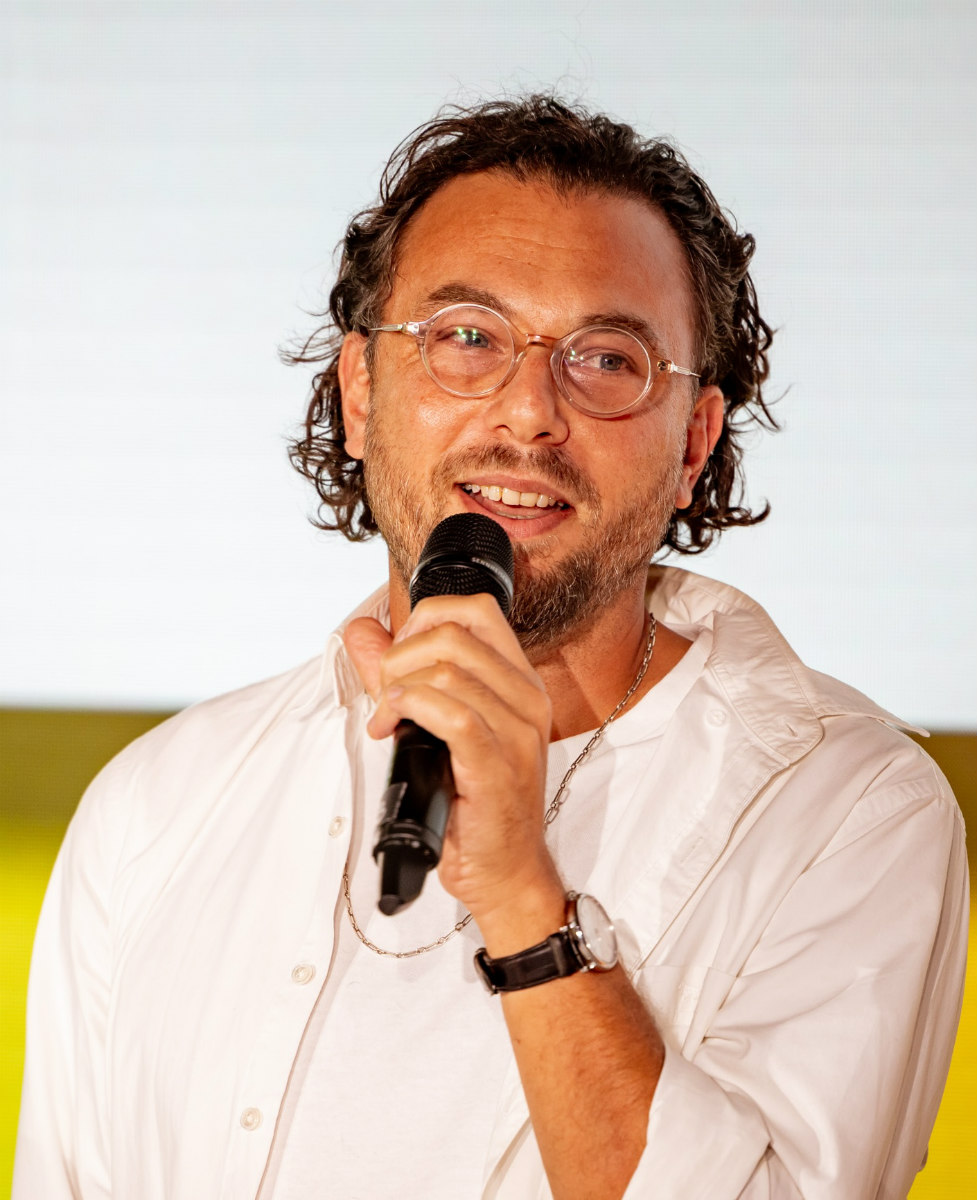
Roseman says of Ripples: “We believe Palestinians and Israelis can partner for collective liberation, for fighting injustice and fighting occupation, and so on. So the encounter itself is recognizing those asymmetries of power and the injustices of occupation and seeing this as a way to heal, but at the same time to build networks of solidarity. So it’s not just reconciliation.”
After decades of peacebuilding experiments, it remains difficult to determine the transformative force that could turn scattered acts of peacebuilding into tangible political change. Is it something collective, a movement, or the emergence of a single leader—the next Nelson Mandela?
“I don’t know if I believe in a single savior, in the style of Jesus, who would bring about change,” says Sulaiman Khatib of Combatants for Peace. “What I see are many dynamics at play, both here and globally, with small actions that can lead to titanic change. Our work is central and important; it makes a difference. It’s not just one group that matters. It’s also the people who have stayed—those holding on to the land and embodying what we Palestinians call steadfastness.”
We may never know whether the proliferation of peace organizations since Oslo has, intentionally or otherwise, helped normalize a conflict that remains unresolved. Until the standard list for peace has been addressed—that the occupation ends, the apartheid legal system ends, the refugees have the right to return, and reparations are made—until then, there is a thin line between creating spaces for Israelis and Palestinians to act together, and creating the appearance of progress without changing the political conditions that make peace so elusive.
If you ask people living in the West Bank, the vast majority will tell you that a two-state solution is unrealistic, given the 500,000 Israeli settlers dispersed throughout the territory. A two-state solution would require the mass forced displacement of either 500,000 of them, or 2 million Palestinians. It’s no wonder that imagining an alternative future seems daunting; the more one tries to apply logic to a solution, the more it feels necessary to pray for a giant hand from the sky to sort it out.
The Palestinian poet Mahmoud Darwish famously stated that “Palestinians are suffering from an incurable disease—hope.” However, these peace activists appear to have found a way out of the downward spiral to bring hope and vision through a “belief cascade” of collaboration, empathy, and solidarity as a way to bring about change, which is perhaps more interesting and takes imagination alongside courage.