
Listen to the audio version of this article (generated by AI).
Step into the homes of writers, artists, and thinkers where discussions and debates nested democracy in our cities—and be part of today’s conversations at these historic locations.
This article is part of the series Inside the City’s Best Open Houses.
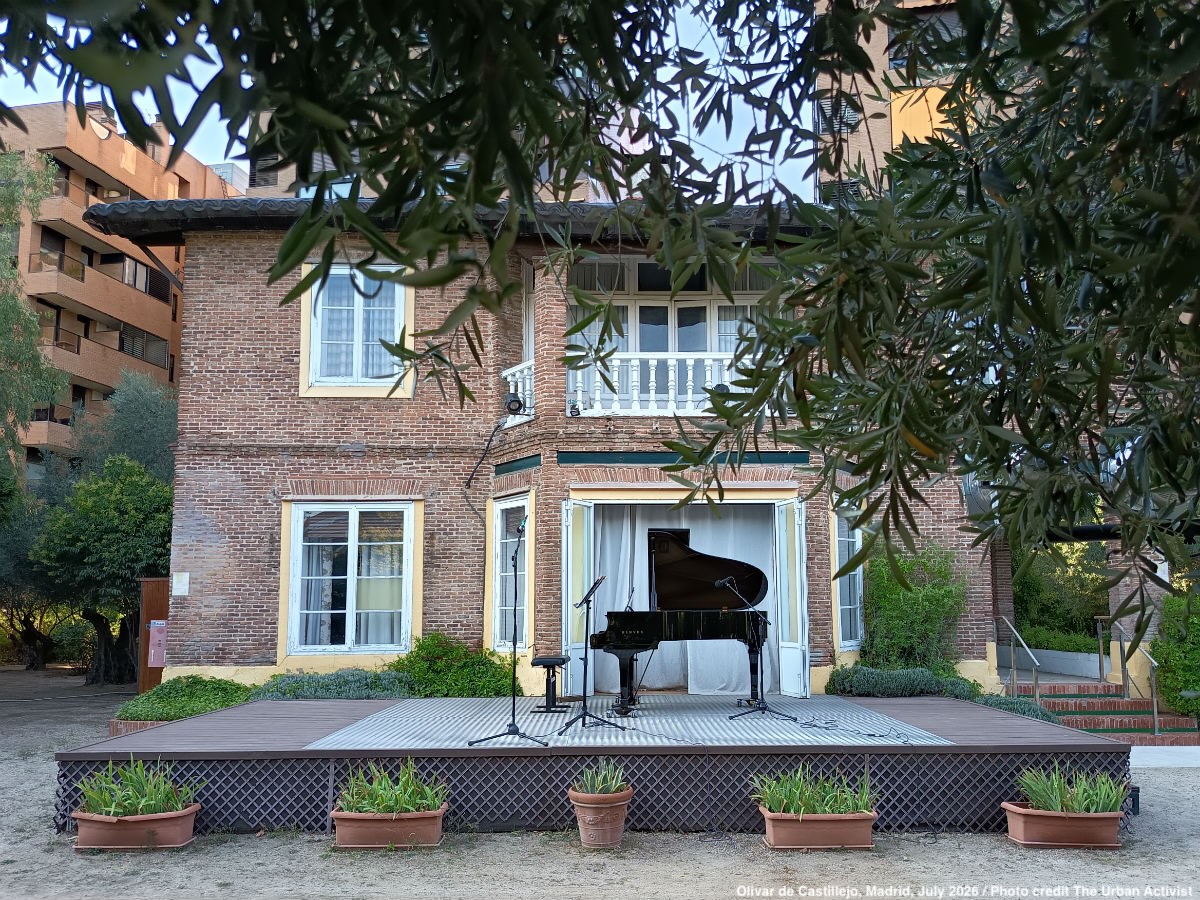
Knowledge flourishes best in contact with nature. That idea feels especially convincing while listening to Clara Schumann beneath more than a hundred centuries-old olive trees, surrounded by almond trees, rock roses, broom, and rosemary, in the garden of a hidden historic house in the heart of Madrid on a warm summer night. Cicadas begin their chorus, almost accompanying the piano. In the distance, the wail of police and ambulance sirens gradually fades beneath the classical music, which brings an unexpected sense of calm to one of Europe’s busiest capitals.
On a podium, a violinist and a pianist at the grand piano set this scene in motion. It feels like an extension of the house’s living room, whose curtains sway with the summer breeze in unison with the music.
In 1917, José Castillejo bought this olive grove in the small Madrid village of Chamartín de la Rosa. He was the secretary of the Board for the Extension of Studies and Scientific Research (Junta para Ampliación de Estudios y Investigación Científica), and his wife was the English writer Irene Claremont. While almost the entire bourgeoisie preferred to live in central Madrid, Castillejo advocated a simple, healthy life close to the countryside and chose to reside in the so-called Balcony Olive Grove, a site where it is said that Napoleon camped during the War of Independence.
Well into the 20th century, the surroundings of Madrid were dotted with olive groves, vineyards, orchards and cereal fields. Although Madrid is not typically associated with olive trees as in Andalusia or Castilla-La Mancha, an important olive-growing culture was part of the economy and agricultural identity of much of the region, especially in the southeast, prior to urban sprawl transforming the landscape.
However, the Castillejos’ olive grove never succumbed to real estate speculation. The family lived there with their four children until the Spanish Civil War forced them into exile in England in 1936, where José Castillejo passed away in 1945.
In 1985, the Castillejo family established the Foundation Olivar de Castillejo in memory of their father, which today owns one hectare of olive groves in a privileged location in Madrid. Almost secretly preserved, it is open to everyone and is gradually expanding to new visitors through its cultural program, under the auspices of Castillejo’s legacy.
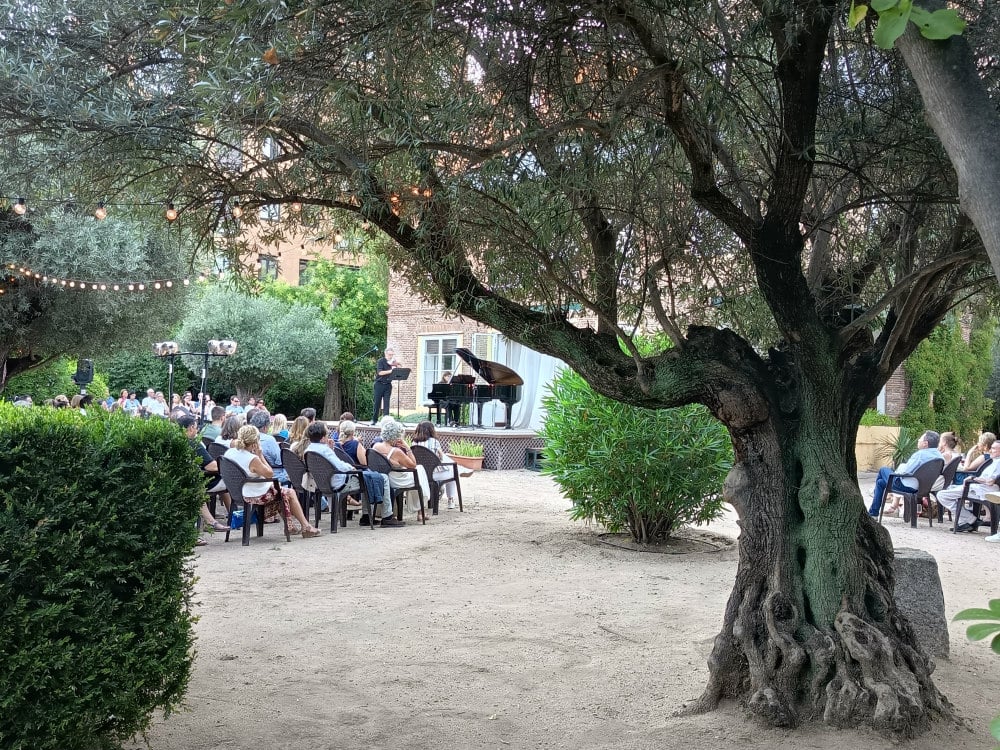
From late June through July and August, the olive grove comes alive with an acclaimed series of piano concerts. “Given the characteristics of the venue, we focus on solo instrumental music and chamber music, performed by small ensembles,” explains pianist Marta García Teijido, Executive Director of the Foundation Olivar de Castillejo. Tickets are easily booked online, and the atmosphere is intimate, relaxed, and unlike anywhere else in Madrid.
As dusk settles over the centuries-old trees, visitors enjoy the rare privilege of experiencing a pocket of nature in the heart of the city. A small bar serves drinks before the performance, and many people bring their refreshments to their seats as the music begins; a few settle onto the benches scattered among the olive trees. After the final notes fade, audiences linger beneath the trees, talking well into the evening until the grounds close at 10 p.m.
Castillejo was convinced that daily contact with nature fostered creativity and education. He was a close collaborator with the Free Institution of Teaching in Spain (Institución Libre de Enseñanza), a pedagogical experiment that significantly impacted the country’s intellectual life. This institution ultimately supported the Extension of Studies and Scientific Research, founded by the well-known Spanish neuroscientist Santiago Ramón y Cajal, as well as the Residencia de Estudiantes (Student’s Residence). The latter provided accommodation for students and established itself as a cultural institution that helped foster the intellectual environment for Spain’s brightest young thinkers, writers, and artists, including Salvador Dalí, Luis Buñuel, and Federico García Lorca.
For the Free Institution of Teaching, nature was not merely a backdrop; it was an educational tool. Learning should take place through direct observation, excursions, and daily contact with the landscape. Living among olive groves, far from the city center, reflected this same concept: culture and science should not be separated from the natural world.
In that same spirit, Castillejo never renounced his intellectual pursuits in the countryside. He convinced several friends and colleagues to build their homes on plots within the same olive grove, including the naturalist Ignacio Bolívar, the poet Dámaso Alonso, the philologist and historian Ramón Menéndez Pidal, and his wife, the literary critic and researcher María Goyri (their house is now the Ramón Menéndez Pidal Foundation on the other side of the ancient olive grove).
Moreover, José Castillejo and his wife, Irene Claremont, often hosted prominent figures in the intellectual and social spheres of the time, including philosopher and essayist Ortega y Gasset and writer Miguel de Unamuno, who participated actively in the Students’ Residence. The Olivar de Castillejo can be understood as a physical extension of the ideals of the Institución Libre de Enseñanza and the Students’ Residence, making it one of the most representative spaces of the “Silver Age” (Edad de Plata) in Spain, in the late 19th and early 20th centuries. This period was characterized by a rich ecosystem of knowledge that fostered the union between science and the humanities.
It was common for a philologist like Ramón Menéndez Pidal, a physician like Santiago Ramón y Cajal, a philosopher like Ortega y Gasset, and a poet like Federico García Lorca to mingle as they strolled among the olive trees, sharing conversations about philology, science, pedagogy, politics, and literature—all of which flourished in this ancient grove.
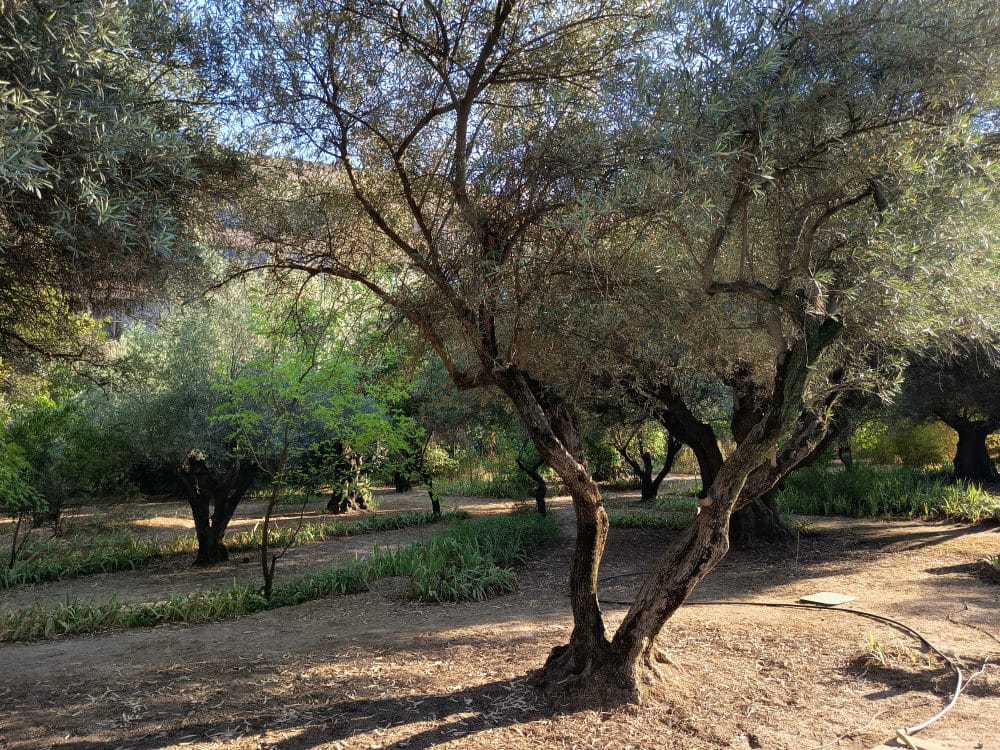
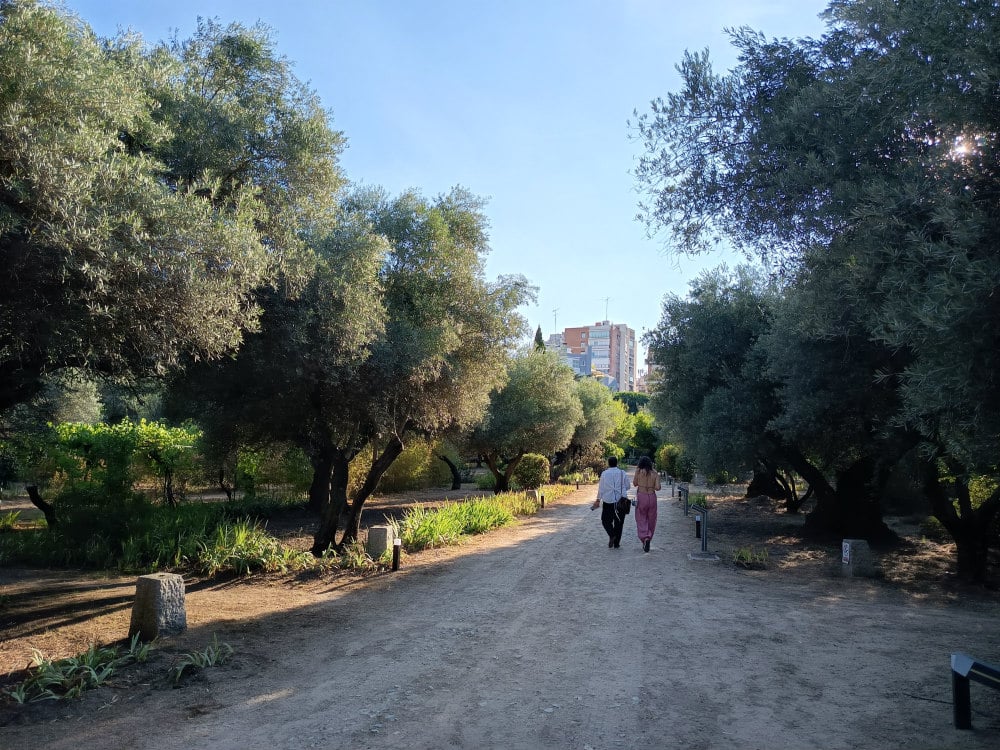
Margarita Sáenz de la Calzada, President of the Board of Trustees of the Fondation Olivar de Castillejo, and a historian who has studied Castillejo’s legacy, recalls in an article how at her home his father “had a kind of Capitoline triad made up of Ortega [Ortega y Gasset], Don Alberto [Jiménez Fraud], and Federico [García Lorca].” He greatly valued the principles that these institutions instilled in their intellectuals. “What they learned was to live according to moral values based on work and personal honesty, far removed from the then-common figure of the privileged young man, and this moral perspective stayed with them forever. They all acknowledged how much they owed to the Residence, from Federico García Lorca to José Entrecanales and Severo Ochoa.”
García Teijido explains, “The Foundation’s objective is to continue spreading awareness of the importance of José Castillejo, the great reformer of pedagogy in the early 20th century. He placed a special emphasis on university education and the world of culture, which is the spirit in which we work through music and concerts.”
“We aim to engage young performers in our programming—individuals who have recently graduated and hold impressive resumes. We want to provide them with opportunities and help them gain recognition among the Madrid audience.”
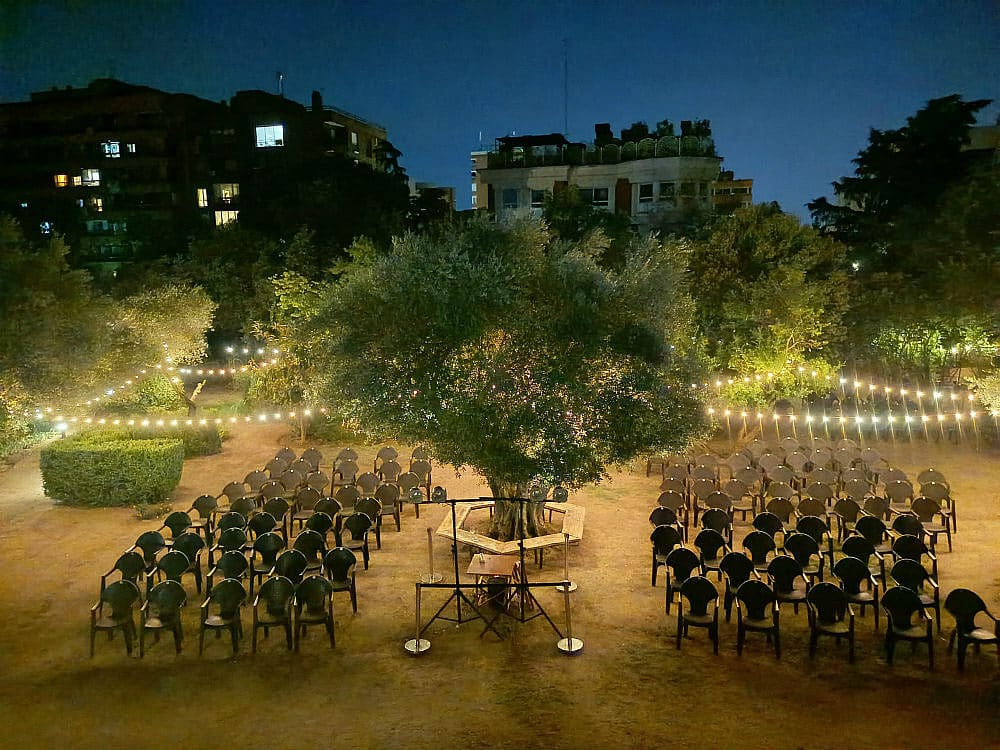
On that summer night, pianist Elena de Santos, accompanied by violinist Enrique Rivas, performed works by the American composer and pianist Amy Marcy Cheney Beach (1867–1944), the first successful American female composer of large-scale art music. I believe that the choice of female composers is significant, as female writers, intellectuals, and artists of the time helped pave the way for a new era of cultural vibrancy during the Silver Age.
Castillejo’s wife, Irene Claremont, was a writer and psychotherapist who authored the classic text Knowing Woman: A Feminine Psychology, published posthumously in 1973. Menéndez Pidal’s wife, María Goyri, was the first woman to pursue formal studies in Philosophy and Letters in Spain. She was a prominent researcher of the ballad tradition and played a critical role as a collaborator in many of Menéndez Pidal’s research projects.
During the Silver Age, significant changes occurred in the social standing of women in Spain, who gradually gained access to higher education. This period also saw the emergence of a new model of female identity, which many women of the time aspired to embody. Today, this group of pioneering intellectual women, including figures like Rosa Chacel and María Zambrano, is known as Las Sinsombrero (The Hatless Ones). The name reflects the act of women removing their hats in the Puerta del Sol, symbolizing a break from the social norms imposed on them.
The Olivar de Castillejo has thrived on the spirit of a small intellectual community united by a common vision for education, science, and the modernization of Spain during the early decades of the 20th century. Today, this ancient olive grove centers around the cultural aspect of classical music. However, its director hopes to renovate the house’s interior, seeking new financial resources to broaden its artistic offerings. Indeed, this historic house and its magnificent olive grove in Madrid could reclaim its role as a place for conversation, ideas, and much-needed intellectual debate in Spain.