Listen to the audio version of this article (generated by AI).
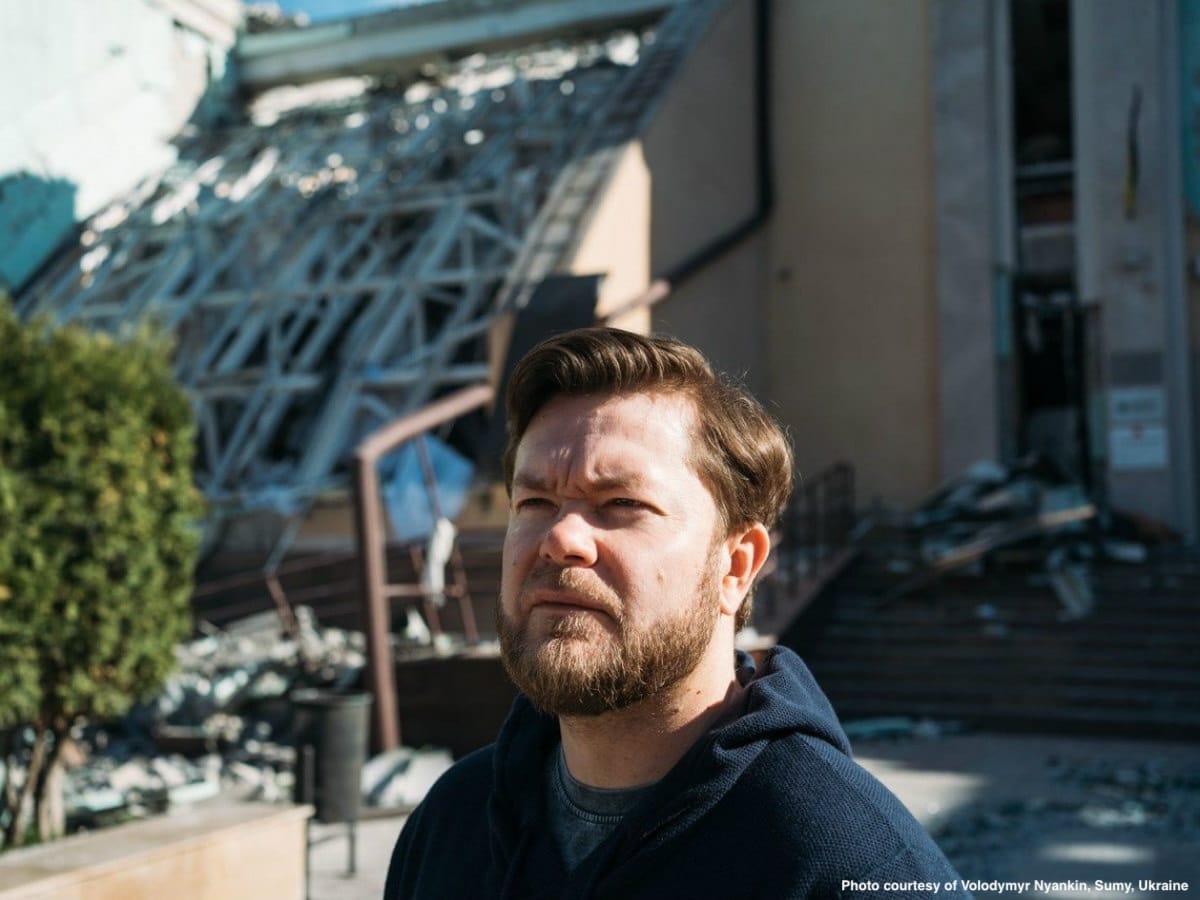
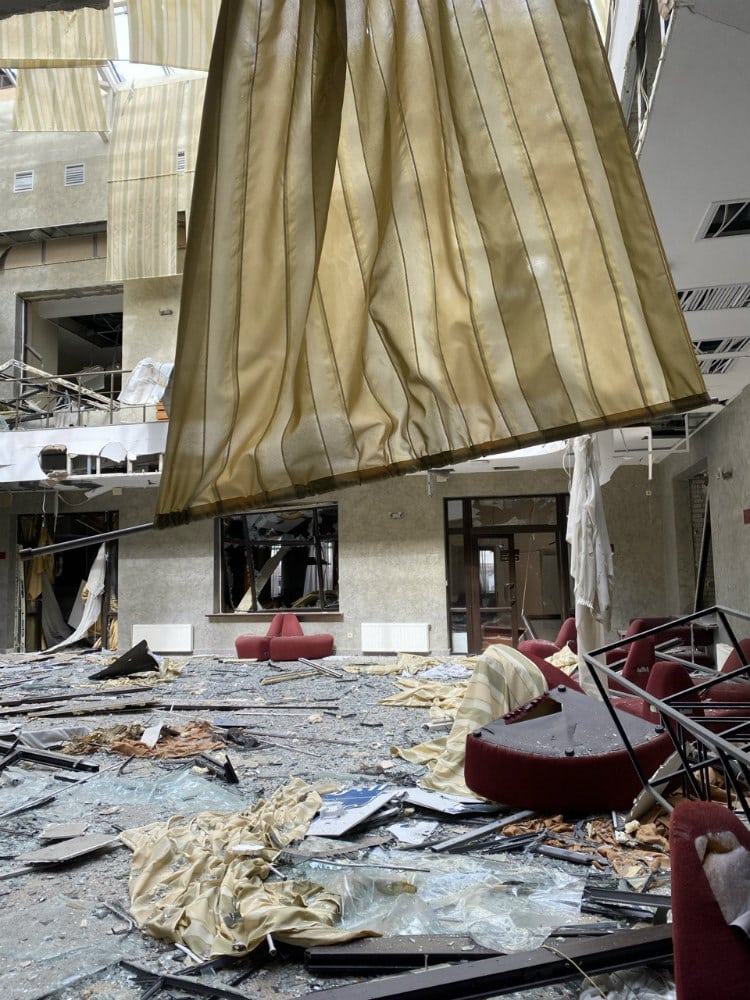
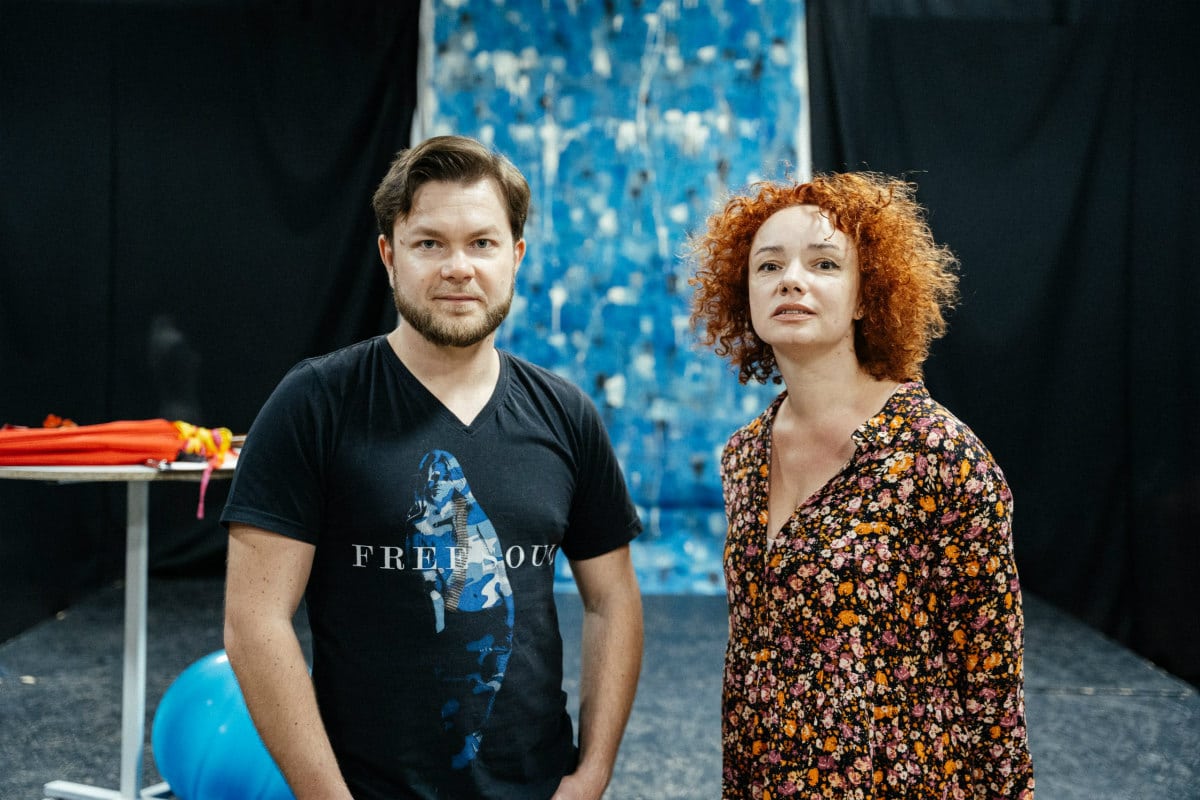
Volodymyr Nyankin and his wife, Tetiana Nyankina, operate the Nyankini Theater underground in Sumy, a frontline city located about 30 kilometers from the Russian border. Last year, two Russian ballistic missiles struck the Sumy University buildings where the theater is housed. Nobody inside was injured. However, the attack outside resulted in the tragic deaths of 35 people on Palm Sunday. The targeting of civilian areas has become a recurring feature of Russian aggression. For these two cultural activists in Ukraine, another realization was quickly dawning: they were here to stay.
The couple’s 9-year-old son was in a singing class near the Sumy University buildings when the first rocket hit. The children ran to the shelter, and he was able to save his life.
In September, a Russian guided aerial bomb struck the grounds of Sumy State University again, damaging several university buildings, including the main academic building. Fortunately, no one was injured.
When we connected one morning over a video call, theatre director, musician and playwright Volodymyr Nyankin had already experienced several air raid alerts that day.
“In Sumy, we hear these alarms constantly, so it’s difficult to run to a shelter every time. We have to leave ourselves some room to live,” Nyankin says with a smile. He adds, “It’s not as dangerous as it was in July or August. Of course, we still hear FPV drones flying overhead from time to time, but they’re not CAB (Corrected Aerial Bomb), and that’s a good thing.”
Residents of Sumy have long learned to distinguish between the sounds of different weapons. A frontline reality has taken root in the city’s daily life: drones overhead, air-raid sirens, and buildings left partially destroyed. “It’s a problem for our city because many people moved out after the full-scale invasion, especially the middle class—those who could afford to go to the theater,” explains Nyankin. The population has decreased from more than 270,000 to 260,000, including 32,000 displaced persons.
Yet Sumy has a particularly vibrant cultural life for a city of its size. Theatre has been integral to the city’s identity since the early 19th century, with the first theater established in Sumy in 1806. By the second half of the 19th century, theatrical activity became increasingly important, supported by local businessmen and philanthropists amid the city’s economic prosperity, particularly through the sugar industry. Today, despite Russia’s invasion, Sumy’s two main theatres—Shchepkin National Academic Theatre of Drama and Musical Comedy and the Sumy Theatre for Children and Youth—have managed to keep their doors open.
In 2013, Volodymyr Nyankin, his wife, and a few friends founded the Chekhov Fest theater festival, named after the Russian writer Anton Chekhov, who had a deep connection to Sumy and spent summers in the nearby town of Luka —a place that inspired part of his work. Unfortunately, the festival was canceled due to the COVID-19 pandemic and has not resumed since.
The Nyankini Theater, named after Volodymyr’s surname, came later, in 2017. Volodymyr was in a rock band for many years and is also a documentary scriptwriter. His wife is a professional theater director and actress. When she was five months pregnant, they decided to combine their skills to create a theater project for children. They never anticipated that they would be running the theater under such challenging circumstances.
First, the Covid-19 pandemic struck. Then, just before the war in 2021, when they had purchased a large seven-seat vehicle for touring, they found themselves using it for evacuation during the initial months of the full-scale invasion.
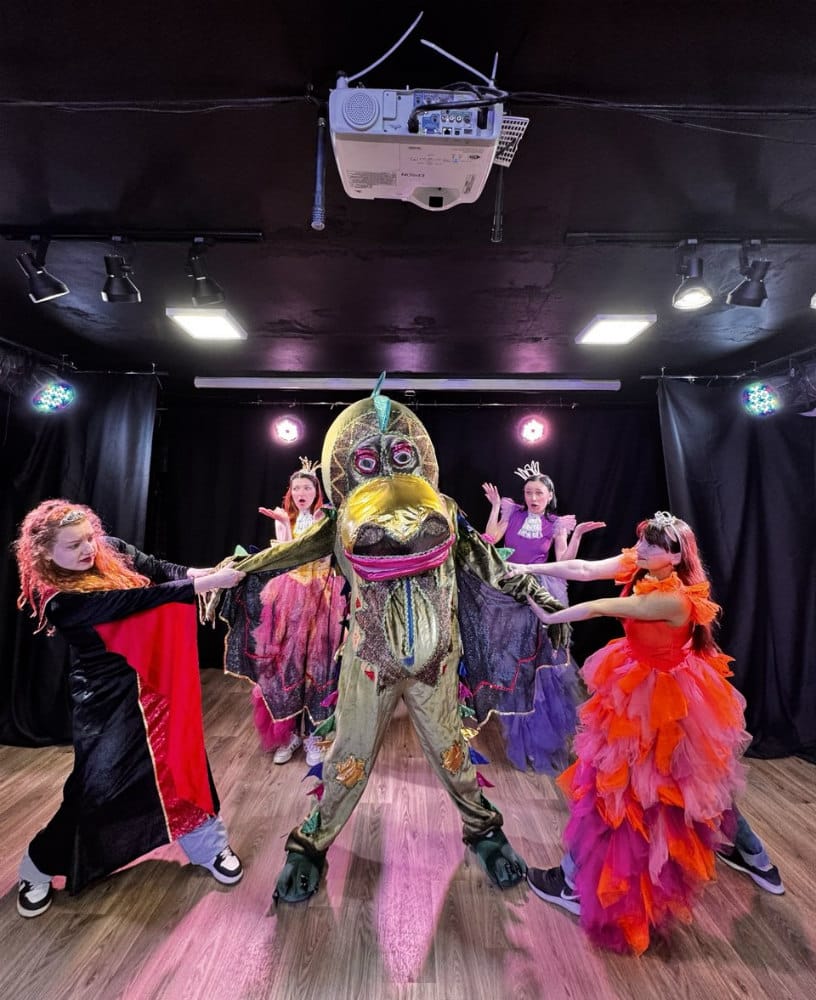
Since the onset of the war, this small but feisty family theater has played a vital role in sustaining a city’s community and identity, while also serving as an official shelter. After moving underground, the theater’s capacity decreased from 300 to 100 people, but it continues to resist. Some comedy stars and music performers have begun to visit the Nyankini Theater, as it is currently the only theater operating underground.
“We are so small compared to the National Theatre; it’s on another level,” says Nyankin. “But for us, the community atmosphere and the family roots of our theater, as well as providing a safe artistic space for those with us, are far more important than the number of our performances or any major theater reviews.”
A month before their next premiere, Volodymyr explains that they are working on a story about his immigration to Canada in 2015, where he briefly became a seahorse breeder without knowing much about seahorses. This production is a mono-play infused with comedy, and its title is a wordplay that combines “konik” (meaning horse in Ukrainian) with “comic” (referring to a comedian). It offers the audience a variety of reasons why he chooses to stay in Ukraine, specifically in Sumy. “Everyone has a different reason to stay,” he says with a gentle smile.
Only 10% of their work is aimed at adults; the rest is for children, and the majority of their plays are based on personal experiences. Volodymyr notes that their writing has taken a comedic turn due to the hardships of daily life. “It’s better for people to escape from reality by immersing themselves in these comedic situations. However, we also recognize that for adults, we need to address the tough realities and reflect on the pain they experience,” he states. For children, Nyankin is firm: they ensure that their theater remains a place for escaping reality, avoiding any mention of war.
“All the war is outside our building. Children have this hour of safety because we are in a shelter. And I think it’s wonderful for parents to have a space to escape with their children,” Nyankin explains.
Recommended Read: Kyiv Mayor Vitali Klitschko: “It’s not Easy—but No Fight, No Win”
So, how do these cultural activists find the strength or mental space to continue creating amid the devastation in Ukraine? “Theater has a business aspect that involves finances,” Nyankin says with disarming rationality. Their budget breaks down even with ticket sales, since they don’t have state support like the two public theaters. “So for us, the work continues. We are not trying to generate pathos in our plays. We are saving ourselves, our minds, and the minds of the people who come to this theater. We’re trying to reach out to the larger community to safeguard our collective mental health,” he adds.
They refer to it as “the universe of their theater” because their reach extends from the Nyankini Theater to various educational projects in Sumy, such as acting classes for children and theater for people with disabilities “My ye” (translated “We are”). “It’s a huge community of people who love each other, who save each other, and who can surround each other with love.”
This year, the Culture Helps Solidarity program awarded a grant to Volodymyr Nyankin and his son, allowing them to spend some restorative time near the sea in the Odesa region. During this break, Nyankin found inspiration to write a new solo performance.
Since February 2026, the European Cultural Foundation has been offering Individual Care Grants through its Culture Helps Solidarity program to assist Ukrainian artists and cultural professionals in regaining their strength, resilience, and ability to support others. “Against all the odds, artists, cultural workers and community activists across Ukraine continue to provide vital emotional support to people affected by Russia’s endless attacks,” the European Cultural Foundation states.
The program acknowledges that cultural workers who support others often face their own challenges, including loss, exhaustion, and the psychological impacts of war, and therefore need to care for themselves as well. This vital support enables grantees such as Volodymyr Nyankin to maintain Ukraine’s cultural life and infrastructure with their family theater.
Not only is the underground location a remarkable stage in itself, but the imagination, humor, and optimism with which the Nyankin cultural activists disguise the brutality surrounding them also help protect young children from the horrors of the war in Ukraine. Ultimately, an overarching purpose guides their work: preserving children’s innocence, hope and will to live. Their theatre is an expression of love and of the power of imagination in the face of unimaginable cruelty.