
Listen to the audio version of this article (generated by AI).
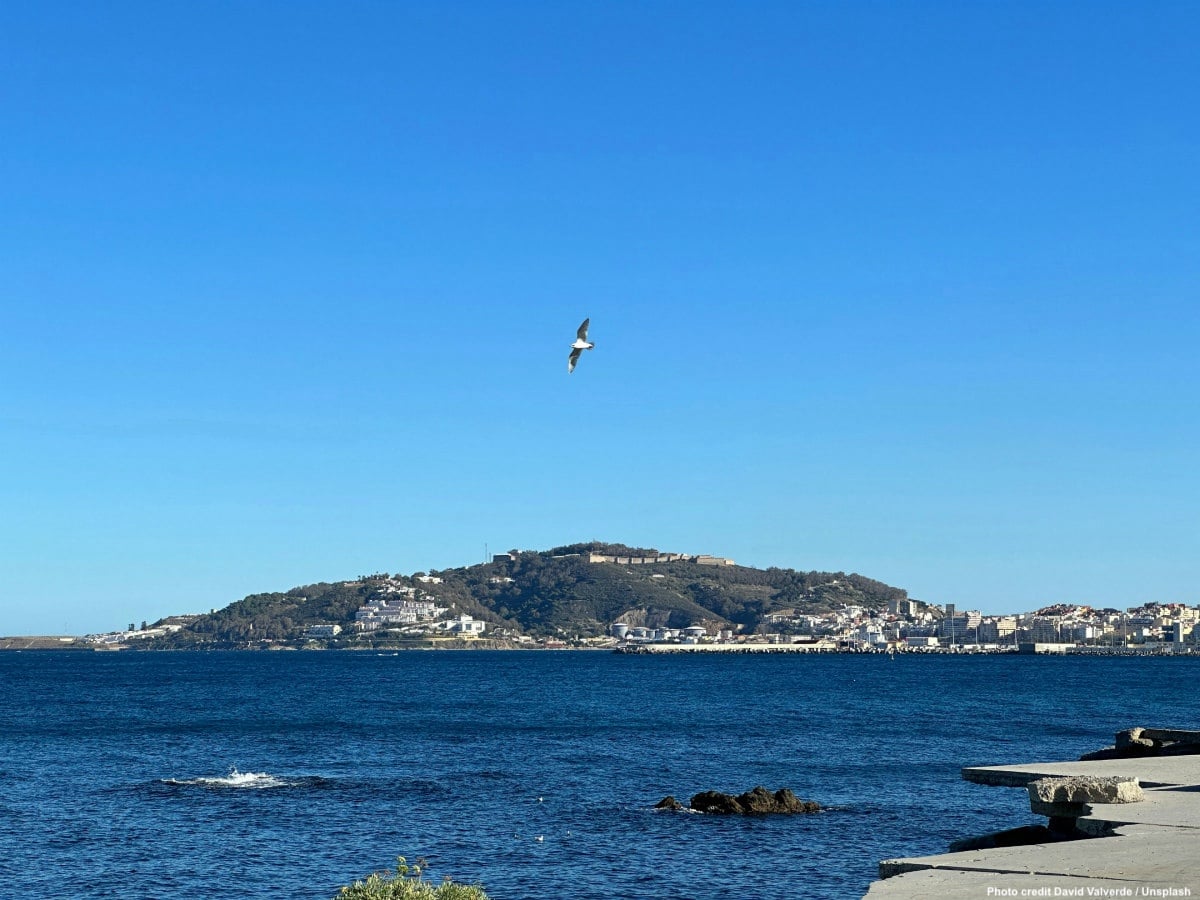
On July 30 and 31, 2026, at least 70,000 people crossed between Morocco and the Spanish city of Ceuta, at the northern tip of Africa, either by swimming or through the Tarajal border crossing. Most were young men. Their numbers raise another question: why are young women not making the same dangerous journey in comparable numbers, particularly when, according to community initiatives working with women in Morocco, they face their own significant economic and social barriers?
Across the country, community initiatives are working on the ground to create concrete opportunities for women living under difficult circumstances—from dropping out of school to being cast out by their families. But many of these projects are small, local, and chronically underfunded. Yet they offer a different way of looking at the pressures that drive young people to leave: not only through the lens of migration, but also through the possibilities that could be available to them where they live.
Neither the deaths at the border nor the violence suffered in the enclave is enough to close off this prospect. The Moroccan Association for Human Rights estimates that 141 people died on both sides of the border during the crisis in Ceuta.
For Fatin, leaving home became a goal when she had to drop out of school. She wanted to continue her studies, but says she was assigned to do housework instead. After arriving in Ceuta in July, she spoke to The Guardian along with 28 other Moroccan teenage girls. Their stories differ, but their aspirations are the same: to study, pursue a career, help their families, or choose whom they will marry.
***
In 2005, Samia Lamrani, along with other women, founded one of the community initiatives that supports women in Morocco, called the INSAT association in Béni Mellal, the capital of the Béni Mellal-Khénifra Region, located in the interior of the country and stretching from the Tadla agricultural plain to the mountainous and sometimes isolated areas of the Middle Atlas. Initially, INSAT focused on assisting unmarried mothers, including teenage girls aged 14 to 16. Samia Lamrani, the founder, describes the plight of young pregnant girls who were subsequently rejected by their families, as well as very young women married—sometimes without an official marriage certificate—to Moroccan men who left to work in Spain or Italy. Many of these women found themselves living with their in-laws, where they faced violence and were burdened with household chores.
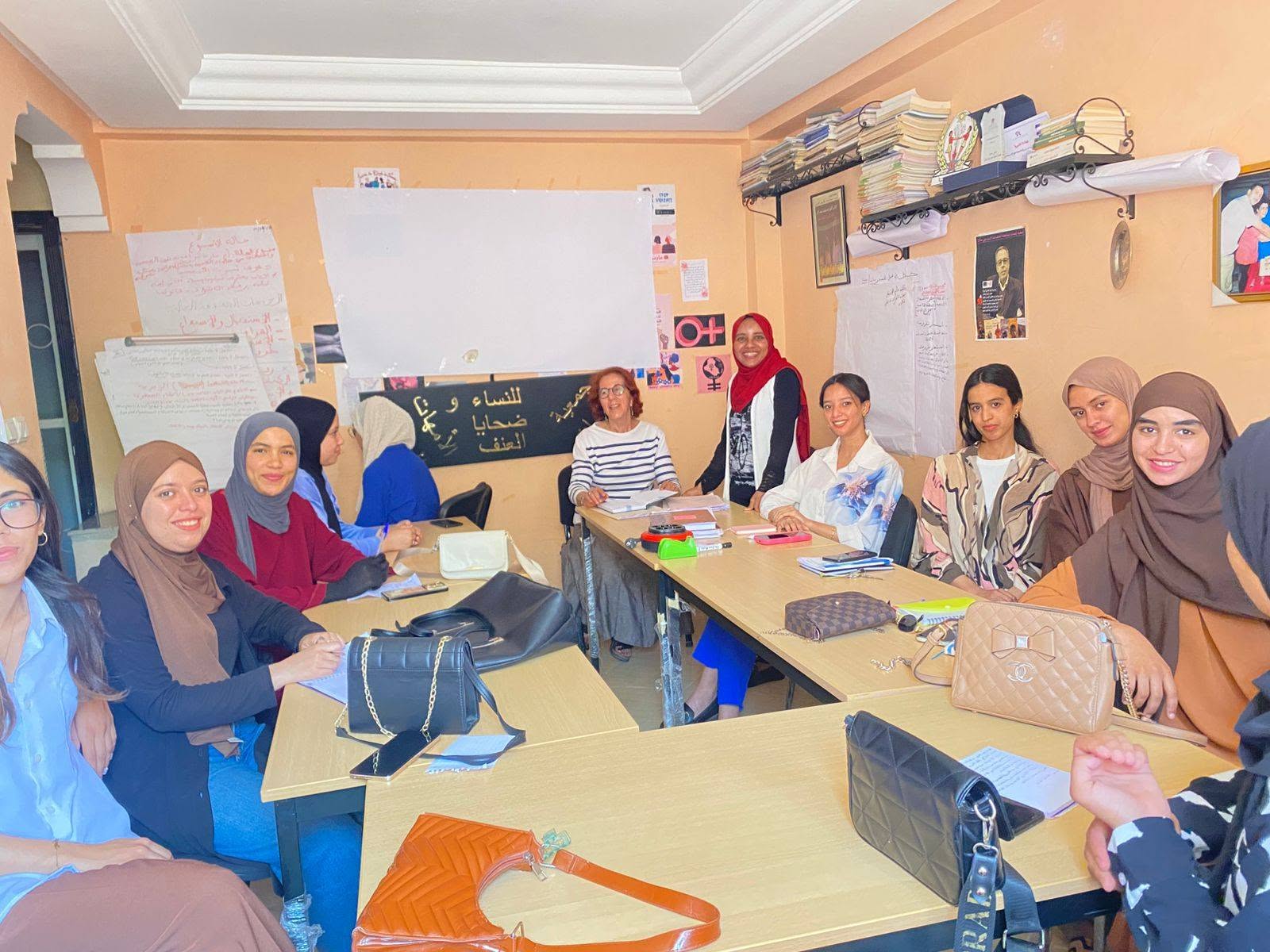
In response to requests for shelter, INSAT began by offering four beds, and later established a formal housing program between 2013 and 2021. However, the organization ultimately had to abandon this effort, as providing shelter for a pregnant woman until she gave birth and assisting with child registration required a constant presence and resources that INSAT could no longer sustain. The organization now primarily focuses on supporting women and girls facing gender-based violence. Its center offers counseling from a social worker, legal guidance, and, depending on available funding, assistance from a lawyer, psychologist, or psychiatrist. For the organization, simply having an income is not enough to escape a situation of violence when a safe place, necessary documents, or legal support are lacking.
Education is another significant challenge for women in Morocco.
Inequalities begin within adolescence, and despite a decline in illiteracy rates, 32.4% of women aged 10 and older are illiterate, compared with 17.2% of men, according to the 2024 census. Additionally, there are notable regional disparities that exacerbate these gender inequalities; for instance, the illiteracy rate in Béni Mellal-Khénifra is 32%, while in Casablanca-Settat, it is 19.6%.
These disparities in access to education continue to weigh heavily on life trajectories as individuals enter adulthood. In 2023, 2.9 million young people aged 15 to 29 were neither employed nor enrolled in school or training, according to the High Commission for Planning, with more than 72% being women. Behind this statistic are, in particular, young people classified as “at home.” It is unclear if this situation is by choice or imposed by family responsibilities, a lack of childcare, or mobility restrictions.
In some rural areas, the distance to schools, combined with a lack of transportation, or roads cut off by rain or snow, makes it difficult to get to school. “When a family has to choose between a girl and a boy to continue their education, they choose the boy,” explains Samia Lamrani. “The girl stays behind to do housework and may be married off shortly thereafter.” She recalls the case of a 15- or 16-year-old girl who became pregnant after an alleged rape. With material and psychological support from INSAT, she resumed her studies, earned her high school diploma, enrolled in college, and then found a job in Casablanca—all while raising her child. This individual’s journey demonstrates what sustained support can make possible.
***
In Casablanca, Solidarité Féminine is one of the community initiatives for women in Morocco, serving a different clientele and supporting them at a different stage of life. Its main program targets unmarried mothers aged 18 to 30, as minors are not currently admitted; when they contact the organization, they are referred to specialized agencies. Many of these women have been rejected by their families during their pregnancy or after giving birth. The father may refuse to acknowledge paternity. Some women have dropped out of school, have no income, and find themselves homeless. This social exclusion is compounded by legal uncertainty, as Article 490 of the Penal Code criminalizes sexual relations between an unmarried man and woman. According to the organization, the fear of prosecution may discourage some mothers from seeking legal recourse to defend their rights or those of their children.
Recommended Read: Curtain Up! Women in Rabat Use Theater for Freedom. Sexuality Proved Problematic (from 2021)
The three-year support program aims to address these challenges at once. Participants receive meals, childcare, medical care, literacy classes, and social, legal, and psychological support. The organization also provides training in cooking, baking, hospitality, or management through its food services, while scholarships give some women the opportunity to resume their studies. “It’s not just about vocational training,” emphasizes Laila Majdouli, co-founder and executive director of Solidarité Féminine. “There’s literacy training, awareness-raising, and legal and psychological support for mothers and their children. We need to make them financially independent so they can care for their children and take charge of their own lives.” Thus, the approach is not only about teaching a trade; it aims to rebuild the conditions women need to choose their own path by combining income, access to rights, health care, child care, and a return to education.
The organization reports having assisted approximately 1,000 women in 2025, including program participants, those receiving outpatient care, and women referred to other organizations. INSAT has received or referred between 1,500 and 1,800 women per year. Yet these community initiatives for women in Morocco often strive to ensure this continuity with limited resources and temporary funding. For instance, a previous project by INSAT funded legal assistance for six women each month, compared to two today.
Both INSAT and Solidarité Féminine’s work illustrates two complementary approaches: INSAT focuses on protection and access to rights, while Solidarité Féminine combines social support, childcare, training, and economic self-sufficiency.
But above all, their work shows that a sustainable response cannot be limited to emergency measures; it must connect security, access to justice, continued education, housing, and income. The recent events in Ceuta do not seem to have diminished young people’s desire to leave; Samia Lamrani notes that INSAT has not received any young women directly involved in the July crossings. However, she observes that the idea of leaving Morocco remains prevalent among young people in the region, including girls and minors.
The issue revealed by the situation in Ceuta is not how to persuade young women to stay in Morocco, but whether they truly have the resources necessary to choose their own future. Being able to stay without facing violence, pursue studies in another city, or migrate through legal channels all boil down to the same issue: the ability to decide for oneself, rather than being assigned a place by one’s family, by economic inequalities, or by border policies.
Moreover, the border did not necessarily bring the safety that many hoped for. For some, the tragedy of the crossing was followed by another struggle: finding protection upon arrival. Once in Ceuta, shortcomings in the reception system reportedly exposed some young Moroccan women to new forms of violence and vulnerability, within their own communities on Spanish soil. Placement in shelters did not always eliminate these risks. Reports have surfaced from some centers where adolescent girls faced humiliation, alleged physical violence, inadequate care, and sexual threats. A judicial investigation is now underway.
These experiences point to an essential question that begins long before reaching the border: what choices are available to young women in Morocco? Supporting local initiatives that create genuine opportunities, protection, and economic independence could give women more options at home. For those who do choose to leave, it is equally critical to ensure access to safe, transparent, and dignified migration pathways to a better future.