
Listen to the audio version of this article (generated by AI).
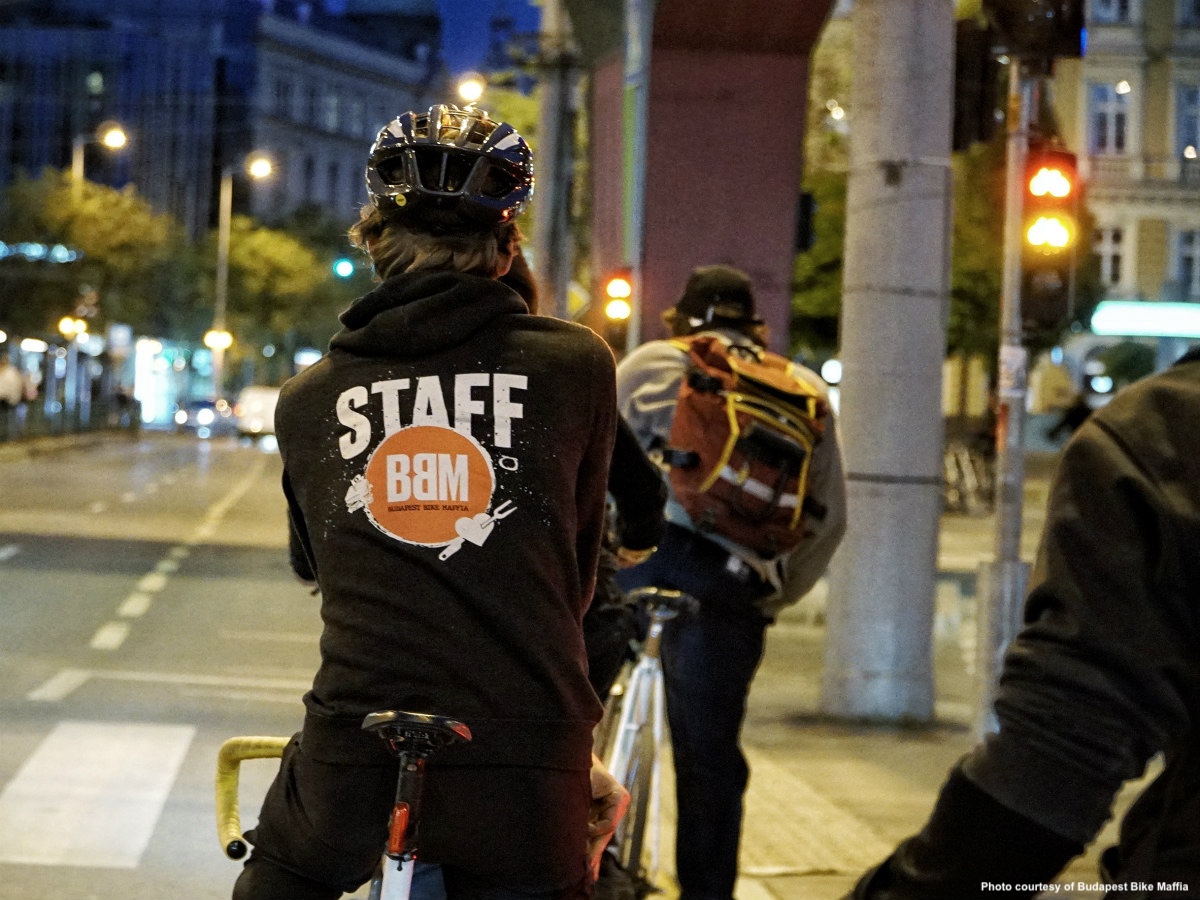
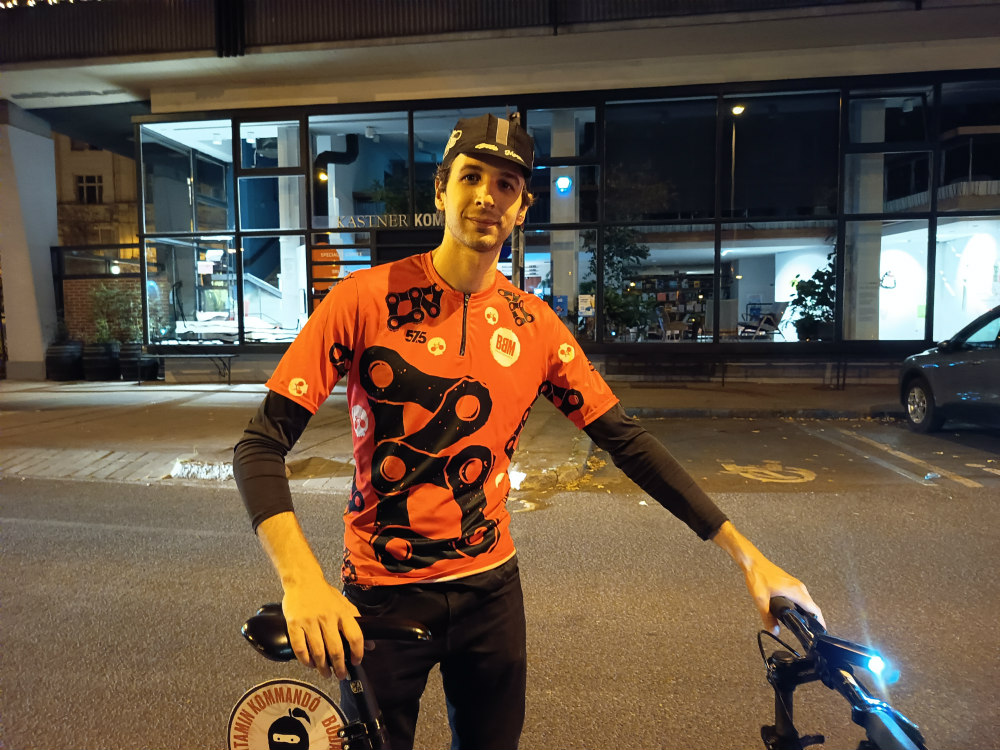
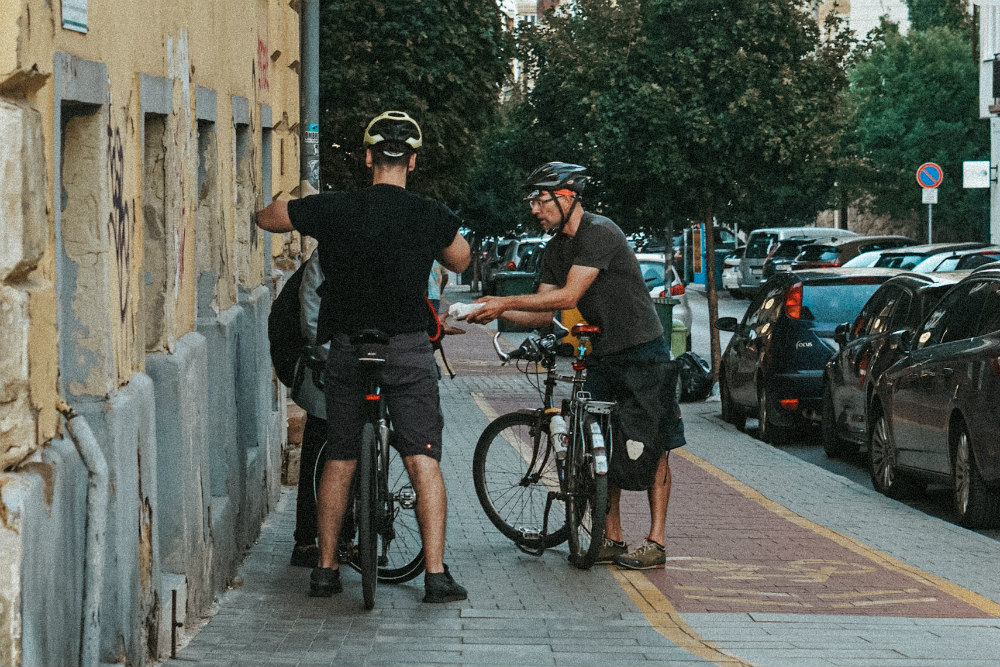
It is Thursday evening, and András Molnár is giving instructions to a group of cyclists outside a school a few meters from Margaret Bridge, on the Pest side of the Danube. A small sticker on the back of his bicycle reads “Budapest Bike Maffia.” Tonight, I will join them on a Vitamin Commando, one of their initiatives distributing healthy sandwiches to make life a bit better for people experiencing homelessness—and to witness many issues on the streets of Budapest long before they become statistics.
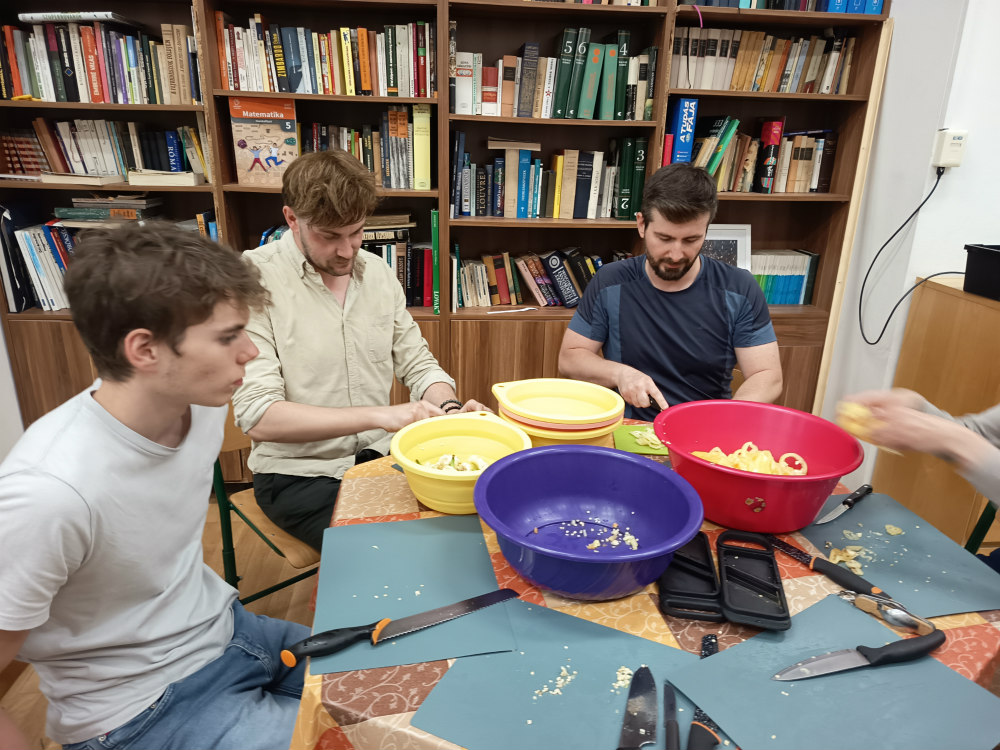
Inside the school, volunteers busily cut slices of bread, spread margarine, chop vegetables, and assemble the final sandwiches, all under the gentle guidance of Zita Tokay, affectionately dubbed “the Sandwich General” by András, who leads the operation with a smile. “Some volunteers know exactly what to do; they have been coming here every Tuesday or Thursday for the past few years,” Tokay explains.
At the sandwich-wrapping table, I strike up a conversation with a middle-aged lady who has been volunteering since the severe cold snap that affected Budapest in 2017. Another volunteer, a man originally from London, mentioned that after discussing volunteer opportunities with his daughter during Christmas a few years ago, he received a recommendation for the Budapest Bike Maffia and has been involved ever since.
An Iranian woman, who moved to Budapest three years ago, felt compelled to give back and contribute to the community that welcomed her. “The people at the Bike Maffia are so friendly, and everything is so well organized that I love coming back,” she shares as she wraps sandwiches and writes kind messages on the wrapping paper.
People chopping vegetables at another table laugh when one man says he’s come straight from the construction site to volunteer for the first time. It’s also a young student’s first day with the Budapest Bike Maffia. It is part of the 50 mandatory hours every Hungarian student must complete in community initiatives during their time at a private or public school, and she thought Budapest could use a hand with homelessness.
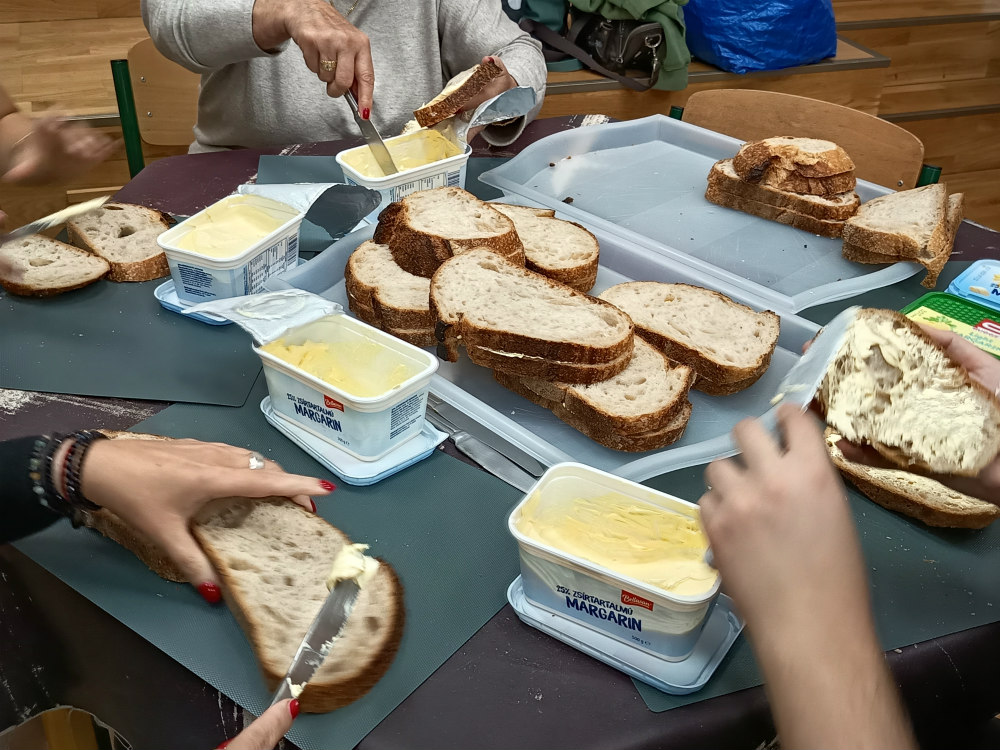
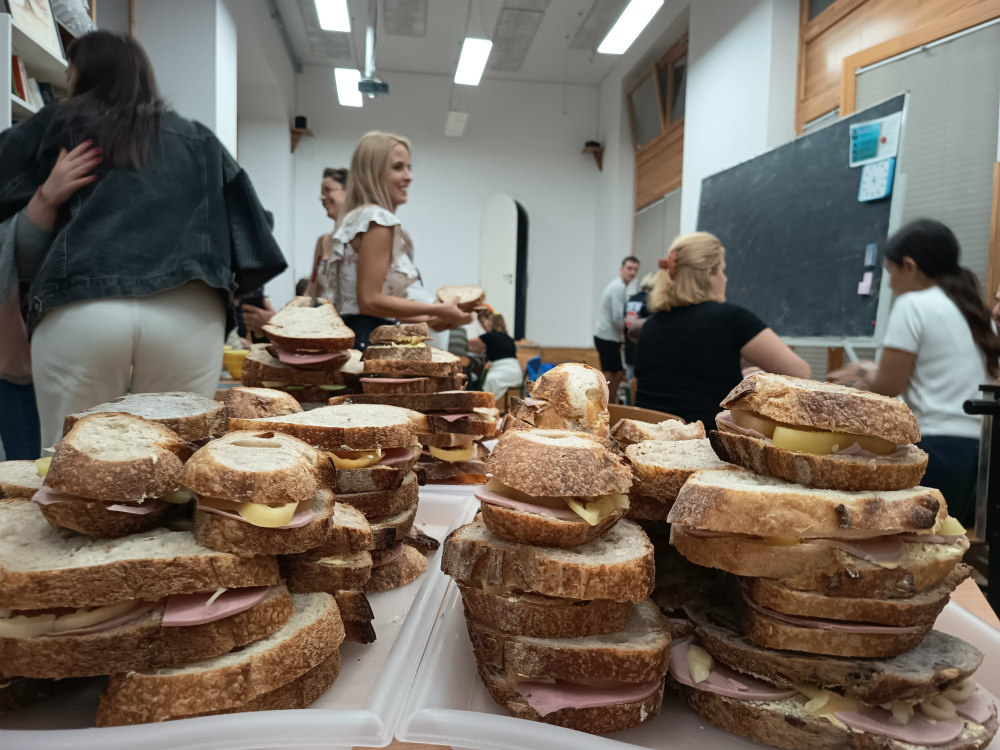
By now, my mouth is watering; the sandwiches look incredible, especially the bread, which appears to be sourdough, with some containing walnuts. I learned that these loaves are leftovers from some fancy bakeries in the neighborhood. The vegetables are sourced from donations from farmers outside Budapest, an initiative Bike Mafia promotes on social media to increase visibility for these farmers. Sometimes, the ingredients for the sandwiches are acquired through donations made by individuals and companies that want to fulfill their corporate social responsibility commitments. Bike Mafia is a sustainable model that cleverly combines donations with for-profit volunteering activities for companies.
Recommended Read: Nuit De La Solidarité: Inside the Night Paris Counts Its Homeless
After one and a half hours, 237 sandwiches have been packed and put in big bags to be distributed by the Vitamin Commando, split into two or three groups of cyclists, through usually fixed routes across Budapest. “Homeless people are less scattered at night, and they hang out in specific areas, but it also depends on the weather and time of the year,” explains András and his fellow cyclist Levente Sor. They have volunteered for this mission every Tuesday and Thursday for the past nine years, since their high school days and throughout university, continuing even now in their corporate jobs.
Tonight, I have the opportunity to ride with them.
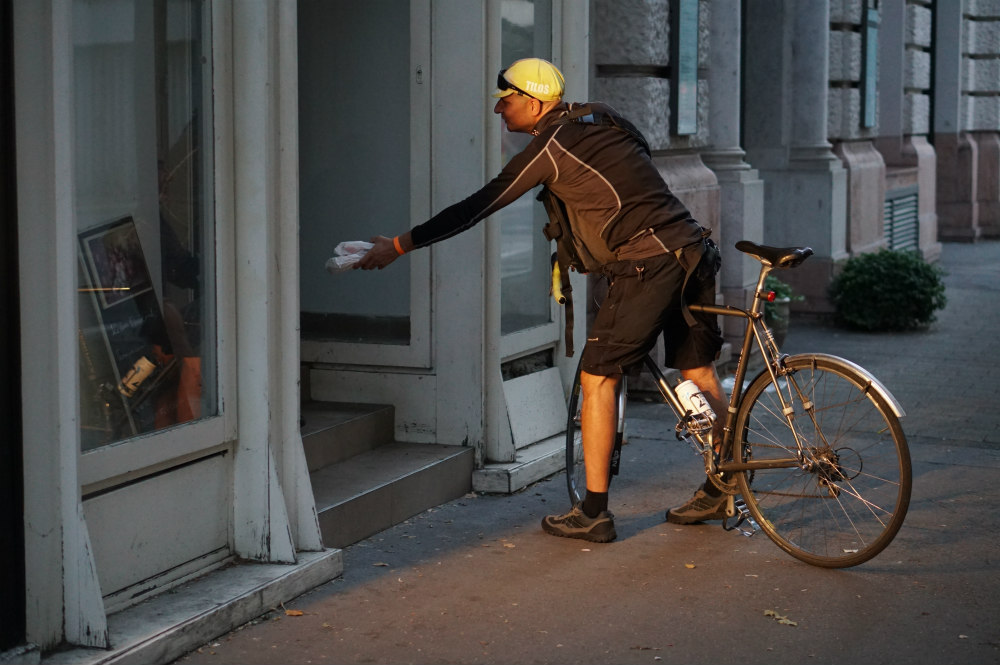
The ride is pleasant on one of Budapest’ public bikes, MOL Bubi, often on bike lines, despite potholes that are hard to see in the evening dark. As András stops his bike, some people immediately recognize him, perhaps because of the bright red Bike Maffia T-shirt he wears, and approach him. After he hands out the sandwiches, another man leads him to other individuals sleeping rough in a corner. The evening passes smoothly; at times, they exchange a few words with the people we hand a sandwich to.
On one occasion, a man is watching the Liverpool soccer team on his mobile phone; he supports them because a Hungarian player is on the team. I joke that I am a Real Madrid supporter, and we all laugh. As the evening concludes, András and Levente take the remaining sandwiches to local shelters.
There, the Budapest Bike Maffia runs other initiatives for people experiencing homelessness, such as the Plus One Sandwich program in Hungarian schools. Kids are encouraged to bring an extra sandwich for their snack, which is collected for shelters—a great way to teach children about solidarity.
For the Vitamin Commando team, their evening rides mean much more than just delivering food. Some individuals seek a moment of human connection or assistance with bureaucratic issues, such as healthcare. If someone requests a painkiller or a warm coat, they make sure to bring it the next time. Others don’t sleep on the streets but come from the other side of the city just for a sandwich. “The line between who is homeless and who is not has become very blurry,” says András.
That evening, most of the individuals we met were men in their fifties, and their appearances varied widely, challenging the average Hungarian’s perceptions of homelessness. “Many people associate homelessness with someone dirty and often drunk, based on what they see in the underground. But this image represents only a small proportion of people experiencing homelessness,” explains Kata Kis, the spokeswoman for Bike Maffia Budapest.
The shelters offer a different dimension of homelessness. “During my last visit to a women’s shelter, I encountered people of all ages, from a 20-year-old girl to a woman in her 80s, and everyone in between,” Kata Kis notes.
According to the latest “February 3rd Survey” on homelessness in Hungary, organized by the Menhely Foundation and the February 3rd Working Group, every second homeless person under the age of 30 comes from childcare institutes. Over the past decades, Hungary’s child protection system has gradually shifted from large institutions towards foster and family-based care. However, moving a child from an institution to a foster family does not automatically mean that the child protection system is functioning properly. “When a young person leaves state care at just 18 years old, they face a very high risk that they will soon become homeless, which is unbelievably tragic,” says Kata Kis.
And she adds, “Around twenty years ago, many psychiatric institutions were also closed in Hungary, but the underlying issues persist; the individuals affected did not simply vanish.”
Recommended Read: How Toronto Doctors Are Tackling Homelessness
Another striking finding of the latest “February 3rd Survey” on homelessness is the age of the homeless population. The largest group consists of single men over 50, with relatively low levels of education, who have been homeless for several years. There is also a growing number of people over 60 who are ill or unable to work. Many of them lost their homes later in life. As a result, homeless shelters increasingly have to care for elderly, chronically ill, or dependent people who would actually need residential elderly care or nursing facilities.
“Homelessness reflects a very diverse group of individuals with varying financial, social, and psychological backgrounds, which presents numerous challenges. There is absolutely no dignity within the system, as everyone is treated the same way. The only commonality is that they lack the financial means to rent a flat,” laments Kata Kis.
In addition, the streets of Budapest reveal another phenomenon that has become increasingly visible this summer. Because of limited opportunities and gaps in the social system in rural areas, many people from the countryside have come to Budapest to collect empty bottles in exchange for small amounts of money. “Many of them are struggling with the consumption of extremely cheap drugs, and we are seeing more and more people in very vulnerable situations appearing on the streets of Budapest,” explains Kata Kis. This is a complex problem connected to poverty, limited opportunities and a lack of adequate support in disadvantaged rural areas. “For many years, there has simply not been enough meaningful investment or long-term support to help people out of these situations. Instead, short-term solutions have often replaced real opportunities for change. It’s really tragic.”
Education is another major issue. Among working-age homeless people, low educational attainment is widespread, and around two-thirds of those under 30 have completed no more than eight years of primary school. This severely limits their employment opportunities and their chances of escaping homelessness, which is closely linked to deficiencies in housing, healthcare, education, employment, and social services.
While Hungary has a relatively high employment rate, a considerable portion of the population still lives with financial insecurity. For individuals already struggling with low incomes, expenses like rent, utilities, debts, or sudden health issues can quickly lead to a serious crisis that puts them on the streets.
Kata Kis argues that reducing homelessness in Budapest requires more than emergency shelters and grassroots initiatives: it needs appropriate care for elderly and ill people, effective support for people leaving institutions such as the child protection system, and stronger social support in rural areas. It remains to be seen whether the new government is up to the task after the European Union agreed to unlock €16.4 billion ($19 billion) in previously frozen funds for Hungary. In the meantime, a Vitamin Commando keeps handing out sandwiches in Budapest’s evenings.