
Listen to the audio version of this article (generated by AI).
This article was produced independently with support from the non-profit organization Nobel Women’s Initiative.
On the same day I met Guatemalan lawyer Astrid Escobedo, the member states of the International Criminal Court voted to remove its chief prosecutor, Karim Khan. The British lawyer is facing serious allegations of sexual misconduct by a member of his team.
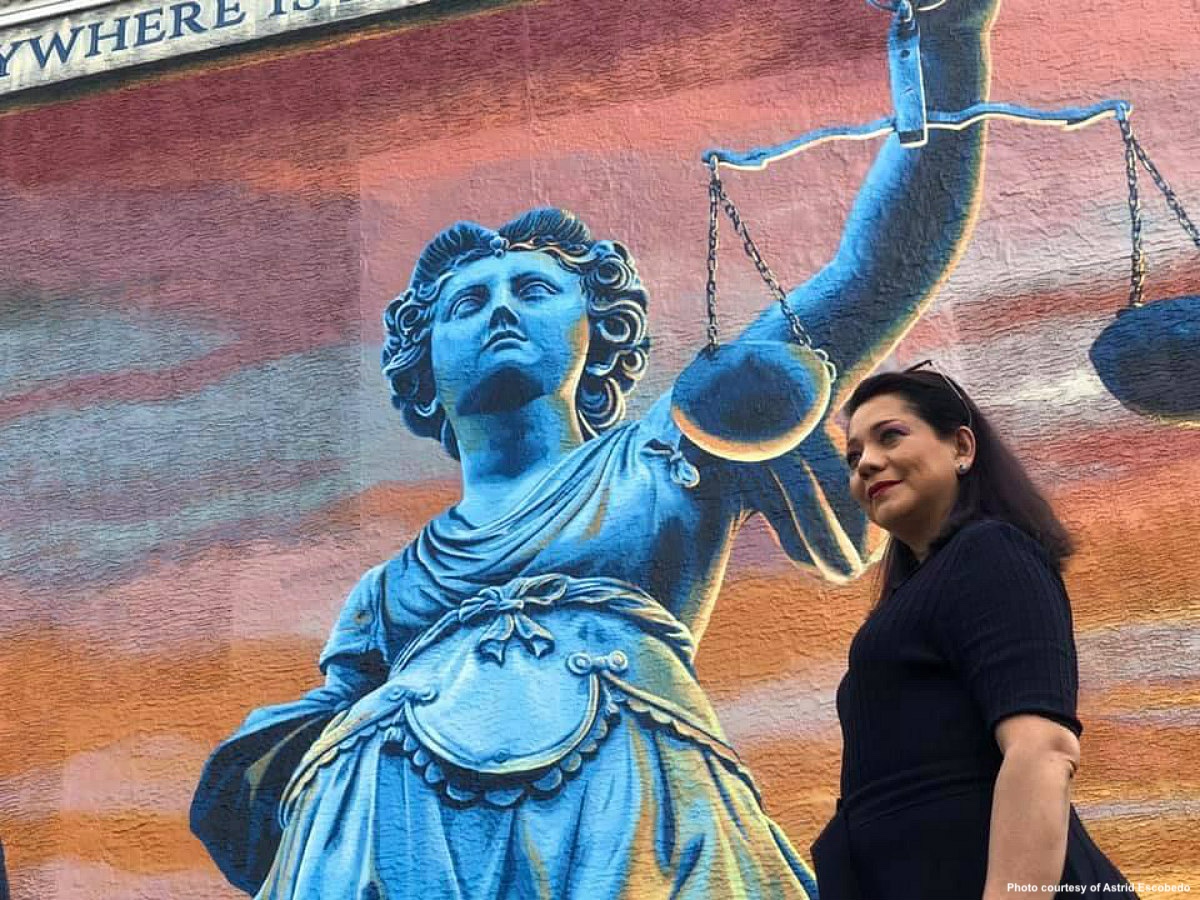
Escobedo knows the ins and outs of that world well. In 2023, she became the first Central American lawyer to be included on the International Criminal Court’s (ICC) List of Lawyers, and she also serves on the ICC Lawyers’ Association’s Working Group on Gender, Diversity, and Sexual and Gender-Based Violence. However, our meeting that day had a different purpose: to understand how a Guatemalan activist with an international background in human rights ended up in Philadelphia, putting her experience at the service of Latina immigrant women.
Until October 2019, Escobedo had lived in Guatemala, where he grew up in the midst of armed conflict. From a young age, she was very aware of the things happening around her. “I was very curious; I always asked questions,” she explains. At 12, she decided she wanted to become a lawyer to help her country achieve justice; and years later, she graduated with a law degree from the University of San Carlos of Guatemala. “At university, they nicknamed me ‘the lawyer of impossible causes’ because I always defended what others didn’t dare to, since we grew up in a society filled with fear.”
A year after graduating, Escobedo went to work in Washington, DC, on the Rómulo Gallegos Fellowship awarded by the Inter-American Commission on Human Rights. Normally, lawyers who received the fellowship did almost everything possible to stay and work at the Inter-American Commission. Yet, Escobedo wanted to return to Guatemala “to help my country move forward.” With a master’s degree in Fundamental Rights and doctoral studies from the Carlos III University of Madrid, she returned to Guatemala in 2005 to open her law office, where she represented victims of enforced disappearance, including the well-known case of Florencio Chitay Nech, as well as cases concerning the rights of indigenous peoples and gender-based violence.
Everything changed for Escobedo when she began working for the International Commission against Impunity in Guatemala (CICIG) four years later. This independent international body was created in 2007 through an agreement between the United Nations and the Guatemalan government to support the Public Prosecutor’s Office, the National Civil Police, and other state institutions.
“CICIG became my life. I was hired as a legal officer to support the team that was establishing the prosecutor’s office. What seemed like an administrative job turned out to be something entirely different. I began supporting investigations and litigating cases related to corruption, organized crime, and illicit networks,” Escobedo explains. This continued for almost 11 years until President Jimmy Morales unilaterally terminated the agreement between the UN and Guatemala in 2019 and expelled the commissioner.
“I became completely involved in defending my international colleagues from expulsion without considering the risks,” she says. She also supported cases of tax and customs fraud involving members of Congress and Guatemala’s wealthiest families. In 2017, Escobedo was alerted that a case had been opened against her in the Money Laundering Prosecutor’s Office for $2,500. “It’s a very convenient charge to get rid of me,” she adds. If there isn’t enough evidence, the judge can order a three-month investigation, and in the meantime, the accused must be held in pretrial detention. No alternative measures are available. Ultimately, investigators concluded that no crime had been committed, but every time a hearing was scheduled, it was postponed. The last one was supposed to be in February 2020, and it hasn’t been rescheduled since.
“I already had enemies everywhere and no support in the country. Nobody would give us work. The United Nations turned its back on us,” Escobedo laments. With no other option, she had to leave the country. She went to the UN Refugee Agency to request asylum, but her application was denied because of the open money laundering case. She explored other options without success and eventually moved in with her sister in Philadelphia, where she has rebuilt her life over the past seven years.
“It has been a challenge working here without a degree from an American university. Then, when they see that I have a lot of experience, they say I’m overqualified. I couldn’t even work as a waitress or in a supermarket,” Escobedo explains. She began connecting with migrant communities, where she realized how much she, as a Latina activist, could contribute in Philadelphia. “I met a Salvadoran woman who introduced me to the domestic violence program; here they don’t call it gender-based violence,” Escobedo shares. “Then you start to compare and understand why international conventions and treaties aren’t ratified here, and why many of the terms we use in other countries aren’t used here.”
In the United States, more than 43 million women (25% of the total female population) have experienced intimate partner violence—physical, sexual, stalking, psychological abuse, and certain forms of control and coercion—at some point in their lives, according to the latest data from the Centers for Disease Control and Prevention (CDC). Latina women in the United States experience intimate partner violence at rates similar to or lower than other women. According to the latest CDC data from 2017, 42.1% of Latina women have experienced intimate partner violence, sexual violence, or stalking by their partner.
Recommended Read: Can a Community Own a Design? Mayan Weavers Say, ‘Yes’
“In the case of Latina immigrants, I think the statistics fall short compared to the reality here because they face much greater obstacles to reporting abuse and seeking help,” Escobedo adds. It remains to be seen how the anti-immigrant political climate affects reporting. Latina immigrants are less likely than non-immigrant Latinas to seek help from formal services due to limited English proficiency, lower education levels, and irregular immigration status.
Additionally, there is no support system for immigrants as in Upper Darby, outside Philadelphia, where Escobedo has worked. “There are no officers, social workers, or psychologists who speak Spanish, so they lack the capacity to address women’s reports,” she explains. In Upper Darby alone, the police have identified more than 100 languages for which they do not have interpreters. Escobedo has had to accompany women to file reports at the police station and also act as an interpreter for victims of domestic violence.
It is not a secret that domestic violence takes on a different dimension for migrant women, who often lack a support network—family, friends, or community—to rely on. On the radio program Voz Colectiva Comunitaria, aimed at the Latino community in Philadelphia and co-hosted by Escobedo, they’ve introduced the concept of “vicarious violence,” which many women experience without even recognizing it as such because certain behaviors are normalized. These include threats related to their immigration status and child custody, often in binational couples.
Unfortunately, Escobedo notes that the immigration industry and its barriers often foster organized crime and exploitation. “That’s why we not only focus on domestic violence but also strive to educate and empower the migrant community. It’s difficult to grasp the underworld that exists because of people in an irregular situation. Everything revolves around not having a work permit.” Escobedo works with single mothers who face constant challenges in raising their children while trying to balance work. She points out that hiring a nanny can cost $30 for an afternoon, while if the mother had legal immigration status, a caregiver would charge between $15 and $20 per hour. The higher cost doesn’t necessarily translate to better care; rather, it can expose children to potential abuse for fear of reporting it.
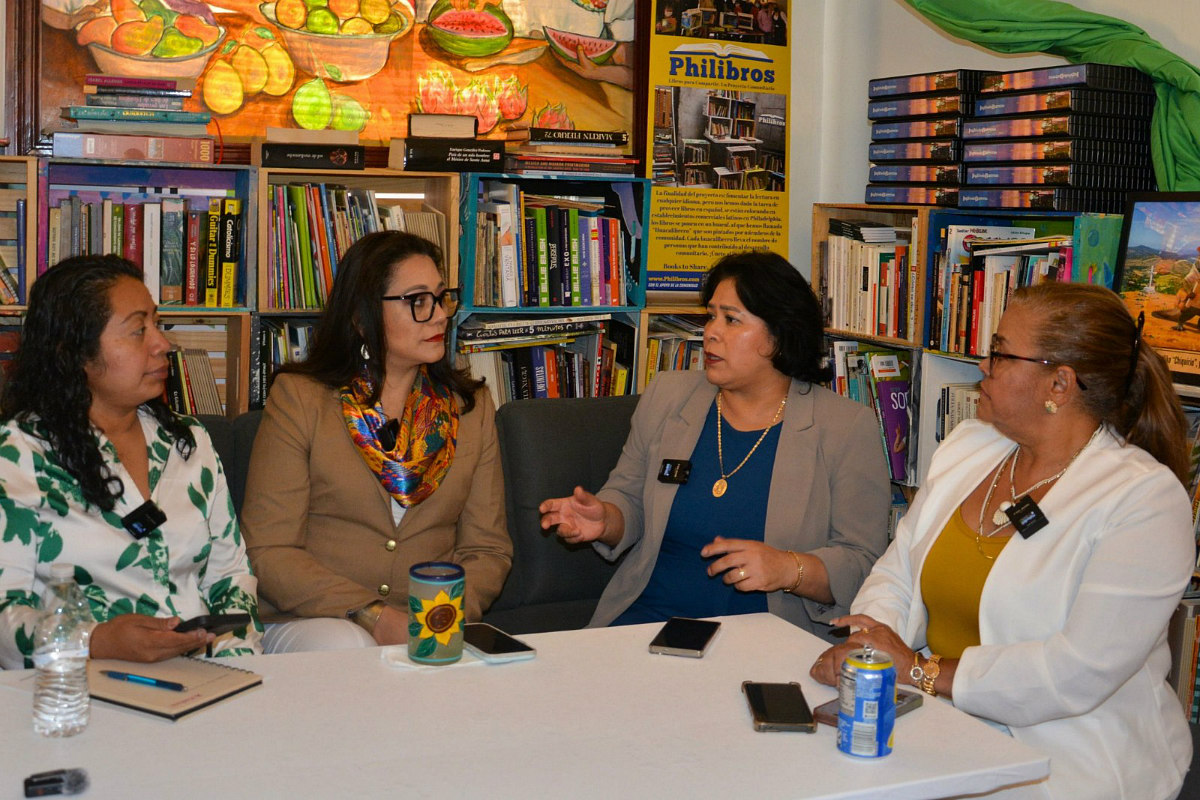
Escobedo also recalls helping an American girl in community college, the daughter of undocumented immigrant parents, navigate the various universities and loans available to her as a citizen. “The challenge is learning how to navigate the system,” she says.
Reflecting on her experiences, Escobedo explains, “What I’m experiencing now is different from my time as an intern in DC, which felt like a bubble in the international world.” Witnessing the needs and challenges of the Latina women in Philadelphia has been incredibly difficult for this activist. “Finding this path has not been easy and has cost me many tears, but I won’t deny that it’s ultimately an opportunity to share knowledge, grow, and learn. My personal satisfaction comes from the realization that I possess skills that surpass mere qualifications, while I help those who truly need assistance.”
Around 50 Guatemalans are in exile for reasons similar to Escobedo’s, dispersed across the United States. She shares that they recently began organizing a cooperative specifically for the Guatemalan migrant population to help them understand their rights. Escobedo is spearheading an initial project that aids individuals in developing an emergency and security plan in the event of arrest or deportation. She encourages them to consider important questions: What should they plan to do? Do they have children? Do they have passports? What do they intend to do with them? Are they allowed to travel to Guatemala? If they are arrested while driving, who will pick up their car? Do they have car keys?
“My experience has taught me that you have to be open to being reborn,” she says. Escobedo has left everything behind—her dreams, family, career, and material possessions. As a lawyer, she has no clients waiting for her in Guatemala, nor does she have an organization willing to rehire her, as the International Commission Against Impunity in Guatemala will not reopen. “Other organizations don’t want us. I’ve applied for jobs in Guatemala, and they simply don’t call me back,” she adds. In the United States, she has found her purpose and is now studying for her LLM (Master of Laws) so that she can practice as an immigration attorney.
Recommended Read: The Red Card Mexico Can’t Ignore
Escobedo remains actively involved in international legal networks and advocates for human rights through strategic litigation, research, and public policy engagement. Notably, she is the only Central American lawyer included on the International Criminal Court’s (ICC) list of lawyers, and she serves on the ICC Lawyers’ Association’s Working Group on Gender, Diversity, and Sexual and Gender-Based Violence. It is important to note that this working group does not directly investigate or sanction judges, prosecutors, or lawyers. Instead, it monitors and provides professional representation, promotes equality, prevents violence, provides training, and advocates for adequate working conditions for those who serve before the Court, as well as for victims and all parties involved in ICC proceedings.
On Karim Khan’s dismissal, Escobedo emphasizes the need for a thorough investigation to ensure justice is served. She states, “Allegations of sexual harassment can severely damage a person’s reputation. I’ve witnessed very similar cases, like what happened to one of the Investigation Chiefs of the International Commission against Impunity in Guatemala (CICIG), and also when one of the commissioners had extramarital affairs fabricated to interfere with his position,” she shares, referring to prosecutor Carlos Castresana. He was a pioneer in the fight against corruption in Spain and arrived in Guatemala in 2007 to lead the UN-appointed CICIG. At the time, he spent his first months building the commission with no staff, headquarters, budget, or infrastructure.
Years later, Castresana decided to return to Spain because of the brutal campaign against him. “In the case of the former Head of Investigations, he stated that he had enemies even within the commission,” Escobedo says. “He was so disappointed that he resigned, even though no case was ever brought against him.”
“I owe nothing to the ideal of justice I once held. I have fulfilled it. Is this the result of fighting for justice? Yes, it is, but I am alive. Because the motto was exile, imprisonment, or death. They didn’t get to the burial stage, but they did get to the imprisonment stage, putting some of my former colleagues, former prosecutors, journalists, and human rights defenders in jail. I was clear about it: this country has had enough martyrs without me becoming another one.”