
Dear Reader,
You might have thought of giving up Coca-Cola by now, if you’re in solidarity, along with other products on the BDS (Don’t Buy Into Occupation) movement list. Like the boycott on South Africa in the 1980s, the strongest way to express your activism is the same as then — with your cash.
But we have no such options, because our cash is Israeli Shekels. Everything we buy supports Israel’s purchasing of bullets and bombs via taxes and the treasury.
I’m writing to you from Tubas. It’s a large agricultural town with an even larger rural area surrounding it, in the agricultural heart of the West Bank, growing vegetables, fruit, wheat, and herbs, and raising livestock for dairy and meat.
Fresh local produce competes with stuff grown over the wall, where there’s three times as much water. That’s why their stuff is cheap, at the water level, and they have digitized systems for managing pests, automating picking, and so on, so their stuff rolls into our markets at a way lower cost. The working class in the West Bank is broke from no work, so they’re forced to eat Israeli produce over their own locally-grown food.
Most of the money Palestinians earn thus flows back into the Israeli economy in one way or another. The “Protocol on Economic Relations” (1994) of the Oslo Accords, better known as the Paris Protocol, could have led the Palestinian economy towards independence; instead, the West Bank became a captive market for Israeli goods. Approximately 70 percent of Palestinian imports come from Israel, and 85 percent of the goods exported from the Palestinian territories are destined for Israel. But exports are challenging and unpredictable, especially for perishables. Just today, someone I know was turned back at the border to Jordan and is currently on his way back here. Now imagine a truck of goods instead of one guy.
We see foreign brands and English, Chinese, and Turkish words on chocolate bars and cookies. Our favorite chips are Egyptian Tiger brand, but usually only American Lay’s are available. Even bottled water has a Coca-Cola logo on the back, despite being sourced in Jericho. My rice is either Calrose or Basmati (Australian or Indian) despite our fields growing rice since Bible times, alongside even more ancient wheat fields, yet my locally-baked bread contains American or Turkish flour, despite wheat originating from — you guessed it — Palestine, aka the ‘Fertile Crescent’ — so called because wheat originated here.
Recommended Read: #2 — A Regular Day in Jenin
I discovered an even lower bar for consumer goods last week while shopping for household items for Eid, and opted for a really nice enamelware pitcher. It’s made by the best-known cookware brand in the West Bank, Soltam, whose high-quality wares have a monopoly on pots, pans, chef’s knives, and other cooking tools. If it’s a kitchen item in the West Bank, Soltam is the brand, whether we like it or not — but often, we like it. Their stuff is heavy, well-designed, and reasonably priced.
I flipped the enamelware jug I purchased last week and saw their brand name, Soltam, and in a moment of late-night curiosity, Googled them. Their homepage is not hiding the clues, a strapline about ‘military-grade durability’ and ‘over 70 years of expertise’ winking at their roots. Wikipedia reveals that Soltam is a subsidiary of the notorious Israeli manufacturer of military equipment and unmanned drones, Elbit Systems. As their website states, they ‘deliver cutting-edge defense technology and solutions for global security across air, land, sea, cyber, and space.’
No wonder those chef’s knives are sharp.
I water my geraniums, reflecting on the jug’s origins, and the funds every purchase provides to a military that invades our towns and fields daily, not to mention Gaza and Southern Lebanon.
We need to ignore all of this, and a lot more, to find the joy that you need me to serve for you to keep reading this column, which is meant to be part-educational, part-anthropological, and part-extreme tourism, with ‘Come to Palestine’ magnetism when I get it right.
That’s why my gaze is firmly on the souk now, to provide an enjoyable ending to this letter, after a pretty gnarly ride through disempowering retail options that fund our own demise.
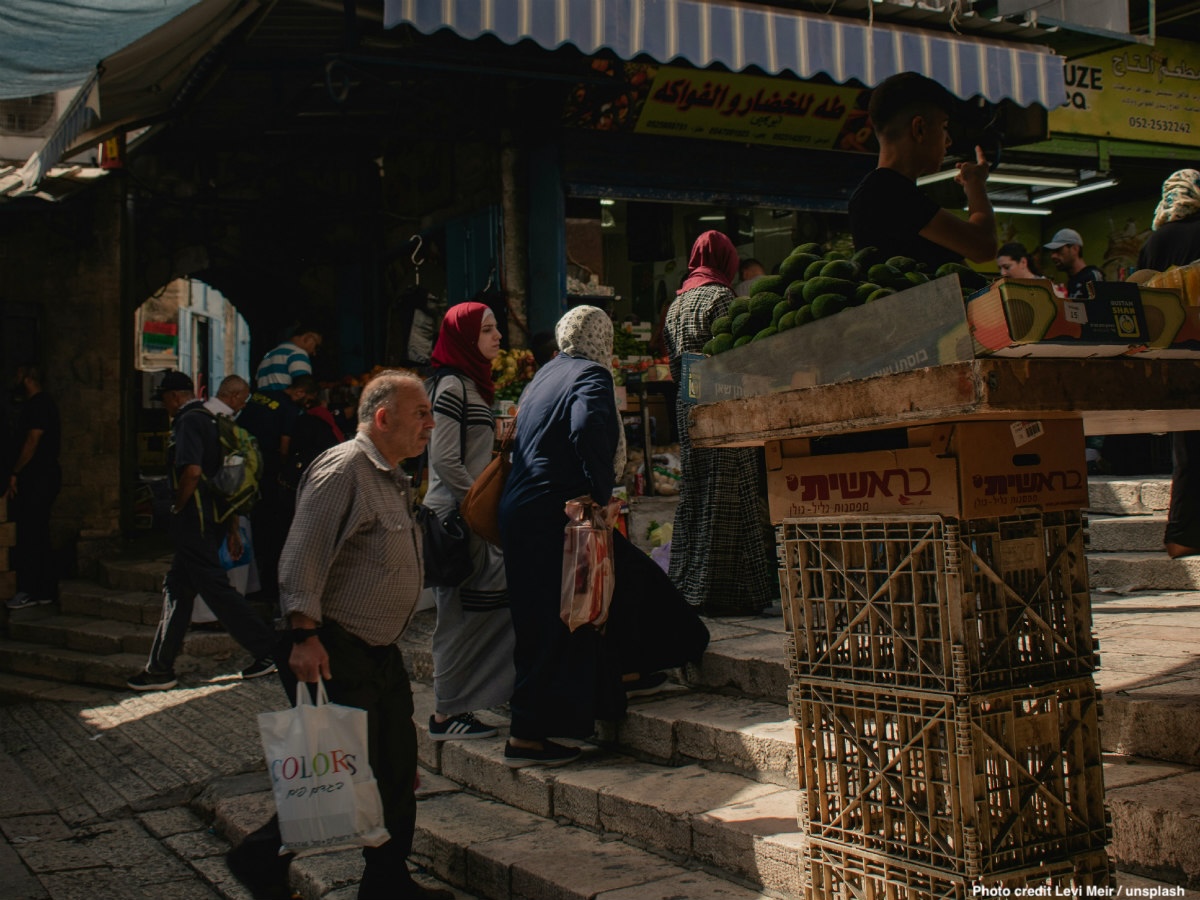
The souk is unimaginably special. Tanned and wrinkled, the hands that pass the items treasure each gem, whether it’s a local heirloom onion or a plastic pink yoyo from China. They value the stuff with sacred appreciation, wrapping your shopping while saying a blessing, smiling deep into your soul as they drop it in your hands, and cherishing the human exchange as much as the financial reward.
Bread is freshly baked, hot and round, whether it’s a sourdough pitta or dough stretched over a cushion and flipped onto a red-hot dome for 2 seconds to bake Bedouin shraak.
Coffee is roasted while you wait, either ground with cardamom or solo.
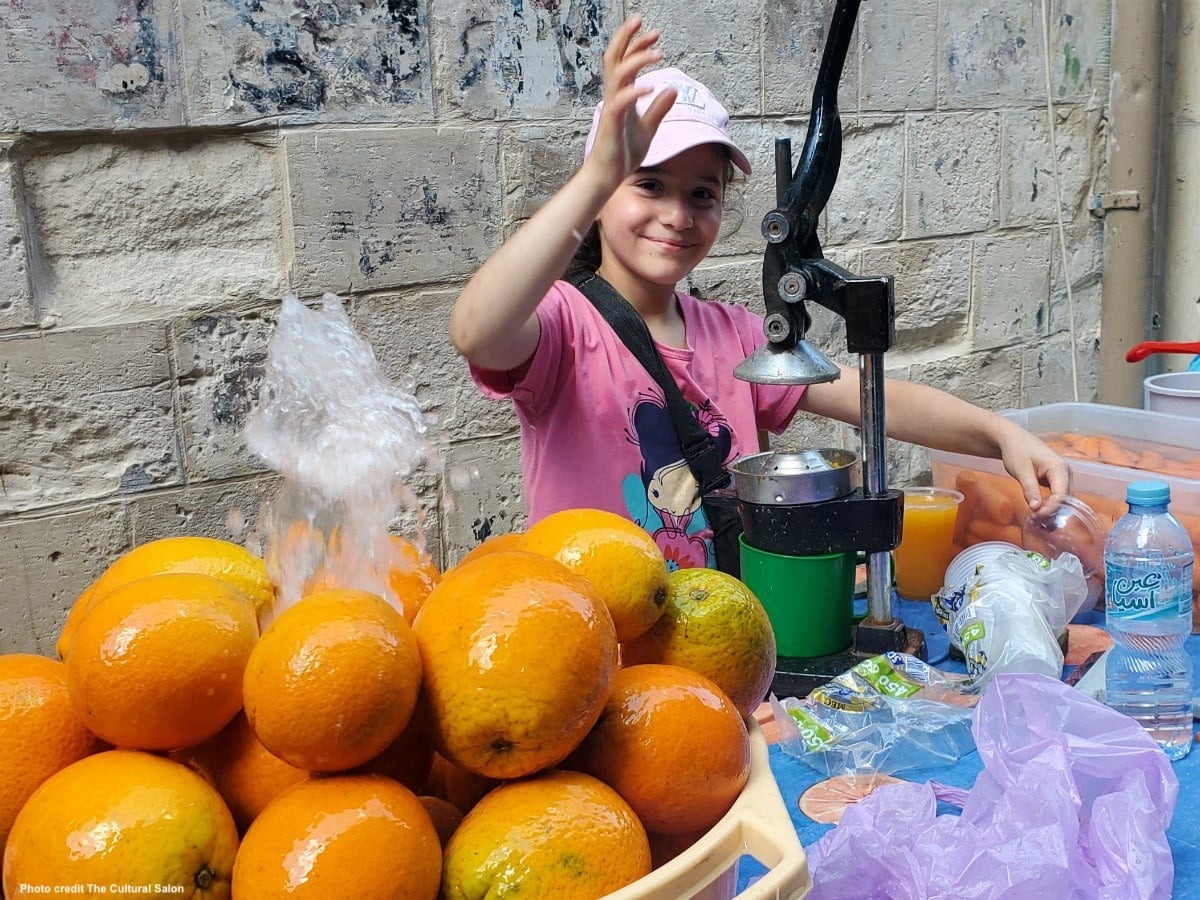
Fruits are juiced and bottled as you watch, the recycled plastic soda bottles lying about Fanta as juice is funnelled by a small girl dressed in pink whose joy in her profession is obvious, as is her sense of belonging to this street. Her name is Maryam, and she’s a prime example of what to do when compound factors give you oranges — you make orange juice, doubling the cost of the oranges with every squeeze, and adding a unique reason to buy them.
Come to Palestine, and I’ll take you shopping – for real! Come and meet Maryam, we’re waiting for you, and we’re happy to help you navigate this beautiful place.
From Tubas with Love,
Afaf