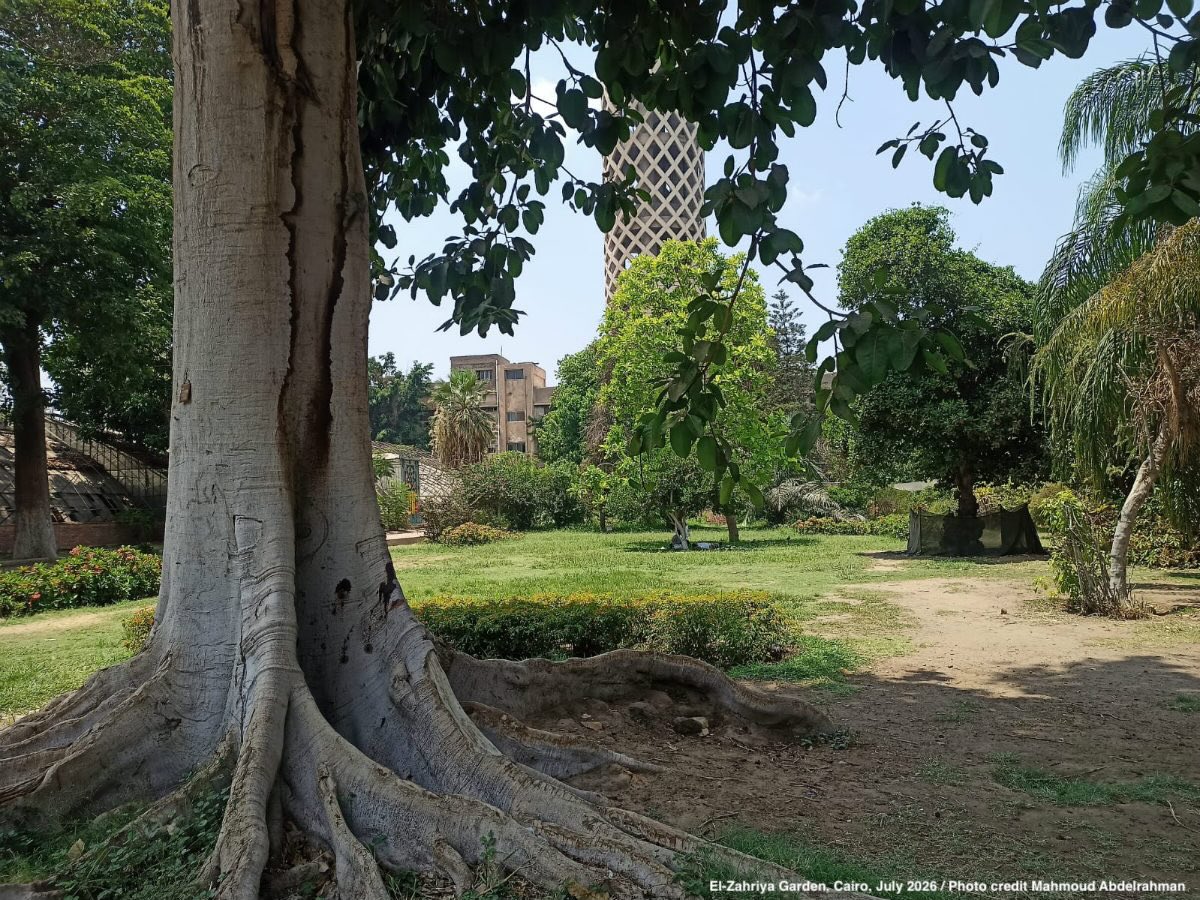

Cairenes often pass high walls without realizing that behind them lies a Victorian botanical garden open to the public with century-old palms, towering ficus trees, and historic glasshouses. Inside, the roar of traffic gives way to birdsong and shade. When the Ottoman viceroy Khedive Ismail laid out the royal gardens of Gezira—of which today’s El-Zohriya Garden in Zamalek is one of the last surviving remnants—he envisioned foreign monarchs admiring Egypt’s modernity. More than 150 years later, it is ordinary Cairenes—not kings or presidents—who are fighting to preserve that vision by saving a public park in Cairo and defending the city’s dwindling green spaces.
Khedive Ismail sought to transform Cairo into a cosmopolitan capital inspired by Paris. In 1868, the ruler commissioned French landscape architects and horticultural experts to create an experimental botanical garden within the grounds of his palace. Thousands of plant species from Africa, Asia, Europe and the Americas were imported and tested to see whether they could thrive in Egypt’s climate. A vast Bengal fig, filmed for a 2024 Bibliotheca Alexandrina documentary, is estimated to be more than 150 years old.
The garden also had a diplomatic purpose. Khedive Ismail invited foreign leaders to wander through these gardens as evidence that Egypt was becoming a modern, cosmopolitan nation.
A palm from India, a tree from South America, an Australian eucalyptus—each symbolized Egypt’s connections to an expanding global network. The garden welcomed royalty and dignitaries at the opening of the Suez Canal in 1869, including Empress Eugénie of France, the guest of honor at the inauguration. American diplomat Elbert E. Farman wrote about approaching the Gezira Palace through avenues of palms, passing botanical and zoological gardens—an attraction in their own right—before reaching the residence.
There’s also a poignant irony to Khedive Ismail’s vision. The lavish festivities for the Suez Canal inauguration—balls, banquets, fireworks and receptions—helped cement his image as a modernizing ruler but came at enormous financial cost, contributing to the debts that eventually led to his downfall.
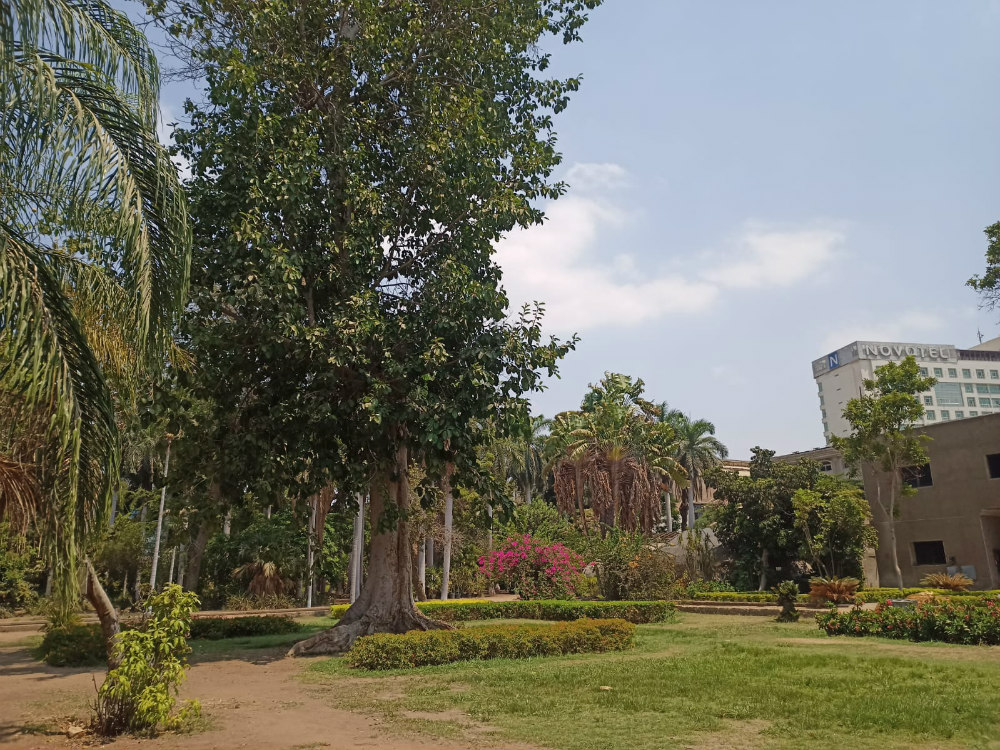
The palace still exists and runs under the Cairo Marriott Hotel and the trees remain. In fact, Zamalek’s southern portion is one of the largest concentrations of greenery left in central Cairo despite decades of subdivision.
For years, El-Zohriya Garden simply received urban dwellers who wanted to walk through it for a ticket price of 10 LE (20 US cents). No cafés oblige a visitor to buy a drink to sit; no rows of tables, no commercial installations, no restaurants changing the character of the place. That simplicity is what gave it its value in a city where public green space that is neither commercial nor ticketed has become rare.
***
In October 2024, residents woke to bulldozers and workers entering El-Zohriya. What project the garden was being prepared for was not clear. Which authority had authorized the equipment was not clear either. Since then, work inside the garden has continued light and intermittent. Meanwhile, Zamalek residents have spent nearly two years trying to establish a single fact. Who is building inside their garden.
But, in a city where independent civic mobilization faces significant constraints, saving Cairo’s last free garden is not an easy feat.
They have gathered more than 11,200 signatures on change.org from residents opposing the project. They have filed collective complaints through the government’s unified line, the first numbered 12401795. The demands are specific and technical: stop the project immediately, prohibit any excavation, respect the maximum permitted construction within heritage gardens of 2 percent of their area, conduct the environmental impact assessment required by law, hold meetings with residents, and keep the garden a public space.
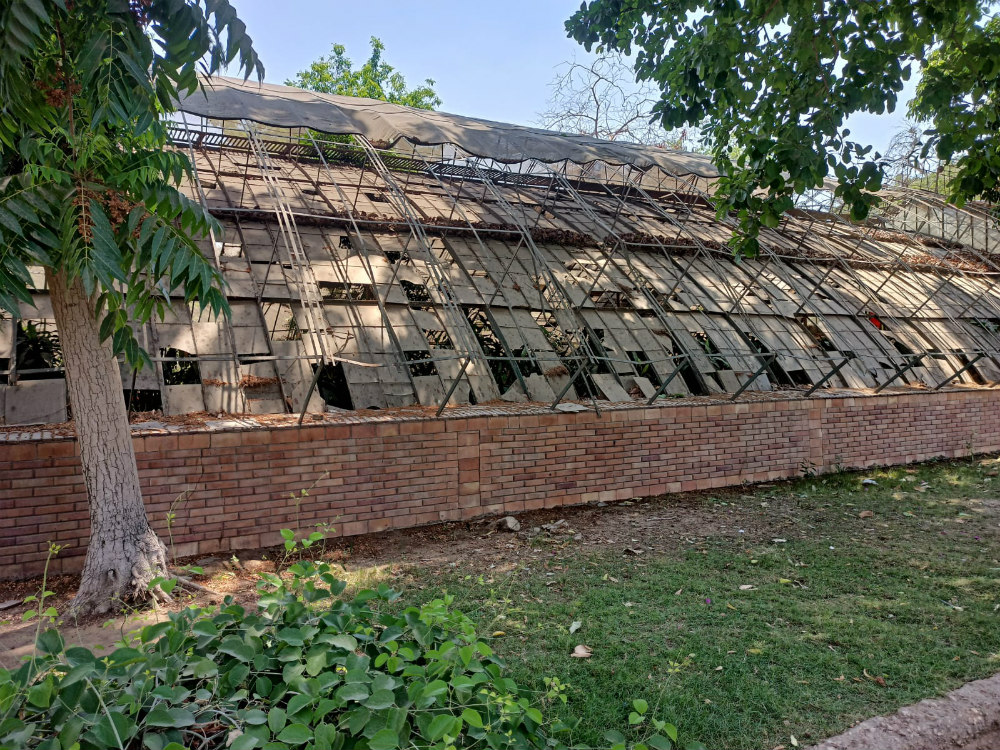
Last June, caravans went up inside the garden, and excavators began clearing the areas marked in an investment plan circulated by campaigners for Zamalek’s heritage, which envisions activities and services, restaurants, sport pitches, a gift shop, a hotel, and a theatre.
Having exhausted the alternatives, the Egyptian Foundation for Environmental Rights asked the court to send an expert into El-Zohriya Garden to record what was being built there and identify who was building it.
Recommended Read: Cairo Keeps Building, but the Housing Crisis Won’t Go Away
“The claimants did not know which authority was carrying out the work, so they could not name it as a defendant from the start,” says Ahmed El-Saidi, the environmental and climate lawyer who chairs the Foundation’s board of trustees.
At the first hearing, the state’s lawyer argued that the urgent matters court lacked jurisdiction because the case implicates government bodies and should go before the State Council instead; the Egyptian Foundation for Environmental Rights countered that the company operating within the garden is private, not governmental, keeping the case where it is. The court granted the state’s lawyer more time to review the case file, pushing the ruling to last Sunday, July 26. It ruled that it had no jurisdiction to do so.
The Foundation will appeal within fifteen days.
El-Saidi describes the case as precautionary, intended to temporarily suspend the works while their legality was verified, without affecting the substance of any dispute. Had it succeeded, he argues, it would have established something reusable—a route for citizens to halt work affecting gardens or public spaces until its lawfulness could be checked. Asked whether residents elsewhere in Cairo could take the same path of saving any other public park or green space, he says they could, if conditions allow, but urges waiting for the appeal before drawing conclusions.
The garden falls under the Ministry of Agriculture. Its greenhouses are registered with the National Organization for Urban Harmony. Its head, Mohamed Abou Saada, did not respond to calls or messages until this story went live.
In a press statement issued on 17 June, the Save El-Zohreya Garden Campaign, founded by Zamalek resident Inas Tewfik, demanded “the immediate halt of the project, and that a 158-year-old natural heritage not be cleared.” Any construction targeting the district’s heritage gardens, the statement said, “is an erasure of history and of the memory of the place, and an assault on the environment and on the lungs of this old neighborhood.”
Tawfik’s campaign has used every available civic instrument, in sequence and simultaneously. She helped draft and submit formal complaints to the relevant authorities, and contacted MPs to explain the heritage dimensions of the case. She ran community awareness campaigns and assembled documented historical and research materials on El-Zohriya, so that public debate over saving a public park in Cairo would rest on accurate information rather than rumor. She wrote to the Speaker of Parliament and to the member for Qasr El-Nil, and on 3 and 4 June 2026 sent urgent appeals seeking to halt excavation and construction she describes as proceeding without legal basis.
Parliament engaged. In October 2024, MPs Abdel Moneim Imam and Samira El-Gazzar submitted formal information requests to the government, warning that an unexplained “development” project threatened the urban fabric and the rare plants of a heritage garden. MP Dalia El-Saadany issued a parliamentary statement demanding to know which body had authorized the works, and how many trees had been cut, moved or removed.
Recommended Read: The Survival of the City of the Dead in Cairo
Residents are not opposing maintenance or improvement. The objection, as the campaign’s own demands make plain, is to an unannounced project inside a historic site, executed without published plans, without an environmental assessment, and without consulting the people it affects.
Omar Hosni, 35, visits the garden regularly to relax. He sees its fate as part of a broader approach, in which any site that can attract investment is encouraged to do so, regardless of consequences.
“Even on the roads, the state removed trees to widen arteries and streets without regard for the environmental impact or for rising temperatures,” he says. “Areas became hotter and less liveable. Trees should be part of any development plan, not a casualty of it.”
He is scathing about what replaces them. “Gardens are being turned into places to consume,” he says, filled with restaurants, cafés and petrol stations. It creates activity, but the result shows in summer, when people feel the heat and find nothing to shelter under, and then understand what trees were for. He describes a fashion for planting palms in imitation of Saudi Arabia and the Emirates, countries whose environment is desert rather than agricultural, producing something artificial that offers neither form nor use.
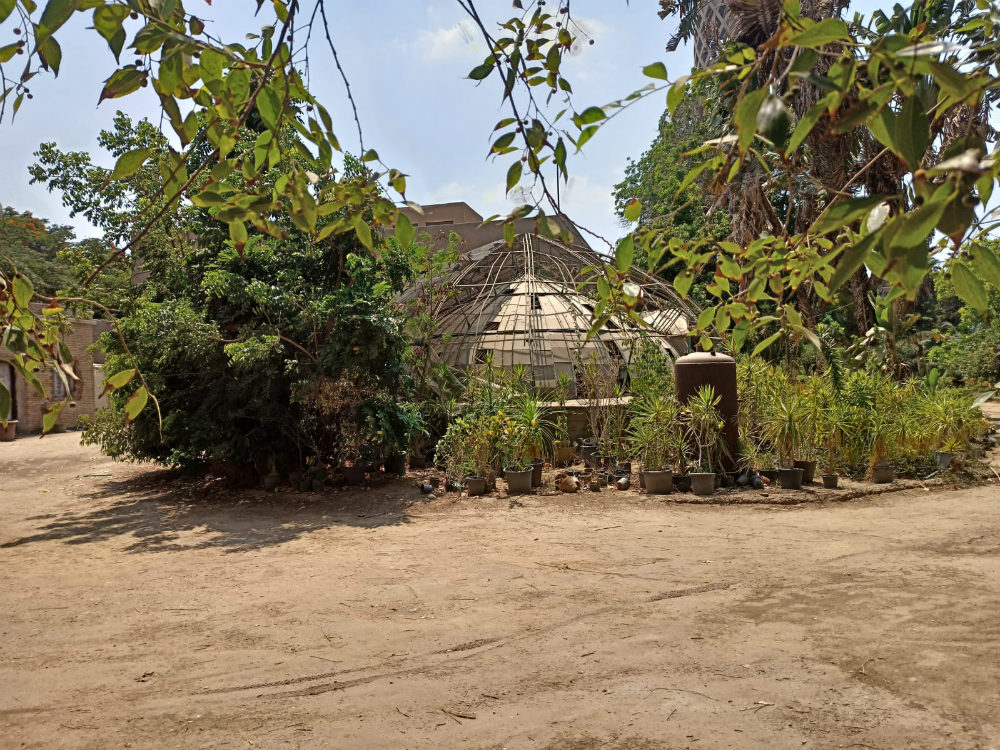
Khaled Seddik, chairman of the Urban Development Fund, has rejected criticism over tree removal. Appearing on DMC’s Masaa DMC in June 2024, he said claims that trees are being cut in Egypt are untrue, pointing to Fustat Gardens, some 500 feddans of which he said 88 percent is planting, on a site that had been a rubbish dump in historic Cairo. More than a quarter of the built area of new housing projects and new cities, he said, is now green where it had been desert.
But Cairo cannot afford another loss.
Individual green space per person in Egypt is just 17 centimeters, compared with a global average of 9 meters. Between 2017 and 2020, at the height of Egypt’s road-widening program, Cairo lost around 910,894 square meters of already limited green space, according to research by Alternative Policy Solutions at the American University in Cairo, reported by Reuters. The Environment Ministry has set the national average at 1.2 square meters per person. The World Health Organization recommends a minimum of nine.
The absence of information about what is planned for El-Zohriya makes every intervention there a matter of suspicion. Whether residents have stopped the project or merely paused it. What sits on the concrete foundations, and is it temporary or permanent? Will the garden remain open, or will commercial activity, fees and paid services enter it? Who is responsible for protecting century-old trees while the work proceeds?
Those were the questions the Foundation asked a court to answer by the simplest means available: to go and look.
The appeal will not resolve any of them. It will decide only whether a citizen in Cairo can ask a court and its city leaders to do that much.
This story was published in collaboration with Egab.
The article has been slightly edited one day after its publication to correct some factual data and an statement by Inas Twefik, according to a press release issued on 17 Jun.